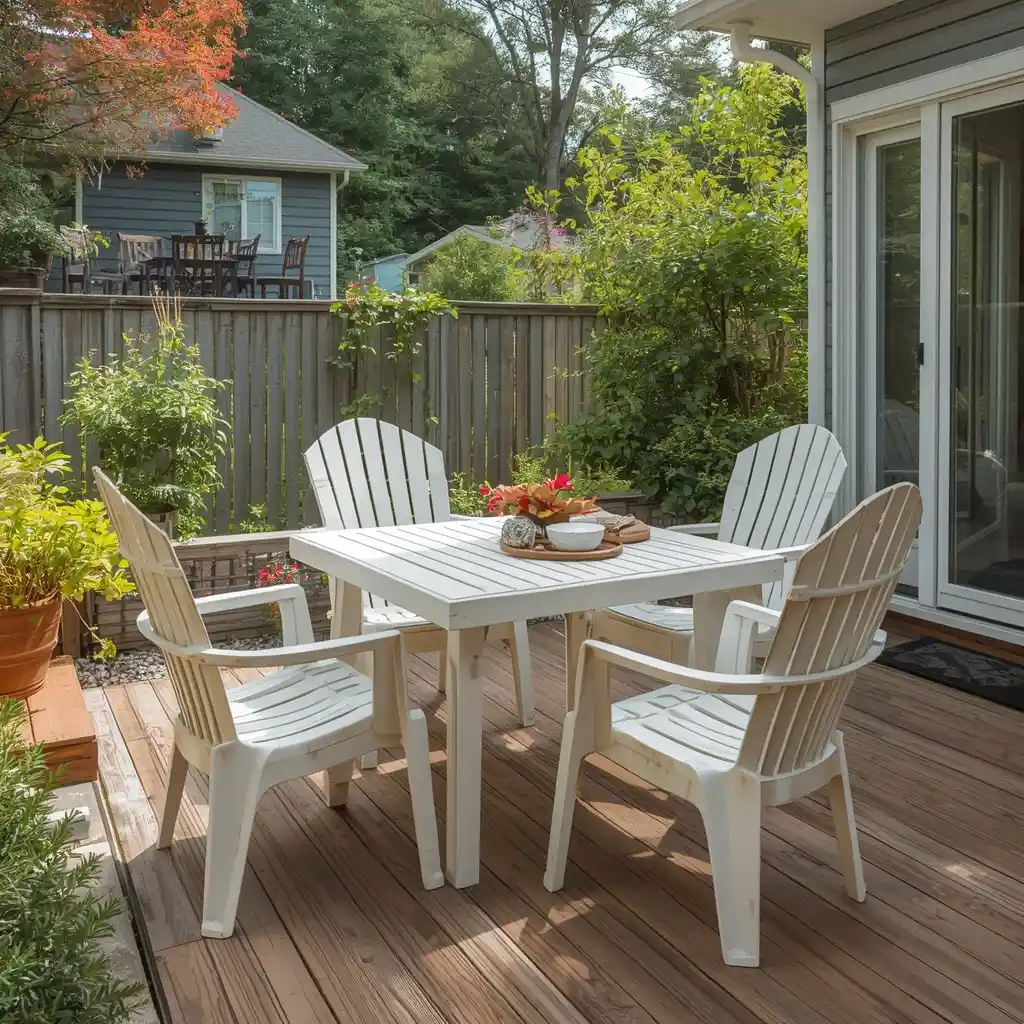

Bringing Faded Plastic Patio Furniture Back to Life

Summer has a way of exposing every corner of a backyard that has quietly been aging in the sun and patio furniture usually shows it first. Faded plastic patio furniture is one of the most common complaints homeowners have once the season really sets in and for good reason. A chair set that looked crisp and bright in April can turn chalky, dull and almost gray by August, even if you never spilled a thing on it or left a single scratch.
The cause is not neglect. It is simple exposure. Sun, heat and rain slowly attack the surface of the plastic itself, breaking down the pigments that gave it color in the first place. The good news is that faded plastic patio furniture is almost always fixable without buying a replacement set. Keep reading for the exact fix, plus four more common patio problems solved below.
Guides for Restoring Your Outdoor Furniture Collection
Faded color is rarely the only issue sitting on a patio by midsummer. Mold creeps into umbrella seams, rust spots bloom on old chair frames, aluminum turns chalky white and teak wood dulls to gray. The five guides below cover the outdoor furniture problems homeowners search for most, starting with the plastic fix itself.
Clearing Mold Off Your Outdoor Umbrella Fabric
Umbrella fabric sits in one of the most humid microclimates on your patio, folded shut for days at a time with moisture trapped inside the canopy. That trapped humidity is exactly the trigger mold needs, since EPA guidance on mold prevention notes that relative humidity above 60 percent creates the conditions mold needs to activate and spread. The table below details the official humidity threshold established by EPA mold prevention specialists.
| Number & Insight | Source (Institute) | Expert / Team |
|---|---|---|
| Relative humidity readings above 60 percent create the conditions mold needs to activate and spread across damp surfaces like folded umbrella fabric. | U.S. Environmental Protection Agency | EPA Mold Prevention Program |
Dark spots along the seams and ribs are usually the first sign and they spread fast once the fabric stays damp for more than a day or two. A mix of oxygen bleach and warm water, left to sit for fifteen minutes before scrubbing with a soft brush, clears most cases without damaging the fabric coating. For the full method, including how to treat fabric that has already turned green or black, see our dedicated guide on how to clean mold off outdoor umbrella fabric.
Removing Rust From Patio Furniture Without Sanding
Rust on wrought iron or steel patio frames is not random; it follows a specific chemical reaction. According to Encyclopaedia Britannica, rust forms when metal, typically iron, reacts with oxygen in the presence of moisture, a process called oxidation that transforms the metal into iron oxide. The table below details the official chemical explanation established by Encyclopaedia Britannica’s science editors.
| Number & Insight | Source (Institute) | Expert / Team |
|---|---|---|
| Rust forms through a specific chemical reaction between iron, oxygen and water, a process scientists classify as oxidation. | Encyclopaedia Britannica | Britannica Science Editors |
You do not need a sander to deal with small to moderate spots. White vinegar or a paste of baking soda and water, worked into the rust with a stiff brush, lifts most surface corrosion within twenty minutes. Larger frames with deeper pitting need a rust converter instead of abrasion. Our full breakdown, including which products actually hold up outdoors, is in the guide on how to remove rust from patio furniture without sanding.
Restoring the Color of Sun-Bleached Plastic Furniture
Of the five problems on this list, sun-driven fading is the one every plastic patio set eventually faces. Nearly all of the ultraviolet radiation that reaches your backyard is UVA, with a smaller share of UVB mixed in and both wavelengths strike the plastic’s surface constantly through the growing season, according to the Centers for Disease Control and Prevention. That energy breaks down the pigment molecules and polymer chains near the surface, which is why faded plastic patio furniture usually turns pale, chalky or slightly yellow rather than simply dirty. The table below details the official radiation breakdown established by CDC radiation health specialists.
| Number & Insight | Source (Institute) | Expert / Team |
|---|---|---|
| Nearly all of the UV radiation that reaches ground level is UVA, with a smaller share arriving as UVB and both wavelengths degrade exposed plastic continuously through the day. | Centers for Disease Control and Prevention | CDC Radiation and Your Health Program |
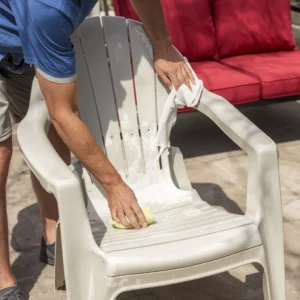
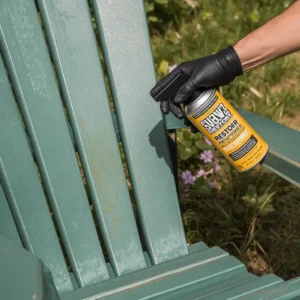
The fix depends on how far the fading has progressed. For light fading, a plastic restorer or automotive-grade UV protectant, wiped on after a thorough cleaning, revives color within a single afternoon. For furniture that has gone fully chalky, a light sanding with 400-grit paper followed by two coats of outdoor plastic spray paint gives a finish that holds up for two to three seasons. Either way, cleaning first with warm soapy water and a soft brush removes the surface film that blocks any product from bonding properly, so do not skip that step no matter which fix you choose.
Cleaning Oxidized Aluminum Patio Chairs
Aluminum does not rust the way steel does but it does oxidize, leaving a chalky white residue on chair arms and table legs that rubs off on clothing. That oxide layer is actually protective rather than damaging, which is part of why aluminum furniture holds up so well over time. According to The Aluminum Association, nearly 75 percent of all aluminum ever produced is still in use today, a durability the metal owes largely to that same protective oxide layer. The table below details the official durability figure established by The Aluminum Association’s industry team.
| Number & Insight | Source (Institute) | Expert / Team |
|---|---|---|
| Nearly 75 percent of all aluminum ever produced is still in use today, a durability the metal owes largely to its naturally protective oxide layer. | The Aluminum Association | Aluminum Association Industry Team |
Removing the chalky buildup without stripping that protective layer means using a mild dish soap solution first, then a paste of cream of tartar and water for spots that will not budge, applied with a soft cloth rather than steel wool. Skip anything abrasive, since it can scratch through the finish and expose bare metal underneath. The complete cleaning and prevention routine is covered in how to clean oxidized aluminum patio chairs.
Making Teak Wood Look New Again
Teak’s natural oils and high silica content are what let it sit outside through every season without rotting but those same oils are also why the wood gradually changes color over time. According to Westminster Teak, untreated teak weathers from its original honey-brown tone to a silver-gray patina within roughly six to twelve months of direct sun exposure and that shift is purely cosmetic rather than a sign of damage. The table below details the official weathering timeline established by Westminster Teak’s care specialists.
| Number & Insight | Source (Institute) | Expert / Team |
|---|---|---|
| Teak typically weathers from honey-brown to a silver-gray patina within six to twelve months of direct sun exposure, a cosmetic change that does not affect the wood’s strength. | Westminster Teak | Teak Care Specialists |
If you want the original tone back, a light sanding with the grain followed by a teak-specific cleaner and brightener restores the honey color in an afternoon and a UV-protective sealer slows the next round of graying. Our step-by-step process, including how often to reseal, is covered in how to make teak wood look new again.
How Much Does It Cost to Restore Faded Plastic Patio Furniture (Up to $60 a Chair)
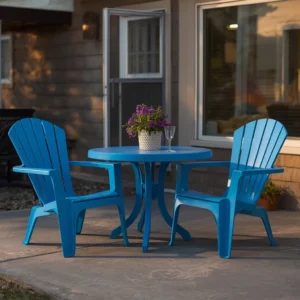
Restoring faded plastic patio furniture yourself typically runs between $25 and $60 per chair once you account for a quality UV-protective restorer or spray paint, fine-grit sandpaper and a microfiber applicator and it is safer to plan toward the higher end of that range since product prices vary by brand and region. A six-piece set can usually be refreshed for under $250 in materials, which is a fraction of what a comparable replacement set costs at most garden centers.
Where the math shifts is when the plastic itself has gone brittle rather than just faded, since cracked or crumbling resin cannot be saved with a topical product no matter how much is applied. In that case, replacement is the more honest recommendation but for furniture that is simply pale or chalky, the DIY route stays well under the cost of new pieces and the results typically last two to three full outdoor seasons before a touch-up is needed.
How Many Coats of Paint Plastic Patio Furniture Needs (2 Coats Minimum)
Two thin coats outperform one heavy coat almost every time on plastic outdoor furniture. A single thick application tends to pool in seams and joints, then peel within a season because the paint never bonds evenly to the resin underneath. Two lighter passes, each allowed to dry fully before the next goes on, give the pigment and the UV-resistant topcoat time to cure into a finish that actually flexes with the plastic instead of cracking off it.
Between coats, plan on roughly 20 to 30 minutes of dry time in warm, low-humidity conditions, longer if the furniture sits in shade or the day is damp. Rushing the second coat is the single most common reason a fresh paint job looks streaky or starts flaking within weeks, so patience at this stage matters more than the brand of paint used.
5 Steps to Spray Paint Plastic Patio Furniture Correctly
Getting a durable finish on plastic patio furniture comes down to preparation more than the painting itself. Start by washing the piece thoroughly with soapy water and letting it dry completely, then scuff the surface lightly with fine-grit sandpaper so the paint has something to grip. Wipe away the dust with a tack cloth, apply a plastic-specific primer and let that cure fully before any color goes on.
Once primed, apply the first color coat in slow, even sweeps from about ten inches away, avoiding the urge to spray heavier passes to save time. Let that coat dry, apply the second and finish with a clear UV-protective topcoat once the color has fully cured. Skipping the primer or the topcoat is the most common reason plastic spray paint jobs fail early, so neither step is optional if you want the color to last.
Conclusion
Faded plastic patio furniture rarely means your outdoor set is finished; it usually just means the surface needs attention. Whether the fix is a UV restorer, a full repaint or simply cleaning off the built-up grime and grit, most sets can look genuinely brand new again in a single afternoon of low-cost work.
Pair that refresh with the other fixes here, from mold and rust to aluminum oxidation and teak graying and the patio starts pulling its weight instead of just the pieces you replaced. See our guide on how to hang outdoor string lights without drilling for a no-tool finishing touch. A weekend of small, low-cost fixes like these adds real years back to furniture you already own. If you try any of these ideas this week, tell us in the comments or share this guide with a friend whose patio could use the same refresh.
Frequently Asked Questions (FAQs)
How do you restore faded plastic patio furniture?
You restore faded plastic patio furniture by cleaning it thoroughly with soapy water, then applying either a UV-protective plastic restorer for light fading or a light sanding plus outdoor spray paint for furniture that has gone fully chalky, finishing with a UV-resistant topcoat to slow the next round of fading.
Can you use car wax on faded plastic outdoor furniture?
Car wax can add a temporary shine and a small amount of UV protection to faded plastic furniture but it does not restore lost pigment and typically needs reapplication every few weeks, so it works best as a short-term touch-up rather than a lasting fix.
Why does white plastic patio furniture turn yellow?
White plastic furniture turns yellow because UV radiation breaks down the polymer chains near the surface and reacts with additives in the resin, a process that shows up as yellowing far more visibly on white and other light colors than on darker ones.
Is it cheaper to restore or replace faded plastic furniture?
Restoring faded plastic furniture is almost always cheaper than replacing it, since a full DIY refresh typically costs a fraction of a new set, though replacement becomes the better option once the plastic itself has become brittle or cracked rather than simply discolored.
How long does restored plastic patio furniture color last?
Restored plastic patio furniture color typically lasts two to three outdoor seasons before it needs a touch-up, though placement in full sun versus partial shade and the quality of the UV-protective product used both affect how long the finish holds.