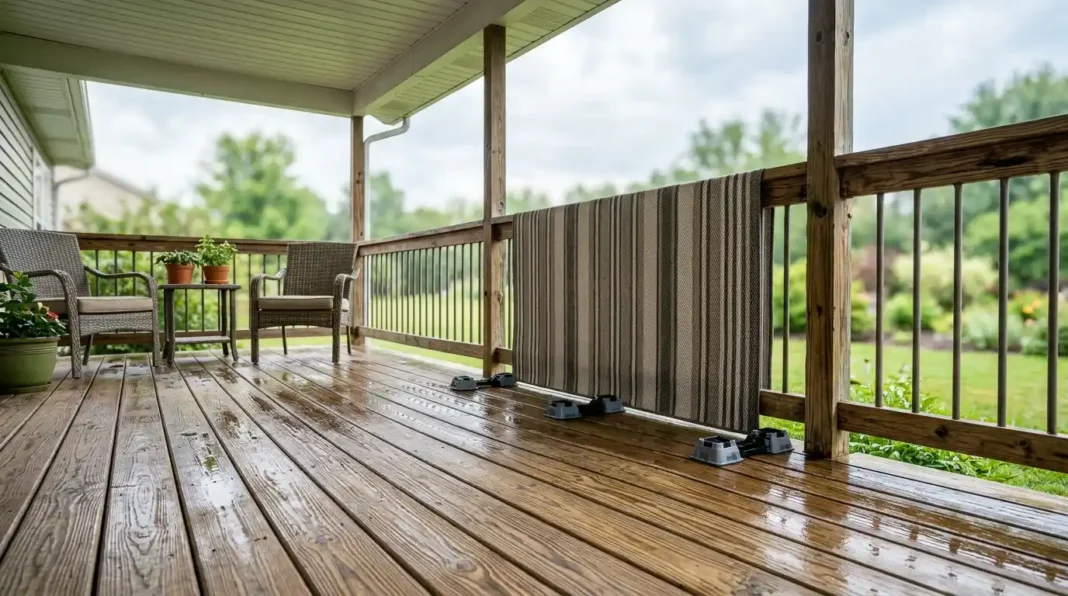

Ways to Keep Outdoor Rug Dry When Storms Roll In
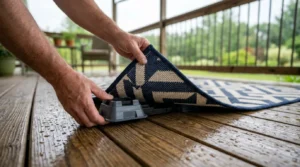

To keep an outdoor rug dry in rain, lift it off the deck before the storm, stand it upright so air reaches both sides and never leave it flat over wet boards. Those three moves stop water from pooling under the rug, which is where mildew and board stains actually start.
Key Takeaways:
- Lift the rug off the deck so air and water can move underneath it.
- Stand it upright after rain, because a flat rug holds water against the boards.
- Choose polypropylene, since jute, sisal and seagrass soak up water and mildew.
- Skip solid rubber pads and use open-weave mesh that lets water drain.
- Dry rug and pad within 24 to 48 hours, the window EPA gives for avoiding mold.
Most rug damage comes from slow drying rather than the rain itself, so the five steps below focus on airflow, drainage and fast drying. Pick one this weekend and try it before the forecast turns wet.
Why a Wet Rug Stays Wet Longer Than You Expect
A rug on a deck is a sandwich of wet layers: rain on top, damp boards below and almost no airflow between them. EPA’s mold course guidance says a wet vacuum alone will not dry carpet, because the carpet and its padding must come off the floor and dry in moving air. The table below details the official carpet-drying guidelines established by EPA specialists.
| Number & Insight | Source (Institute) | Expert / Team |
|---|---|---|
| To dry carpet and backing within 48 hours, remove water with a wet vacuum, pull the carpet and pad off the floor and dry both with a fan blowing air over them, since a wet vacuum alone will not dry carpet. | U.S. Environmental Protection Agency | EPA Indoor Air Quality Mold Program |
The same logic applies outdoors. A rug that stays flat holds water against the deck boards, so the wood stays damp long after the top of the rug feels dry. Airflow under and through the rug matters more than anything you spray on it.
What You’ll Need Before the Forecast Turns Wet
The kit is cheap. A few plastic deck risers or scrap blocks lift the rug, a stiff push broom or squeegee clears surface water and an open-weave mesh rug pad lets rainwater drain. A breathable cover helps for rugs that must stay outside.
Check the fiber label too. Polypropylene barely absorbs water and dries quickly, while jute, sisal and seagrass soak it up and invite mildew. A natural fiber rug works best as a covered-patio piece that comes inside when rain is coming.
Keeping an Outdoor Rug Dry in Rain: Step by Step
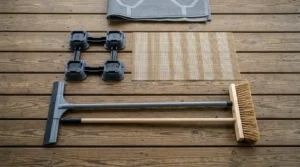
Rain alone rarely ruins a good outdoor rug. Slow drying does and these steps cut the time water sits in the rug and on the boards below it. Most take only minutes and use gear you may already own. Work through them in order the first time, then keep the ones that suit your patio.
Lift the Rug Off the Deck Surface
Raise the rug’s corners and long edges on deck risers or flat scrap blocks so air can move underneath. Even a small gap helps, because trapped water finally has somewhere to go besides into the boards.
Keep risers at the edges rather than the middle, where a sagging rug can pool water. Avoid raw rubber blocks, since rubber backing can leave dark marks on wet deck boards.
Swap Solid Pads for Open-Weave Mesh
Solid rubber or vinyl pads act like a plastic sheet, trapping water between the pad and the deck. An open-weave mesh pad lets rainwater drain and keeps air circulating under the rug.
If you already own a solid pad, pull it before wet stretches or trim it back from the rug’s edges so water can escape. A rug should never sit on a sealed layer that cannot breathe.
Tilt or Stand the Rug Before Rain Hits
When a storm is forecast and the rug is not under cover, stand it upright against a railing or wall with the pile facing out. Air reaches both sides and water runs off instead of settling in the weave.
If it has to go indoors, roll it loosely rather than folding it. Folds trap damp pockets that stay wet for days and can damage the backing along the crease.
Push Off Surface Water After the Storm
Sweep standing water off with a stiff push broom or a squeegee while the rug is still in place. Working from the center outward clears most of it in minutes and shortens the drying time that follows.
Then lift the rug and sweep the deck underneath, because puddles often hide there. Dry boards under the rug matter just as much as a dry rug.
Finish Drying With Moving Air
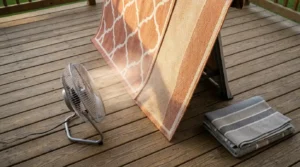
Leave the rug standing or propped in open air with its underside exposed and turn it every few hours. Moving air does more than sun alone, especially for thick weaves.
If it stays damp, point a fan across it, the same approach EPA recommends for drying carpet and pad. Aim for fully dry within 24 to 48 hours, then lay it flat again.
What to Do When the Rug Already Got Soaked
If the rug sat in water overnight, act fast. Remove standing water, lift the rug and pad off the deck and get air moving over both. EPA puts the window for avoiding mold at roughly 24 to 48 hours, so do not wait for the weekend.
Check the deck too. Boards that stayed damp under a rug can stain or soften over time and sealing them helps. Our guide on how to weatherproof outdoor wooden furniture covers the same wood-sealing basics for patio sets and decks.
How Much Does It Cost to Keep Outdoor Rug Dry (Under $30)
A set of deck risers and a push squeegee usually runs under $30 together and plenty of people already own a push broom. An open-weave mesh pad adds to that depending on rug size.
Compare that with replacing a rug that mildewed, which often costs several times more than the drying gear. Prevention is the cheaper side of this project.
How Long Does an Outdoor Rug Take to Dry (24 to 48 Hours)
With good airflow, aim for fully dry within 24 to 48 hours, the same window EPA gives for avoiding mold on wet materials. A thin polypropylene flatweave often dries toward the short end of that range.
Thick weaves, natural fibers and humid weather push drying toward the long end. If the rug still feels cool and damp after two days, move it somewhere with more airflow.
3 Rug Fibers That Handle Rain Best
Polypropylene, polyester and solution-dyed acrylic are the usual outdoor choices and polypropylene is the most common because it absorbs very little water. All three tolerate repeated wetting far better than natural fibers.
Jute, sisal and seagrass look great on a covered porch but soak up water and mildew when rained on. Keep those under cover and let synthetic rugs handle the open deck.
Conclusion
Rain does not ruin an outdoor rug. Standing water does and the five steps above remove the conditions that let it linger under and inside the weave. Lifting, draining and drying protect the rug, the pad and the deck together and the same routine suits any patio textile that sees weather.
Pick one really simple step to try before the next forecast turns wet. Then tell us in the comments how it went or share this guide with a friend whose patio rug never seems to dry.
Frequently Asked Questions (FAQs)
How do you keep an outdoor rug dry in the rain?
To keep outdoor rug dry in the rain, lift it on deck risers, stand it upright or move it under cover before the storm, then sweep off surface water and dry it with moving air within 24 to 48 hours afterward.
Can an outdoor rug stay out in the rain?
A synthetic outdoor rug made of polypropylene, polyester or solution-dyed acrylic can stay out in the rain if it drains and dries afterward, while natural fiber rugs like jute and sisal should be covered or brought inside.
How long does it take for an outdoor rug to dry?
An outdoor rug usually dries within a day or two with good airflow and the safe target is fully dry within 24 to 48 hours, the window EPA gives for preventing mold growth on wet materials.
Should you put a pad under an outdoor rug?
A pad is fine under an outdoor rug if it is an open-weave mesh that lets water drain but a solid rubber or vinyl pad traps moisture between the rug and the deck and should be avoided in wet weather.
Can you leave an outdoor rug on a wood deck?
You can leave an outdoor rug on a wood deck if you lift and air it regularly, since a rug that stays flat and damp can stain or soften the boards underneath over time.