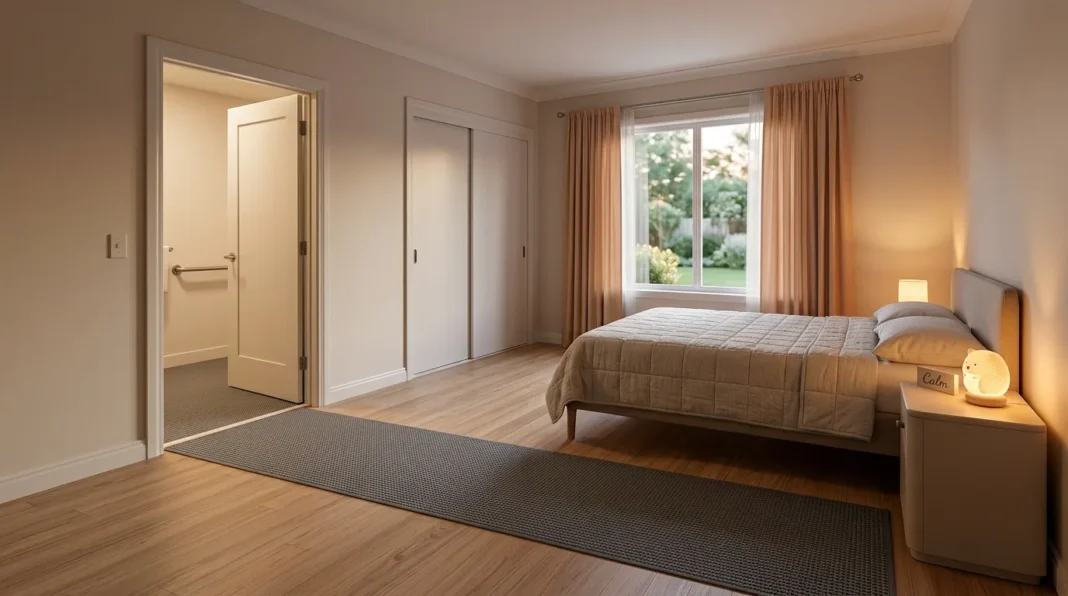

Modify Bedroom for Seniors With Five Low-Cost Safety Changes

You can modify bedroom for seniors in a single afternoon by fixing five things in order: the rails, the lighting, the floor, the walking path and the bed itself. Most of these fixes cost less than $50 each. They matter because the CDC reports that more than one out of four older people falls every year.
KEY TAKEAWAYS:
- Light the route from bed to bathroom first, since darkness is where many night falls begin.
- Choose assist handles or properly fitted rails, never a loose rail that leaves a gap beside the mattress.
- Remove or secure throw rugs and keep electrical cords out of every walkway.
- Keep a clear, straight path between the bed and the bathroom with no furniture in the way.
- Set the mattress top roughly 20 to 23 inches off the floor so both feet rest flat when seated.
Most falls at home are not freak accidents. They happen on ordinary nights, when someone is half asleep, reaching for a light switch and stepping onto a rug that slides. The five steps below move outward from the bed, the same measure-first habit we use to arrange small living room furniture. Clear floor space protects a walker as much as it helps a sofa.
The 5-Step System for a Safer Senior Bedroom
Each step below helps you modify bedroom for seniors one hazard at a time, so you can finish over a weekend or spread the work across a month. Work through them in order, since lighting and flooring decisions change how everything else should be placed.
None of this needs a contractor. None of it makes the room feel clinical either. A safe bedroom can still look like the person’s own, which is the whole point of the effort.
Choose Bed Rails or Assist Handles With Care
A rail feels like an obvious safety purchase. A poorly matched one can create a new danger, since a gap between rail, mattress and frame can catch a head or body. When you modify bedroom for seniors, the goal is a firm handle to push against, not a barrier to climb over, a trade-off we weigh when you add rails senior bedroom setups.
For someone who mainly needs help sitting up and standing, a sturdy assist handle on the side of the bed often does more good than a full-length rail. Check the fit before the first night. Then recheck it every few weeks, because rails can shift or loosen over time. The table below details bed rail guidelines established by FDA specialists.
| Insight | Source | Team |
|---|---|---|
| The FDA tells consumers to confirm that adult portable bed rails meet the ASTM F3186-17 standard and that the rail, mattress and bed frame are compatible, since they are often bought separately and not every rail fits every bed. | FDA | FDA Center for Devices and Radiological Health |
Light the Path From Bed to Bathroom
A bedroom that feels fine at noon can be a hazard at 3 a.m. Aging eyes need far more light and adapt to darkness more slowly, so a single dim lamp across the room is rarely enough. Put a lamp or night light within arm’s reach of the pillow. Then add soft lights along the bathroom route, as compared in our guide to lighting for senior bedroom layouts.
Motion-activated lights are especially useful, since nobody has to remember to turn them on. Keep a flashlight on the nightstand as a backup in case of a power cut. Avoid glaring bare bulbs that leave deep shadows right beside them. The table below details senior lighting guidelines established by Lighthouse Guild specialists.
| Insight | Source | Team |
|---|---|---|
| Lighthouse Guild reports that older adults can require 3 to 6 times more light than younger people. It also notes that in the study, it cites that more than half of participants did not use a night light or switch on a light when getting out of bed. | Lighthouse Guild | Lighthouse Guild Editorial Team |
Fix Floors, Rugs and Cords That Cause Trips
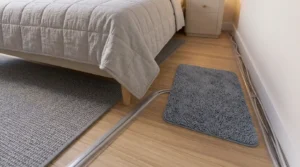
Loose rugs, curled corners and stray cords are the quiet trip hazards in nearly every bedroom. Anything that slides underfoot or catches a toe is worth removing. Anything you keep should be fixed down firmly. If you want to modify bedroom for seniors on a small budget, this is the cheapest and fastest step on the list.
According to NCOA’s bedroom safety guide, you should secure or remove throw rugs that slide or curl, place a non-skid mat beside the bed on hardwood or tile and never run electrical cords across walkways. The same guide also recommends replacing any frayed cords and wearing non-slip slippers that cover the whole foot. The table below details floor and cord guidelines established by NCOA specialists.
| Insight | Source | Team |
|---|---|---|
| NCOA advises a non-skid mat beside the bed on smooth floors, says socks alone are risky on hard surfaces and recommends checking cords for fraying and outlets for overload so nothing crosses the route to the bathroom | NCOA | NCOA Center for Healthy Aging |
Clear a Straight Walking Path Through the Room
Furniture tends to drift into the middle of a bedroom over the years. A chair becomes a clothes pile. A basket lands by the door. A low table sits exactly where a foot swings out of bed. To modify bedroom for seniors well, aim for one wide, straight route from the bed to the bathroom, the layout we map out when you arrange safe senior bedroom furniture.
Walk that route in the dark with your eyes half shut. Anything you bump into needs to move. Everything used daily, such as glasses, phone and medication, should sit within easy reach of the bed instead of across the room. The table below details clear pathway guidelines established by National Institute on Aging specialists.
| Insight | Source | Team |
|---|---|---|
| The National Institute on Aging advises keeping walkways clear of books, papers, clothes and shoes. It also says to arrange furniture, especially low coffee tables, so it does not block your path. | National Institute on Aging | NIA Editorial Team |
Adjust the Bed Height and Setup to Fit the Person
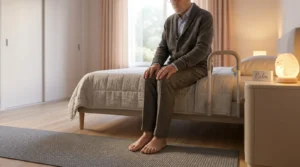
A bed that is too high leaves feet dangling. One that is too low makes standing a struggle. Sit on the edge and check that both feet rest flat with the knees bent at roughly 90 degrees. The National Council on Aging puts the top of the mattress at about 20 to 23 inches from the floor.
If the bed misses that mark, a thinner mattress, a different frame or bed risers can fix it. That same thinking guides how you adapt bedroom aging adults needs over time. It is also the last piece to modify bedroom for seniors properly. Add a sturdy armchair for dressing. Sit up for a moment before standing so dizziness has time to pass. The table below details fall prevention guidelines established by CDC specialists.
| Insight | Source | Team |
|---|---|---|
| The CDC reports that more than one out of four older people falls each year, with about 4.5 million emergency department visits annually. It also notes that less than half of those who fall tell their doctor. | CDC | CDC STEADI Older Adult Fall Prevention Team |
3 Signs a Senior Bedroom Needs Changes Now
Three signs say the room needs work right away: the person grabs furniture to stand up, feet do not reach the floor flat when seated or there has been even one near miss on the way to the bathroom. Any single sign is enough to act on, since the CDC notes that less than half of people who fall tell their doctor.
Do not wait for a serious fall to start. Fixing a rug or adding a night light takes minutes. It is far easier to do while everyone is calm than while someone is recovering in hospital.
Cheapest Ways to Modify a Senior Bedroom Under $50
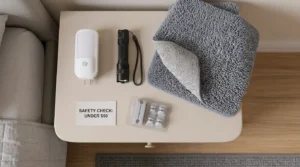
The cheapest wins are plug-in motion night lights, a non-skid mat beside the bed, cord clips and a bedside flashlight. Each one typically costs well under $50. Removing a loose rug costs nothing at all. Rearranging furniture into a clear path is free.
Spend money last on bigger items such as risers, assist handles or a medical alert device. If you are unsure which one fits, an occupational therapist or the person’s doctor can recommend equipment matched to their balance and strength.
Best Senior Bedroom Setup for 2026 (Editor’s Pick)
The strongest way to modify bedroom for seniors in 2026 pairs a bed at 20 to 23 inches, an assist handle on the entry side, motion-activated lights along the bathroom route and a bare, clear floor. It works across the widest range of ages and abilities. None of it looks medical once it is in place.
If you only have budget for one change, choose the lighting and the floor first. They prevent the most common night-time accidents. They also make every later upgrade easier to place.
A Bedroom That Keeps Mornings Easy
Start tonight with a night light and a quick rug check, because those two fixes remove the biggest hazards for almost no money. Then work through the bed height, the walking path and the handle or rail choice, one at a time, so you can see what really changed. Independence is not about risking a fall to prove a point.
Families who modify bedroom for seniors rarely regret the effort, since a safer room keeps the person doing what they have always done. Caregivers also sleep better when the route to the bathroom is lit and clear every night. Walk through your own senior bedroom against these five steps this weekend, then tell us which change made the biggest difference.
Frequently Asked Questions (FAQs)
How do you modify a bedroom for seniors?
You modify bedroom for seniors by lighting the path to the bathroom, securing rugs and cords, clearing a straight walking route, setting the bed at a comfortable height and adding assist handles or well-fitted rails.
What is the most important change in a senior bedroom?
Good lighting is the most important first change, because aging eyes need much more light and many people get out of bed in the dark without turning on a lamp.
Are bed rails safe for older adults?
They can be when the rail, mattress and frame fit together with no gap that could trap a head or body. That is why the FDA advises checking compatibility and the ASTM F3186-17 standard.
How high should a senior’s bed be?
The top of the mattress should sit about 20 to 23 inches from the floor, so both feet rest flat and the knees bend at roughly 90 degrees when seated on the edge.
How much does it cost to make a bedroom safer for older adults?
Many of the most effective fixes, including night lights, non-skid mats and cord clips, typically cost under $50 each. Removing loose rugs or clutter costs nothing.