Where to Add Rails Senior Bedroom Setups Without Creating a Trap
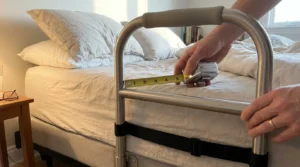

The safest way to add rails senior bedroom setups is to choose a rail that meets the ASTM F3186-17 standard and fits your exact bed, then place it so nobody can climb over it or slip into a gap beside the mattress. Most rail injuries trace back to poor fit and loose installation rather than to the idea of a rail itself, which is why the details of the purchase and the setup matter far more than the price tag or the brand name.
KEY TAKEAWAYS :
- Check that any adult portable rail meets ASTM F3186-17 before you buy it.
- Confirm the rail, mattress and frame are compatible, since not every rail fits every bed.
- No gap beside the mattress should be wide enough to trap a head or body.
- Soft mattresses, air mattresses and pads can open gaps that were not there on installation day.
- An assist handle or a lower bed can replace a full-length rail for many people.
Rails are one of the five fixes in our full plan to modify bedroom for seniors safely, alongside lighting, floors, walking paths and bed height. The rail decision deserves its own careful look, because a rail that is wrong for the bed can hurt more than it helps. A well-chosen and well-fitted one can protect a sleeper for years. A poor choice can turn a quiet bedroom into a hazard within a single night.
7 Rail Risks to Avoid Before You Install Anything
Each risk below is a mistake families commonly make in the first week after they add rails senior bedroom setups. They are ordered so the early ones decide whether the later ones even apply to your situation. Work through them with the actual bed, mattress and sleeper in front of you, since a rail that is safe for one person on one mattress can be risky for a different person on a softer mattress.
Buying a Rail That Does Not Fit Your Bed
Rails, mattresses and frames are often bought separately. That is exactly where the trouble starts. The FDA warns that not all rails fit all bed sizes and that these parts are not always interchangeable. A rail that looks perfect in the box can still leave a gap once it sits against your particular mattress, because mattress thickness, frame style and bed size all change how the rail meets the edge of the bed.
Measure the bed before you shop and write the mattress thickness on a note you can carry into the store or paste into an email. Then confirm compatibility directly with the rail maker. Ask the question in plain words: will this rail fit this frame and this mattress without leaving a gap? A clear written answer from the manufacturer is worth more than any label on the packaging.
Placing the Rail Where It Invites Climbing
A rail that is awkward to get around can turn into something a restless sleeper tries to climb over. The FDA advises choosing and placing rails to discourage climbing, since a climb over the rail can end in a worse fall than no rail at all. Height and position matter as much as strength here, because a sturdy rail in the wrong spot still gives the sleeper a ledge to scramble over in the dark.
If the person already tries to climb out at night, treat that as a signal rather than a nuisance. It usually means that the room, the bed height or the person’s needs have changed. A rail alone will not fix that. Look at lighting, the path to the bathroom and the bed height first, then decide whether a rail still belongs in the plan at all.
Using a Rail for a High-Risk Person Without a Plan
The FDA lists people with confusion, restlessness or lack of muscle control as higher risk. It also includes people whose thinking is affected by medication or by conditions such as Alzheimer’s disease, dementia, Parkinson’s disease, multiple sclerosis, balance disorders, stroke or low blood pressure. For these sleepers, a rail can create danger instead of reducing it, since they may try to climb it or slide into the space beside the mattress.
The FDA also says adult portable bed rails should not be used as a substitute for proper monitoring. Talk with a doctor or an occupational therapist before adding any rail, because they can match the equipment to the person’s balance, strength and sleep habits. In a care facility, the FDA says a comprehensive assessment and care plan should be in place before rails are used at all.
Ignoring Soft Mattresses and Gaps That Grow
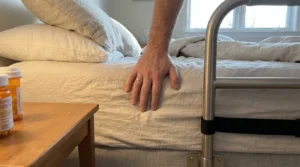
A gap that is safe on installation day can become unsafe a week later. The mattress is usually the reason. When someone lies on a soft mattress, the surface compresses and the edge moves away from the rail. That is why the fit needs testing with the real sleeper on the bed, a step many people skip when they add rails senior bedroom setups, because an empty mattress sits higher and firmer than one carrying a person’s weight.
The FDA’s recommendations for adult portable bed rails say no gap should be wide enough to trap a head or body, whatever the mattress size. A practical habit is to press down on the mattress where the person rests, then look at the gap again with that weight on. If you can see a space that a head or an arm could slip into, the setup is not safe yet. The table below details bed rail gap guidelines established by FDA specialists.
| Insight | Source | Team |
|---|---|---|
| The FDA warns that gaps can form when a mattress compresses or shifts because of body weight, movement or bed position. It says specialty mattresses such as air mattresses, mattress pads and waterbeds raise the risk, while soft mattresses in general can increase entrapment between mattress and rail | FDA | FDA Center for Devices and Radiological Health |
Letting the Safety Strap Hang Loose
Most portable rails come with a safety strap or retention system. It is easy to treat it as optional. The FDA says it should stay permanently attached to the rail and secured to the bed frame. A rail held in place only by the weight of the mattress can slide or tilt. A tilted rail opens exactly the kind of gap that the whole setup is supposed to prevent.
Install the rail exactly as the maker describes. Do not improvise with extra padding or makeshift ties. Then confirm that the rail suits the user’s age, size and weight, since a rail built for a smaller adult may not hold a larger one. Whenever the printed instructions leave a doubt, contact the manufacturer before the first night, not after a problem has already shown up.
Forgetting to Recheck After the First Week
Rails can shift or loosen over time, which is why the FDA tells users to inspect for gaps and recheck the installation on a regular basis. One check on day one is never enough, because mattresses settle, straps work loose and frames flex with daily use. The rail that was snug in week one can be noticeably different by week six without anyone touching it on purpose.
A simple habit helps here. Take a photo of the rail beside the mattress edge on installation day, then compare it with the same view each month. If the picture looks different, tighten the strap and test the gap again with the person on the mattress before the next night. It takes two minutes and it turns a vague worry into something you can actually see.
Choosing a Full-Length Rail When a Handle or a Lower Bed Would Do
Many people need a firm grip rather than a barrier. The National Council on Aging recommends assist handles, which are sturdy grab bars on the side of the bed, instead of full-length rails. It notes that full-length rails have been recalled over entrapment and fall risks. A handle gives something solid to push against when sitting up and standing, without creating a long gap along the whole side of the mattress.
The FDA also lists alternatives for people who should not use rails: roll guards, foam bumpers, lowering the bed close to the floor, concave mattresses and a bed trapeze. Check the bed height too, since NCOA puts the top of the mattress at about 20 to 23 inches from the floor for most people. A bed at the right height often removes the need for any rail at all.
3 Signs a Bed Rail Needs Fixing Right Away
A rail needs attention when you can see a gap beside the mattress that could trap a head or body, when the rail wobbles or tilts under light pressure or when the safety strap is no longer attached to the frame. Any one of these three signs is enough to stop using the rail until it is fixed, because each one points to the same danger: a space or a movement that the design was never meant to allow.
Do not wait for a near miss before acting. A loose strap takes a minute to secure. A gap often closes with a better-fitting mattress or a different rail. If the problem comes back after a fix, contact the manufacturer or call the FDA on 1-888-INFO-FDA, since a rail that keeps shifting may simply be the wrong rail for that particular bed.
5 Lower-Risk Rail Alternatives to Try First
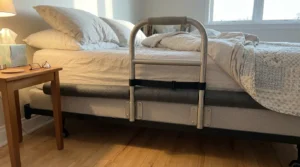
The FDA names five alternatives when rails are not appropriate: roll guards, foam bumpers, lowering the bed as close to the floor as possible, concave mattresses and a bed trapeze. Lowering the bed is usually the simplest one to try first, because it needs no new equipment and it also shortens the distance of any fall, which matters most for sleepers who tend to roll or shift during the night.
A bed trapeze helps a person reposition in bed and get in and out of it, while roll guards and foam bumpers help prevent rolling off. NCOA adds other aids such as bed ladders, which work best with an occupational therapist. It also lists floor-to-ceiling transfer poles. Ask a doctor or occupational therapist which one suits the person, since the right choice depends on their strength, balance and daily routine.
Best Way to Add Rails Senior Bedroom Setups in 2026 (Editor’s Pick)
For most older adults, the strongest 2026 approach is a sturdy assist handle on the side the person uses to get in and out, paired with a bed set to the right height. This is the route NCOA suggests instead of full-length rails. It avoids the gap problem entirely for many people. Pair it with good lighting and a clear floor. Then the bed becomes much easier to leave safely at night.
If a portable rail is truly needed, choose one that meets ASTM F3186-17, confirm that it fits your bed and keep the safety strap attached to the frame. Then recheck the fit on a regular schedule and test the gap with the person lying on the mattress. A rail chosen this carefully protects the sleeper without trading one risk for another, which is the whole point of adding it.
A Rail Should Protect the Sleeper and Never Trap Them
Before you add rails senior bedroom setups, measure the bed and confirm compatibility with the rail maker. Then check the gap with a person lying on the mattress and keep the safety strap attached to the frame. Those three habits remove most of the risks listed above. They cost almost nothing beyond a few minutes of attention. Rails and handles are also only one part of a safer room, so treat them as a single piece of a bigger plan.
The same careful thinking applies to lighting, floors and bed height. It matters because the CDC reports that more than one out of four older people falls every year. A safe bedroom lets a person keep doing what they have always done, with fewer hidden dangers in the way. Small checks also protect people long after day one. Check your own rail or handle against these seven risks this week, then tell us which one surprised you most.
Frequently Asked Questions (FAQs)
Where should you add rails in a senior bedroom?
The safest way to add rails senior bedroom setups is to use a rail that meets ASTM F3186-17, fits your bed and is placed to discourage climbing over it. Another good option is an assist handle on the side the person uses to get in and out.
Are bed rails safe for older adults?
They can be when the rail, mattress and frame fit together with no gap that could trap a head or body. The FDA lists people with confusion, dementia or balance problems as higher risk.
What is the difference between a bed rail and an assist handle?
A bed rail is a long barrier along the side of the bed, while an assist handle is a sturdy grab bar that gives support for sitting up and standing. NCOA recommends assist handles instead of full-length rails.
What can you use instead of bed rails?
The FDA lists roll guards, foam bumpers, lowering the bed close to the floor, concave mattresses and a bed trapeze as alternatives when rails are not appropriate.
How often should you check a bed rail?
Check the gap and the strap on installation day and then regularly, since the FDA says rails can shift or loosen over time. A monthly photo comparison is a practical habit.