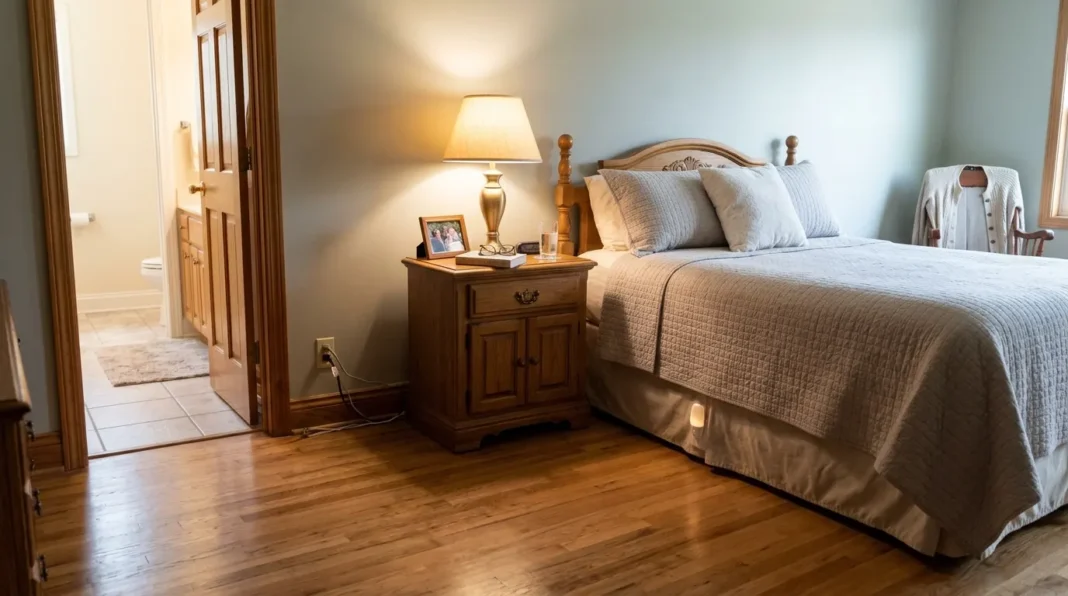

Arrange Safe Senior Bedroom Furniture Around One Clear Walking Route
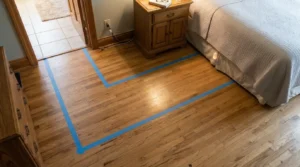

The best way to arrange safe senior bedroom furniture is to keep one wide, straight and clutter-free route from the bed to the bathroom door, then place everything else around that route instead of across it. Furniture that drifts into the middle of the room, cords that cross the floor and daily items stored out of reach are the layout problems that cause most trips. All of them can be fixed by moving things.
KEY TAKEAWAYS:
- Keep one clear route from the bed to the bathroom and place every other piece around it.
- Arrange furniture so it never blocks the path you walk, especially low tables.
- Keep frequently used items at waist level or within easy reach of the bed.
- Run electrical cords along the walls and never across a walkway.
- Keep a phone and a flashlight beside the bed for emergencies.
Layout is one of the five fixes in our full plan to modify bedroom for seniors safely, alongside rails, lighting, floors and bed height. It costs nothing, because the main tool is your own muscle. The five risks below show how a room that looks tidy can still hide trip hazards. They also show how a few small moves turn it into a space that is easy to cross at night.
5 Layout Risks to Avoid in a Senior Bedroom
When you arrange safe senior bedroom furniture, walk the room from the pillow to the bathroom first and picture it in the dark with a sleepy, unsteady stride. Each risk below is a common layout mistake with a specific fix, ordered from the biggest hazard to the smallest, so you can work through them in one evening with nothing more than a cleared floor and a few minutes of effort.
Blocking the Route Between the Bed and the Bathroom
The route from bed to bathroom is the busiest path in a senior bedroom. It is also the one most often blocked. The National Council on Aging advises keeping a clear route between the bed and the bathroom and removing clutter such as boxes and shoes. It also says to keep furniture from blocking walkways. Even a small basket left by the bed can catch a foot at 3 a.m.
Walk the route slowly and look for anything that narrows it. People who use walkers or wheelchairs need wide, obstacle-free routes, according to NCOA, so leave more room than feels necessary. If a dresser or chair sits too close to the path, move it to another wall. A route that stays open without effort is safer than one that depends on remembering where things are.
Placing Low Furniture and Soft Seating in the Path
Low coffee tables and ottomans are easy to miss at ground level, especially in dim light. The National Institute on Aging says to arrange furniture, especially low coffee tables and other objects so they are not in your way when you walk. A footstool that looks harmless by day becomes a shin-height obstacle once the lights go out.
Seating needs the same care, since a seat that is too low turns standing up into a struggle. NIA advises making sure sofas and chairs are at a height that is easy to get in and out of. NCOA suggests a sturdy chair with armrests near the bed for dressing. Sit on each chair and stand up without using your hands. If that feels hard, the seat is too low or too soft for the person.
Keeping Daily Items Out of Reach of the Bed
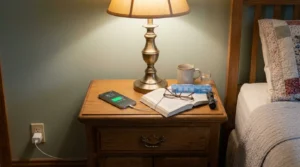
When a nightstand is too small or too far away, people stretch or stand on something to reach what they need. A bedside table that holds a lamp, a phone, glasses and medication means no reaching at all. NCOA advises keeping frequently used items such as the phone, glasses, lamp and medications within easy reach of the bed, which is the single easiest way to arrange safe senior bedroom storage.
The NIA’s room-by-room guide to preventing falls at home says to keep frequently used items at waist level or within easy reach. It also says never to stand on a chair or table to get something high. A reach stick or a helper is the safer option. Move shoes, clothes and hobby items from the top shelf to waist height and see how much more often they get used. The table below details bedroom reach and safety guidelines established by National Institute on Aging specialists.
| Insight | Source | Team |
|---|---|---|
| The National Institute on Aging says to put night lights and light switches close to the bed, keep a flashlight beside the bed for power outages and a phone near the bed, keep frequently used items at waist level or within easy reach and use a reach stick instead of standing on a chair or table | National Institute on Aging | NIA Editorial Team |
Letting Cords Cross the Floor
Lamps, chargers and fans tend to gather cords near the bed. Each cord is a trip line. NIA says to keep electrical cords along walls and away from walking paths. NCOA says not to run electrical cords across walkways at all. A cord that looks flat and harmless can catch the edge of a slipper just as easily as a loose rug does.
Move the bed or the lamp rather than stretching a cord across the floor. NCOA also advises checking for frayed cords, loose plugs and overloaded outlets. Replace any damaged cord. If you need more outlets near the bed, add a wall-mounted outlet strip with a short cable. Fewer cords on the floor also means fewer things to clean around.
Forgetting Emergency Access From the Bed
A well-arranged room still needs a way to call for help. NIA advises keeping a landline or a fully charged phone near the bed and a flashlight beside it for power outages. It also suggests a large-print list of emergency numbers near each landline, with numbers saved in the mobile phone’s favorites, so help is one touch away.
NCOA adds that people who live alone or are at risk of falls may want a medical alert system. It also says doors and windows should open easily and that at least two exit routes should be known. Check that the phone charger reaches the bedside without crossing the floor. Keep the large-print number list where it can be seen from the pillow. A layout that supports a quick call is as important as one that prevents the fall in the first place.
3 Signs Your Bedroom Layout Is Unsafe
A layout is unsafe when you bump into furniture on the way to the bathroom, when you reach or stretch to get the phone or a lamp from the bed or when a cord runs across any part of the floor you walk on. Any one of these three signs means something needs to move. The fix is usually a few feet in one direction.
Another warning is a habit of holding onto furniture while walking. People do this to steady themselves. A dresser or chair is not built to take body weight and may tip or slide. If the person already uses furniture as a handrail, rearrange the room so there is a clear path and add a proper support such as an assist handle.
5 Free Layout Fixes to Try Tonight
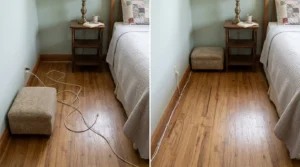
Five moves cost nothing: clear the route from the bed to the bathroom, move low tables and ottomans off the walking path, shift cords to the wall, bring daily items to waist level and place a phone and flashlight beside the bed. Each fix matches advice from NIA or NCOA. None needs a tool or a purchase beyond what is already in the house.
Start with the route and the cords, since those are the two hazards most likely to cause a fall tonight. Then work through the items and furniture, one wall at a time. Take a photo of the finished layout so you can see at a glance when something has drifted back into the path, which tends to happen within weeks as new items collect.
Best Way to Arrange Safe Senior Bedroom Furniture in 2026 (Editor’s Pick)
The strongest 2026 layout puts the bed against one wall with a clear route to the bathroom on the exit side and a nightstand within easy reach holding the lamp, phone, glasses and medication. Furniture stays along the other walls with space to walk. Cords stay along the baseboards. A sturdy armchair with armrests stands near the bed for dressing.
This layout works for most bedrooms because it separates the walking zone from the storage zone. Pair it with night lights along the route and a bed set to the right height. The room then supports someone getting up in the dark. Review it every few months, since needs change and a layout that was perfect last year may need a small adjustment.
A Bedroom Layout That Protects Every Night
Clear the route from the bed to the bathroom first, then bring everyday items within reach of the pillow and tuck every cord against a wall. Those three changes fix most of the layout hazards described above. They take less than an hour. When you arrange safe senior bedroom furniture around a clear path, the room almost looks after itself without extra equipment or spending. It then stays safe with only a few checks.
The reason it matters is that the National Institute on Aging reports that more than one in four people age 65 or older fall each year. A thoughtful layout lets a person keep doing what they have always done, with fewer hidden obstacles in the way. Walk your own route this week with the lights off and a phone flashlight in hand, then tell us which spot needed the biggest change.
Frequently Asked Questions (FAQs)
How do you arrange a senior bedroom safely?
The safest way to arrange safe senior bedroom furniture is to keep one clear route from the bed to the bathroom, keep furniture off the walking path, run cords along the walls and keep daily items within easy reach of the bed.
Where should the phone go in a senior bedroom?
Keep a landline or a fully charged phone near the bed, as NIA and NCOA both advise. A flashlight beside the bed helps during power outages.
Should a senior bedroom have throw rugs?
NIA advises against throw rugs and small area rugs and says carpets should be firmly fixed to the floor. NCOA says to secure or remove rugs that slide or curl.
How should cords be arranged in a senior bedroom?
NIA says to keep electrical cords along walls and away from walking paths. NCOA adds that cords should never run across walkways and should be replaced when frayed.
How do you keep items within reach for an older adult?
Keep frequently used items at waist level or within easy reach of the bed, as NIA advises. Use a reach stick or ask for help rather than standing on a chair or table to reach something high.