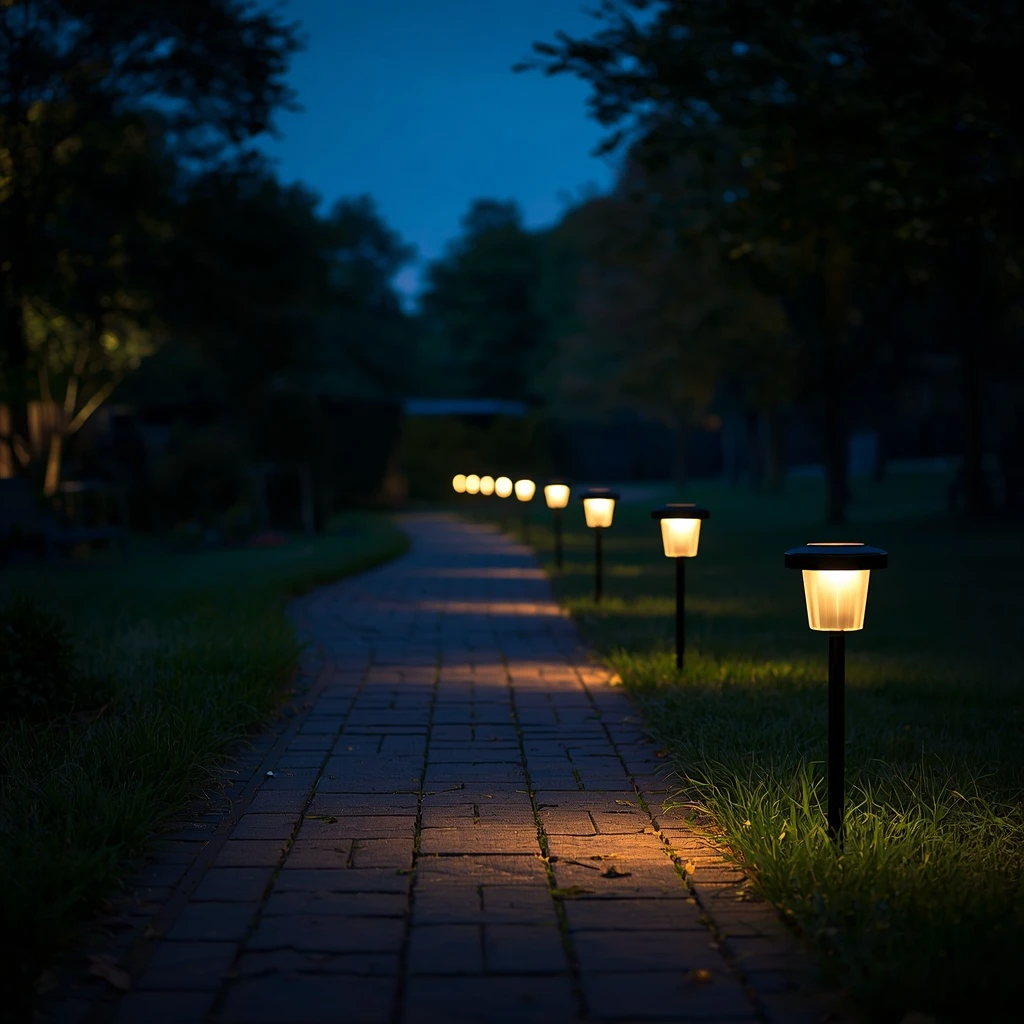

Solar Lights Stop Working: Here’s What’s Actually Happening

Solar lights stop working most often simply because the rechargeable battery has worn out, not because the fixture itself is broken. Dirty panels, shaded placement and confused sensors together account for nearly every remaining case.
Key Takeaways
- A weak or dead battery is the single most common cause, usually after 2 to 3 years of use.
- Dirty panels block sunlight and can cut output by up to 25%.
- Shaded spots still charge, just too slowly to power a full night.
- Confused sensors cause flickering, usually fixed with a simple reset.
- Fire risk is rare and almost always tied to a damaged battery, not the fixture.
Nothing’s more annoying than heading outside at dusk and realizing half your garden has gone dark again, especially when these lights are marketed as the one outdoor fixture you’ll genuinely never have to think about twice. The good news is that solar lights genuinely stop working for a small, predictable set of reasons, and almost none of them actually mean the fixture itself is dead or beyond saving.
Keep reading and you’ll know exactly which specific cause matches your own situation within just a few minutes, plus the simple, cheap fix for it, starting with the single most common culprit of them all first.
5 Reasons Your Solar Lights Might Be Failing
Nearly every solar light failure traces back to one of five things: a weak or dead battery, a flashing or unstable sensor, an overheating or fire-risk installation spot, a dirty panel blocking sunlight or a shaded location that never lets the panel charge fully. Solar fixtures often share the same deck or patio as outdoor rugs.
If you’re tackling seasonal upkeep for both at once, our guide to keeping an outdoor rug safe covers the other half of that maintenance routine. Each guide below covers a different cause, starting with the single most common culprit.
Why Do My Outdoor Solar Lights Flash On and Off
A flashing light almost always points to the sensor, not the battery. The light-sensing photocell in most solar fixtures switches on around 20 lux of ambient light and off between 70 and 80 lux, and a failing or dirty sensor can hover right at that threshold, flickering as it struggles to settle on one state. The table below details standard photocell switching-threshold guidelines established by electrical engineering reference specialists.
| Number & Insight | Source (Institute) | Expert / Team |
|---|---|---|
| Standard dusk-to-dawn photocell sensors typically switch on around 20 lux and off between 70 and 80 lux, with dark resistance in the megohm range dropping to a few hundred ohms in bright light. | General photocell and LDR industry specifications | Electrical Engineering Reference Consensus |
Low battery voltage can sometimes trigger flashing too, since the sensor may struggle to hold a stable reading as power drops. Covering the sensor briefly to force a full on and off cycle often resets it and stops the flashing. If it continues after that reset, our full flashing-lights breakdown covers the sensor replacement steps in detail.
Can Solar Lights Catch Fire on a Wooden Deck
This is rare, but not impossible, and it’s almost always tied to a damaged battery compartment or a fixture installed too close to flammable material in direct, prolonged sun. Standard solar lights with intact housings pose minimal risk; the concern grows specifically with damaged, swollen or off-brand batteries. The table below details official battery warning-sign guidelines established by fire safety specialists.
| Number & Insight | Source (Institute) | Expert / Team |
|---|---|---|
| Fire safety guidance recommends stopping use immediately if a battery shows odor, color change, excess heat, shape change, leaking or unusual noise. | National Fire Protection Association battery safety guidance | NFPA Outreach and Advocacy |
Inspecting the battery compartment for swelling or heat damage takes under a minute and our full fire-risk breakdown covers exactly what else to check for.
Dead or Weak Solar Battery
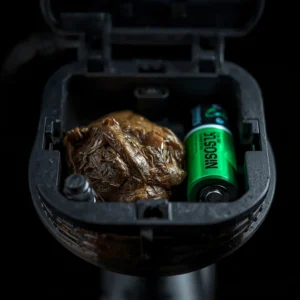
A weak or dead rechargeable battery is the single most common reason solar lights stop working, ahead of every other cause combined. Most solar lights use NiMH batteries, and these wear out gradually rather than failing all at once, which is why performance fades for weeks before a light finally goes dark. Energizer’s NiMH battery handbook states a typical expected life of 2 to 5 years for this battery chemistry under normal use. The table below details official NiMH battery lifespan guidelines established by Energizer’s battery engineering team.
| Number & Insight | Source (Institute) | Expert / Team |
|---|---|---|
| NiMH rechargeable batteries have a typical expected life of 2 to 5 years under normal use conditions. | Energizer Nickel Metal Hydride Handbook and Application Manual | Energizer Battery Engineering |
Most solar garden light batteries fall toward the shorter end of that range, closer to 2 to 3 years, because of daily full discharge cycles and outdoor temperature swings. Replacing the battery is usually the cheapest fix in this whole guide, often under five dollars for a single AA or AAA rechargeable cell.
How to Clean a Cloudy Solar Light Panel
A hazy or cloudy panel surface blocks a meaningful percentage of the sunlight it would otherwise absorb, which directly shortens how long the light stays on each night. Soiling research estimates a typical 5% loss of electricity output from dust and grime buildup, ranging up to 25% or more in dustier regions. The table below details official panel soiling-loss guidelines established by solar research specialists.
| Number & Insight | Source (Institute) | Expert / Team |
|---|---|---|
| Dust and grime buildup on a solar panel causes a typical 5% loss in output, ranging from 3% up to 25% in dustier regions. | National Renewable Energy Laboratory, U.S. Department of Energy | NREL Photovoltaic Reliability Team |
A soft cloth and plain water, wiped gently in one direction, restores most of that lost output in under a minute per panel. Our full panel-cleaning guide covers the exact routine, since doing this every few weeks during pollen season keeps output consistent.
Do Solar Lights Charge in Shade
Solar lights can charge in partial shade, but slowly and incompletely, which is different from not charging at all. Shading research explains that shading just one cell in a panel to half its light can drop the whole panel’s output to half, since cells wired in series all fall to the current level of the weakest one. The table below details official cell-shading output guidelines established by photovoltaic education specialists.
| Number & Insight | Source (Institute) | Expert / Team |
|---|---|---|
| Shading a single cell in a panel to half its light can cut the entire panel’s power output to half, since series-wired cells share one current level. | PVEducation.org, Photovoltaic Education Network | PV Education Research Team |
A panel that gets only dappled or filtered light through tree cover will still draw some charge, just not enough to power a full night of illumination. Our full shade-charging breakdown explains how much light is actually enough.
2026 Pick: Replacing a Solar Light LED Bulb
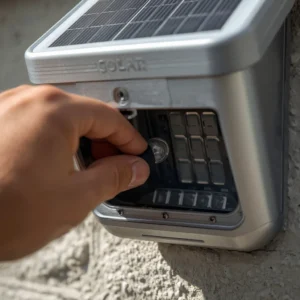
Most integrated solar lights use LEDs rated for 25,000 to 50,000 hours, so bulb failure is rare compared to battery failure. Still, it happens after years of steady outdoor exposure to heat, cold and moisture cycling.
Check the fixture’s model number for a compatible replacement LED before assuming the whole unit needs replacing. Many housings are specifically designed to allow this kind of swap without needing an entirely new fixture.
Best Cold-Weather Solar Lights Under $40
Solar lights rated for cold climates typically use lithium-based batteries rather than standard NiMH, since lithium chemistry holds a charge more reliably once temperatures drop below freezing. Quality options built for this run under $40.
Check the product listing for a stated low-temperature rating rather than assuming any outdoor-rated light performs the same way once winter actually arrives.
2 Fixes for a Solar Light Sensor Stuck On
Covering the sensor fully during daylight is the first fix; forcing it to recognize darkness has ended resets a sensor that’s become confused by a nearby artificial light source. Checking for a physical obstruction, dirt or condensation directly over the sensor lens is the second.
Anything blocking that lens can trick the light into thinking it’s always dark. Both fixes take under a minute and solve the vast majority of stuck-on sensor cases without needing a replacement part.
Solar Lights Stop Working for Fixable Reasons, Not Broken Ones
A dark solar light rarely means the fixture is finished; it means one of five specific, fixable things happened: a battery wore out, a panel got dirty, a sensor got confused, a spot turned out too shaded or rarely, a damaged unit sat somewhere it shouldn’t. Work through the five reasons in this guide in order, starting with the battery, since it’s the single most common cause by a wide margin.
That’s really the whole story behind solar lights stop working complaints: a small system with a small number of failure points, each cheap and quick to fix once you know which one you’re looking at. If this saved you a trip to buy replacement fixtures you didn’t actually need, pass it along to whoever else on your street has been quietly living with a dark front path.
Frequently Asked Questions (FAQs)
Why do solar lights stop working?
Most commonly because the rechargeable battery has worn out, typically after 2 to 3 years of daily use. Dirty panels, shaded placement and confused sensors account for nearly all the remaining cases.
How do you know if it’s the battery or the panel?
Swap in a fresh, known-good battery first, since it’s the cheaper and faster test. If the light still won’t charge or hold power after that, the panel or wiring is the more likely culprit.
Do solar lights work in winter?
Yes, but with reduced output, since shorter days and lower sun angles mean less total charging time. Cold temperatures alone don’t stop them; standard batteries just charge and discharge slightly less efficiently in the cold.
How often should you clean solar light panels?
Every few weeks during pollen season or dry, dusty stretches, and after any heavy rain that leaves visible residue once it dries.
Can you leave solar lights out all winter?
Most are weatherproof enough to stay outside, but battery performance drops in extreme cold. Bringing lights in colder climates indoors during the harshest months can extend battery life significantly.