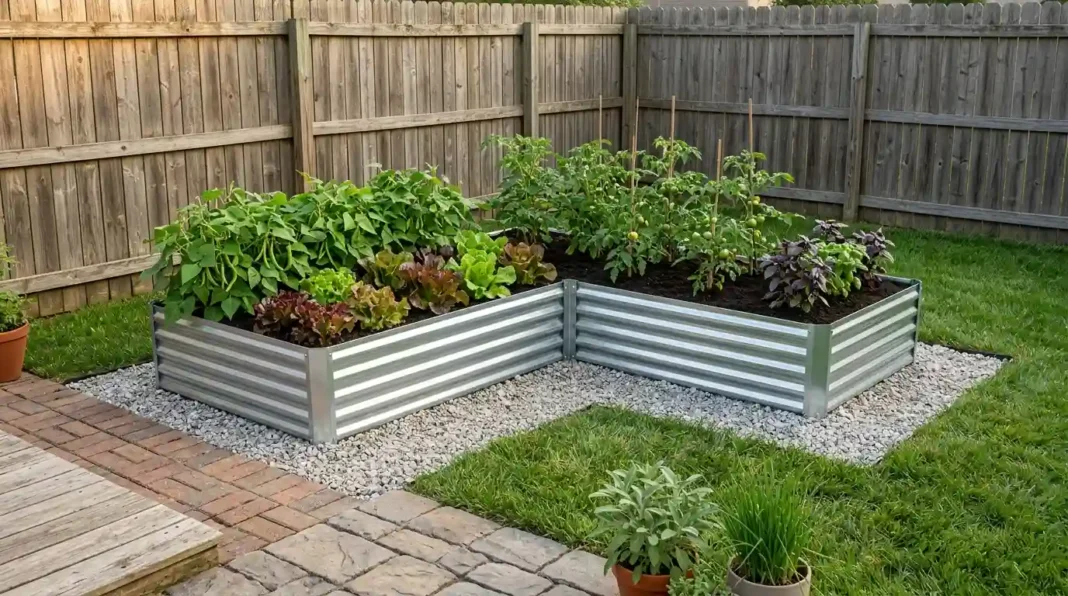

Metal Modular Raised Bed Kits Explained


A metal modular raised bed kit is basically a flat-pack box of steel panels. Bolt a few of the corners together, and you’ve got a garden bed. No cutting, no staining, no sealant every spring. Just steel that bolts into a frame and holds up to whatever the weather throws at it.
Key Takeaways
- Pre-cut steel panels bolt together without power tools.
- Sandy, well-drained soil keeps corrosion under 5 microns a year.
- Modular panels let you extend the bed later without rebuilding it.
- Kits land between $80 and $200 depending on size and gauge.
- A galvanized frame outlasts an untreated wood frame by decades.
This guide covers gauge, finish, soil, assembly and cost, in the order those questions actually come up when you’re standing in front of a listing trying to decide. One small mistake shortens a kit’s life more than anything else, and it shows up near the end of this guide.
Five Metal Modular Raised Bed Kit Guides
No two kits are built alike. Gauge, coating, and the dirt you fill them with all change how long one actually survives. Here’s the order these decisions usually come up in, starting with the one spec most buyers skip right past.
Panel Gauge Decides Everything
Look at the gauge number before anything else on the listing. It’s the one spec that actually predicts durability. Home kits run 18 to 22 gauge steel. Lower numbers mean thicker panels, and thicker panels shrug off dents that would dent cheaper steel.
Some budget kits drop to 24 gauge to hit a lower price. That steel flexes. It can dent in the first season alone. No gauge listed? Assume it’s thin, and ask before you buy.
Bare Metal or Painted?
Bare galvanized steel looks industrial. Gray, matte, a little utilitarian. Some gardeners love that look. Others want color on their patio instead. Either way, the zinc coating does the real work, and bare steel costs less to get it.
A powder-coated finish adds color, nothing more. Scratch through it to bare steel underneath, and that one spot corrodes faster than the rest of the panel. If your bed is going to take hits from a wheelbarrow or a dropped shovel, skip the paint.
What Your Soil Does to the Steel
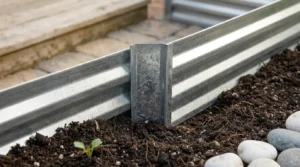
Soil isn’t air. Steel buried in dirt corrodes differently than steel exposed to open sky, and the American Galvanizers Association has the numbers to prove it. Sandy soil with a neutral pH barely touches the coating, under 5 microns a year, which adds up to a service life past 75 years. Dense, waterlogged, acidic soil is a different story entirely. It eats through zinc far faster. The table below shows the soil-specific corrosion numbers from the American Galvanizers Association.
| Number & Insight | Source (Institute) | Expert / Team |
|---|---|---|
| Sandy, well-aerated, neutral-to-slightly-basic soil keeps galvanized steel corrosion under roughly 5 microns per year, while dense, high-moisture, low-pH soil corrodes it fastest. | American Galvanizers Association | AGA Technical Publications |
Here’s the good news. A raised bed kit dodges most of that risk anyway. The panels sit above native soil, not buried in it, filled with compost and garden soil you control yourself. Read more from the American Galvanizers Association’s soil corrosion guidance before setting a kit directly on heavy clay or swampy ground.
Thirty Minutes With a Wrench
Open the box, and you’ll find flat panels, brackets, and a bag of bolts. The instructions sit right on top. A basic rectangular bed goes together in 30 to 60 minutes. A taller, two-course design takes longer, since you’re stacking a second row of panels.
Level the ground first. Skip that step, and the corner brackets take on stress they weren’t built for. A bowed panel or a loose bolt almost always traces back to uneven ground, not a weak frame.
The Real Price Tag
A basic 4-by-2 kit runs $80 to $130. Go bigger or taller, and you’re looking at $180 to $250. Gauge drives most of that gap. Thicker steel costs more to roll and ship, plain and simple.
Buying loose panels and brackets instead of a matched kit can save a few dollars. It also risks parts that don’t quite line up. For a first build, pay for the matched kit and skip the headache.
Forget the Marketing Number

Five microns a year sounds small. Run the math and ideal sandy soil gives you a coating that could last over a century. But soil is never ideal all the time. Rain comes. pH shifts. That’s why the American Galvanizers Association lands on 75-plus years as the number that actually holds up in the real world.
That figure assumes direct soil contact, too. Most raised bed kits are built to avoid exactly that, since the frame sits above ground. A kit filled with your own garden soil usually beats even the generous estimate.
Fixing a Wobble
A loose corner bracket causes nearly every repair call on an older kit. It’s rarely a sign the bed is failing. Tighten the original bolts first. If a bolt hole has worn oval from years of stress, a slightly larger bolt with a washer grabs new threads.
Swap in stainless hardware while you’re at it. It holds up better than the zinc-plated bolts that shipped with the kit, especially in a bed that gets watered daily.
Cheapest Real Option
A 4-by-2 kit in 20 to 22 gauge steel gets you under $100. That buys a single-course bed around 10 to 12 inches deep, nothing taller or fancier at that price.
Want 18-gauge steel instead? Add $30 to $50 to the same footprint. For a first vegetable bed on a tight budget, the lighter gauge still does the job for several good seasons.
Metal Modular Raised Bed Kit Buying Takeaways
What does a metal modular raised bed kit really buy you? Mostly, it’s what you don’t have to do. No cutting. No staining. No yearly resealing that wood demands every spring. Gauge is the spec that matters most long-term, and 18 to 20 gauge beats the thinner 22 to 24 gauge in budget kits every time. Glance at the bracket hardware once in a while. A loose bolt is the usual culprit, not the panels failing. A budget kit under $100 works fine for a first bed.
Go thicker if you plan to keep this one in place for a decade. If you’re weighing this against a full elevated bed on legs instead, our guide on what are elevated raised garden beds breaks down that larger build. If this guide helped you plan your build, let us know in the comments below and share it with friends or family who are setting up their own garden beds this season.
Frequently Asked Questions (FAQs)
What is the best metal modular raised bed kit for vegetables?
Look for 18 to 20 gauge galvanized steel in a 4-foot by 2-foot footprint or larger. That gauge shrugs off years of wet soil pressure without denting or flexing.
How long does a galvanized steel raised bed last?
Figure on 75 years or more, based on American Galvanizers Association research. Soil drainage swings that number either way. Sandy soil stretches it further. Dense, wet soil shortens it.
Do metal raised beds need a liner?
Not usually. The galvanized coating already resists rust and the frame sits above native soil rather than buried in it. A liner comes down to personal taste more than necessity.
Is thicker steel always better for a raised bed kit?
For the long haul, yes. Thicker gauge resists denting and bowing under wet soil. But thin panels still work fine for a few seasons, and they cost less upfront.
Can you make a metal modular raised bed taller later?
Usually, yes. Bolt on another panel course to add depth without rebuilding the frame. Just check the brand still sells matching panels before you count on it.