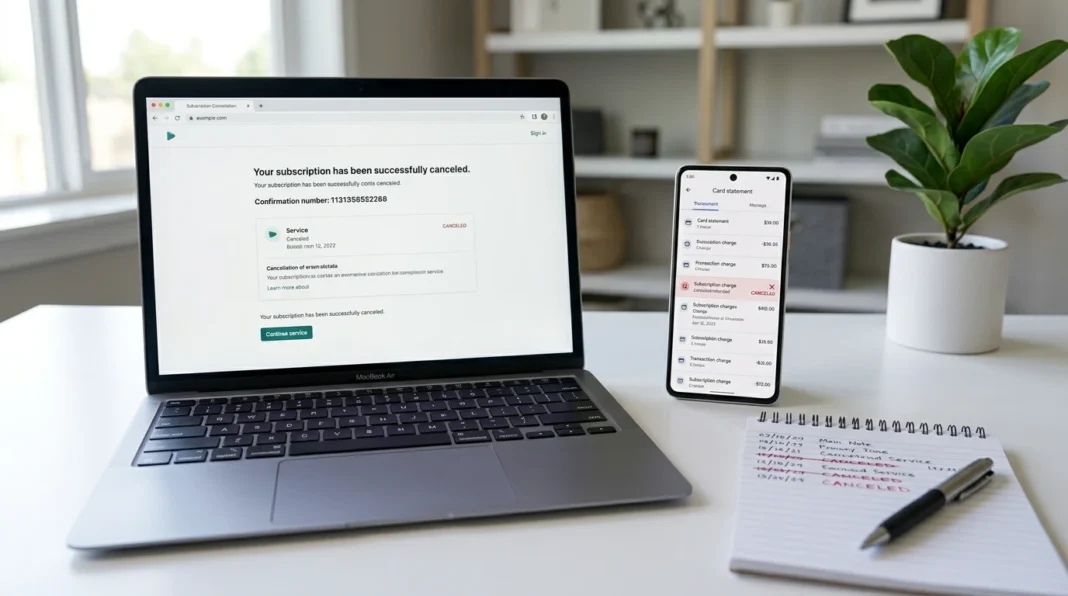

How To Cancel Accidental Subscription Order Before It Bills Again

To cancel accidental subscription order, contact the company right away and follow its cancellation instructions. Keep a copy of your request. Watch your card statements for later charges. The FTC says to file a dispute with your card issuer if charges continue after you cancel. One wrong click should not turn into months of billing. This guide shows three steps that stop the charge and protect your proof. Act today even if the charge looks small.
Key Takeaways:
- Contact the company right away and follow its cancellation instructions.
- Keep a record of your cancellation request and notes on any conversations.
- Watch statements after you cancel and file a dispute with your card issuer if charges continue.
- Free trials usually need a card number and pre-checked boxes may grant permission for ongoing charges.
- A renewal notice is a reminder and not a bill so never use the number or links in a suspicious one.
Subscriptions hide in checkout boxes and free trials. A rushed click is easy to make. Acting fast keeps the damage small. Work through the three steps in order. Take screenshots of the order page and any confirmation email. Keep every message in one folder. Bookmark this guide so the steps are ready the next time a surprise charge appears on your statement. Small recurring charges add up fast over a year.
Three Easy Steps To Stop A Surprise Subscription
These three steps follow the order of a clean cancellation. First you find the cancellation route and act the same day. Next you record the cancellation and watch your statements. Last you close the gaps that let the order happen. Each step is short and each one builds your proof.
Find The Cancellation Route And Act Today
Start with the company. Look up its cancellation instructions and follow them. The FTC says businesses must tell you how to cancel before collecting your card information and must make canceling simple. Check your confirmation email first because it may name the account page or a help contact. Check whether you can skip or change shipments instead of canceling. Do it today and not next week (verified October 2026).
Sign in where you placed the order. Look under account, orders or subscriptions. If you cannot find the cancel option contact customer service in writing. To cancel accidental subscription order fast, say exactly what happened and what you want. Ask for confirmation by email. The FTC says it should be as easy to cancel as it was to sign up. If you cannot cancel a free trial the FTC says to call your card company and ask them to stop payments.
Record The Cancellation And Watch Your Statements

Records protect you if the charges continue. The FTC says to keep a record of your cancellation request. Add notes on any conversations and when and how you canceled. Then watch your bank and card statements for charges after you canceled. Check the next statement closely. If the company keeps charging you can file a dispute with your credit or debit card issuer. This is called a chargeback (verified October 2026).
You can dispute online through your card account or by phone using the number on the back of your card. Then follow up in writing to the address listed for billing disputes or errors. Read the FTC advice on how to stop subscriptions you never ordered for the full steps. Report charges you did not agree to at ReportFraud.ftc.gov. The table below details subscription cancellation guidelines established by FTC specialists.
| Number & Insight | Source | Expert/Team |
|---|---|---|
| Four steps: contact the company, keep records, watch statements and follow up in writing with the card company (published May 19, 2023 and verified October 2026) | FTC, How to stop subscriptions you never ordered | FTC consumer education |
| Keep records of your cancellation request plus notes on any conversations and when and how you canceled | FTC, How to stop subscriptions you never ordered | FTC consumer education |
| If charges continue after canceling file a dispute with your credit or debit card issuer online or by phone using the number on the back of your card | FTC, How to stop subscriptions you never ordered | FTC consumer education |
| You never have to pay for something you did not order and an unordered item that arrives by mail never has to be returned | FTC, How to stop subscriptions you never ordered | FTC consumer education |
Close The Gaps That Let It Happen
Prevent a repeat. The FTC says free trials usually need a credit card number and the company can charge you if you do not cancel before the trial ends. Uncheck pre-checked boxes because they may grant permission for ongoing charges. Read the terms before you click. The FTC says to skip an offer if you cannot find what you are agreeing to or how and when to cancel (verified October 2026).
Mark the cancellation deadline on your calendar the day you sign up. Add every active subscription to your monthly budget so none stays hidden. Pay attention to renewal notices. The FTC says a renewal notice is a reminder and not a bill. Search the company name with the word complaint or scam before you give your card. Use a card you can dispute. These habits keep you from having to cancel accidental subscription order again.
Is A Free Trial Really Free? (3 Checks)
Not always. The FTC says free trials usually need a credit card number. The company can charge you if you do not cancel before the trial ends. That is the first check. The second is extra charges. The FTC says charges for shipping or fees mean the offer is not fully free. The third is the terms. Look for what you agree to and the trial length and how and when to cancel. Skip the offer if you cannot find them.
A 2018 FTC alert gives an example of how it goes wrong. The FTC alleged that one company advertised risk free trials for only shipping and handling. Customers were charged up to $98.71 for the first shipment plus the same amount for each monthly shipment after that. Some were enrolled without knowing it after they clicked complete checkout. These are FTC allegations. Read the checkout page to the end. Check for extra boxes before you click.
Do You Have To Pay For A Subscription You Never Ordered? (2026 Check)
No. The FTC says you never have to pay for something you did not order. If an unordered item arrives by mail you never have to return it. I read that rule as covering products you never ordered and not a click you made by mistake. An accidental click still created an order in the company’s records. So contact the company and ask to cancel. Explain what happened and keep the reply.
If the charge appeared without your consent the steps are the same. The FTC says to contact the company and keep records of what you do. Watch your statements. If the company keeps charging file a dispute with your card issuer. Follow up in writing. Report charges you did not agree to at ReportFraud.ftc.gov and to your state attorney general. Save every email and screenshot in one folder.
Can A Renewal Notice Be A Scam? (3 Warning Signs)
Yes. The FTC says fake renewal notices are common. A real renewal notice is a reminder of when your subscription expires and that you will be charged automatically. If you already agreed to auto-renew it is not a bill and it should not ask for card details. That is the first warning sign. The second is a push to call a number on the notice. The third is a link you are told to click.
Do not use the number or the links. Search the company name with the word scam or complaint. Then contact the company using a number you already know is correct. Check that the renewal price matches what you expected because promotional rates may end. If it does not match or the amount is not stated contact the company promptly. Ask for a lower rate or to cancel. Keep a record of the call.
Conclusion
To cancel accidental subscription order, act the same day. Contact the company and follow its instructions. Keep a record of your request. Watch your statements and dispute any charge that continues. Close the gaps with calendar reminders and a careful look at checkout boxes. These steps take minutes and stop small charges from growing. A fast reply costs nothing and protects your money. Do not wait for the next bill to see if the charge goes away.
Subscriptions are easy to forget and easy to hide. They deserve a line in your plan. Read how to manage household shopping budget so every recurring charge has a place before it bills. Share this guide with a friend who clicked the wrong button. Then tell us how you stopped the charge. Your answer may help another shopper act faster. Keep your records until the account is closed for good.
Frequently Asked Questions (FAQs)
How to cancel accidental subscription order?
Cancel accidental subscription order by contacting the company right away and following its cancellation instructions. Keep a copy of your request and notes on any conversations. Watch your statements and dispute any charge that continues.
Can you get a refund for an accidental subscription?
The FTC says to review refund and return policies and any cancellation fees. It does not promise a refund. Ask the company in writing. If you are charged after canceling or without consent dispute the charge with your card issuer.
How do you stop automatic charges on your card?
Cancel with the company first. The FTC says that if you cannot cancel a free trial you should call your card company and ask them to stop payments. Keep records of every request you make.
What is a chargeback?
A chargeback is a dispute filed with your credit or debit card issuer. The FTC says you can file it online through your card account or by phone using the number on the back of your card. Follow up in writing.
Where do you report subscription problems?
Report cancellation problems or charges you did not agree to at ReportFraud.ftc.gov. You can also report them to your state attorney general. Include screenshots and your cancellation records.