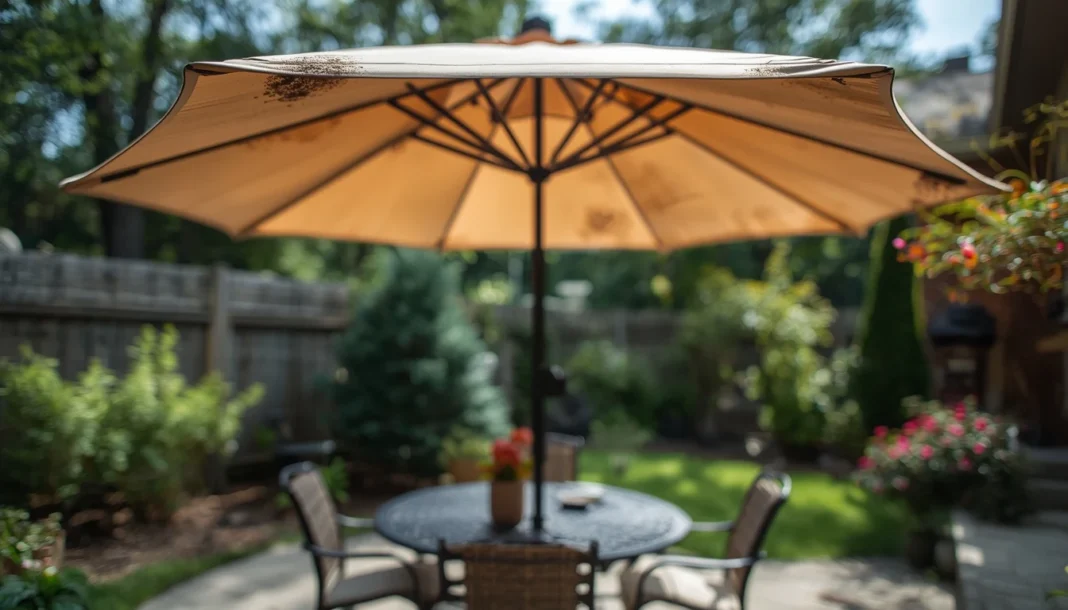

Treating Moldy Outdoor Umbrella Fabric for Good

A patio umbrella spends most of its life folded shut and that single habit is exactly what turns it into a mold magnet. Every outdoor fabric surface eventually deals with moisture but a canopy that gets rolled up tight after every use has almost no chance to fully dry between closures, which is a very different situation from a cushion or rug that stays exposed to open air. Moldy outdoor umbrella fabric usually shows up as small dark flecks along the seams first, easy to miss until an entire panel is speckled by the time you unfold it for the season.
The fabric itself is rarely the problem. It is what happens to that fabric between uses, closed up damp with almost no airflow, that gives mold everything it needs to spread. The fix does not require replacing the canopy or calling in a professional cleaner and it takes less time than most people expect once you know the right order of steps. Keep reading for the exact cleaning method, plus how to stop it from coming back once your umbrella is clean again.
Why Mold Takes Over Outdoor Umbrella Fabric
An umbrella that gets folded away wet, even from morning dew rather than rain, creates the kind of trapped moisture mold thrives on. According to EPA guidance on mold prevention, materials that stay damp for more than 24 to 48 hours are at real risk of developing mold growth and a canopy folded shut while still wet can easily stay in that damp state for days. The table below details the official drying window established by EPA mold prevention specialists.
| Number & Insight | Source (Institute) | Expert / Team |
|---|---|---|
| Items and materials that are dried within 24 to 48 hours of getting wet generally will not develop mold, which is why prompt drying matters more than any cleaning product. | U.S. Environmental Protection Agency | EPA Mold Prevention Program |
That short window is also why the same umbrella can look fine one season and speckled the next. A single storm followed by a quick fold-up, without a full day to air dry first, is often all it takes to start a colony that will not show up as visible spots for another week or two.
What You’ll Need Before You Start
Most of what clears moldy outdoor umbrella fabric is probably already in your kitchen or laundry room. Oxygen bleach powder, a soft-bristle brush, a bucket and a garden hose handle the vast majority of cases without needing anything specialized. A spray bottle helps too, for working solution into fabric folds and stitching where a sponge cannot easily reach.
Skip chlorine bleach if the fabric is a printed or dyed pattern rather than solid white, since it tends to strip color unevenly and can leave the treated spots visibly lighter than the surrounding fabric. Oxygen bleach lifts mold and mildew stains just as effectively without that risk, which is why it is the safer default for most umbrella fabrics, especially the striped and patterned canopies most patio sets actually use.
Removing Mold From Umbrella Fabric: Step by Step
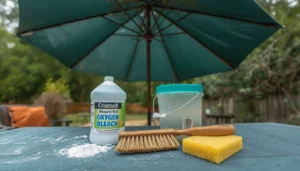
Once the fabric is prepped and the right materials are on hand, the actual cleaning moves fast. The four steps below take about an hour from start to finish, most of it spent waiting for the solution to sit rather than active scrubbing. Follow them in order, since skipping ahead, especially rinsing before the solution has had time to work, is the most common reason a first attempt falls short.
Brush Off Loose Mold Spores
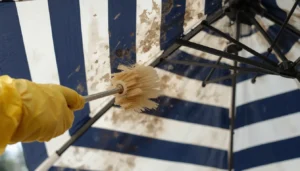
Start by brushing off any loose, dry mold spores with a soft brush before introducing water, since wetting the fabric first can smear spores deeper into the weave instead of lifting them out. Work in short, light strokes across the affected area rather than pressing hard, which keeps spores from grinding further into the fabric fibers.
Apply an Oxygen Bleach Solution
Mix warm water with oxygen bleach powder according to the product’s label ratio, then apply the solution directly to the moldy outdoor umbrella fabric with a sponge or soft brush, working it into the weave rather than just wiping the surface. Cover every visible spot generously, since a thin, uneven application leaves patches of mold untouched and likely to spread again within days.
Let It Sit and Scrub Gently
Let the solution sit for fifteen to twenty minutes so it has time to break down the mold’s grip on the fibers, then scrub gently in small circles along any remaining dark spots. Avoid scrubbing hard enough to damage the fabric’s weather-resistant coating, since that coating is what keeps the canopy waterproof in the first place.
Rinse Thoroughly and Dry in the Sun
Rinse thoroughly with a hose until no soap residue remains, since leftover residue can attract dirt and make the fabric look dingy even after the mold is gone. Let the umbrella dry fully in the open position under direct sun if possible, since UV exposure helps kill any spores the cleaning solution missed.
Treating Stubborn Black or Green Mold Stains
Fabric that has gone untreated for a full season sometimes holds onto ghost stains even after the mold itself is dead, especially in the case of black mold varieties that dye the fibers rather than just sitting on top of them. A second treatment with a slightly stronger oxygen bleach mix, left to sit closer to thirty minutes, usually lifts what a first pass leaves behind.
For canopies where the discoloration still will not budge, a fabric-safe mildew stain remover made specifically for outdoor textiles is worth trying before writing off the umbrella entirely. These products are formulated to break down the stain pigment itself rather than just cleaning the surface, which is the difference between a fabric that looks clean and one that looks genuinely restored.
Keeping Mold From Coming Back
The single best habit for prevention is drying the canopy fully before closing it, even if that means leaving it open an extra hour after a storm passes. A few seconds of shaking off excess water and a short air-dry window prevents most of the moisture buildup that leads to mold in the first place.
If the rest of your patio furniture is showing its own wear this season, from faded plastic to rusted frames, the same seasonal maintenance mindset applies across the board. Our guide on how to fix faded plastic patio furniture covers five more common patio problems worth tackling at the same time.
How Much Does It Cost to Replace Moldy Umbrella Fabric (Up to $150)
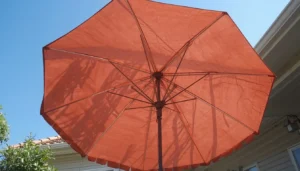
Replacing a full umbrella canopy typically costs between $40 and $150 depending on size and fabric quality and it is worth budgeting toward the higher end since designer or oversized canopies run well past that starting range. For most standard market or patio umbrellas, a full cleaning solves the problem for a fraction of that cost, since materials for an oxygen bleach treatment typically run under $15.
Replacement only makes sense once the fabric itself has degraded past cleaning, meaning the weave has thinned, torn or lost its water-resistant coating entirely rather than just staining. A canopy that is simply moldy, even heavily so, is almost always salvageable with the cleaning method above, which makes replacement the more expensive option in the vast majority of cases homeowners search for.
How Many Times a Year You Should Clean Umbrella Fabric (2 Times)
Cleaning umbrella fabric twice a year, once at the start of the season and once before storing it for winter, catches most mold problems before they take hold. A spring cleaning removes whatever built up during storage, while a fall cleaning ensures the fabric goes into storage completely dry and mold-free.
Umbrellas used constantly through a humid summer or ones stored in a garage or shed with limited airflow, often benefit from a quick mid-season check as a third pass. A five-minute visual inspection catches early spotting long before it becomes the kind of deep staining that needs a full treatment.
How Long to Air Dry an Umbrella Before Storing It (24 to 48 Hours)
Umbrella fabric should air dry for at least 24 to 48 hours in open, ventilated conditions before being folded away for storage, matching the same drying window EPA guidance identifies as the threshold for preventing mold growth on damp materials. Rushing this step by folding the canopy away even slightly damp undoes most of the benefit of cleaning it in the first place.
On humid or overcast days, that drying window can stretch longer, so it is worth checking the fabric by hand rather than assuming a fixed number of hours is always enough. If the fabric still feels cool or slightly damp to the touch, it needs more time in the open air before it goes back into storage.
Conclusion
Moldy outdoor umbrella fabric almost never means the umbrella itself is done; it usually just means the fabric needs the kind of cleaning a quick wipe-down cannot provide. A proper oxygen bleach treatment, given time to sit and rinsed fully, clears the vast majority of cases in under an hour and even stubborn black or green staining from a full season of neglect usually responds to a second, stronger pass instead of requiring a full canopy replacement.
Pair that cleaning with better drying habits going forward and the same umbrella can easily go mold-free for several seasons instead of one. The core habit is simple: never fold the canopy away while still damp, even if that means propping it open for one extra hour after a storm passes through. Give the fabric a full, careful inspection before you fold it away tonight, since catching a small spot early beats scrubbing a full panel later in the season. If this method worked for your umbrella, tell us in the comments or share this guide with a friend whose patio set could use the same fix.
Frequently Asked Questions (FAQs)
How do you clean moldy outdoor umbrella fabric?
You clean moldy outdoor umbrella fabric by brushing off loose spores, applying an oxygen bleach and warm water solution with a soft brush, letting it sit for fifteen to twenty minutes, scrubbing gently, then rinsing thoroughly and air-drying the canopy fully open in direct sun.
Can I use bleach on my outdoor umbrella fabric?
Chlorine bleach can be used on solid white umbrella fabric but tends to fade printed or dyed patterns unevenly, so oxygen bleach is the safer choice for most umbrellas since it removes mold and mildew without stripping color.
Why does my umbrella keep getting moldy every year?
Moldy outdoor umbrella fabric tends to repeat every year most often because it gets folded away while still damp and even a small amount of trapped moisture in a closed canopy gives mold the conditions it needs to return season after season.
Does vinegar kill mold on outdoor fabric?
White vinegar can kill many common surface molds on outdoor fabric and works as a milder alternative to oxygen bleach, though it is generally less effective on set-in stains and deeper mildew than a proper oxygen bleach treatment.
How long does it take to clean mold off an umbrella?
Cleaning mold off an umbrella typically takes about an hour total, including quality scrubbing time and the fifteen to twenty minute soak, though full drying afterward can take several additional hours depending on sun exposure and humidity.