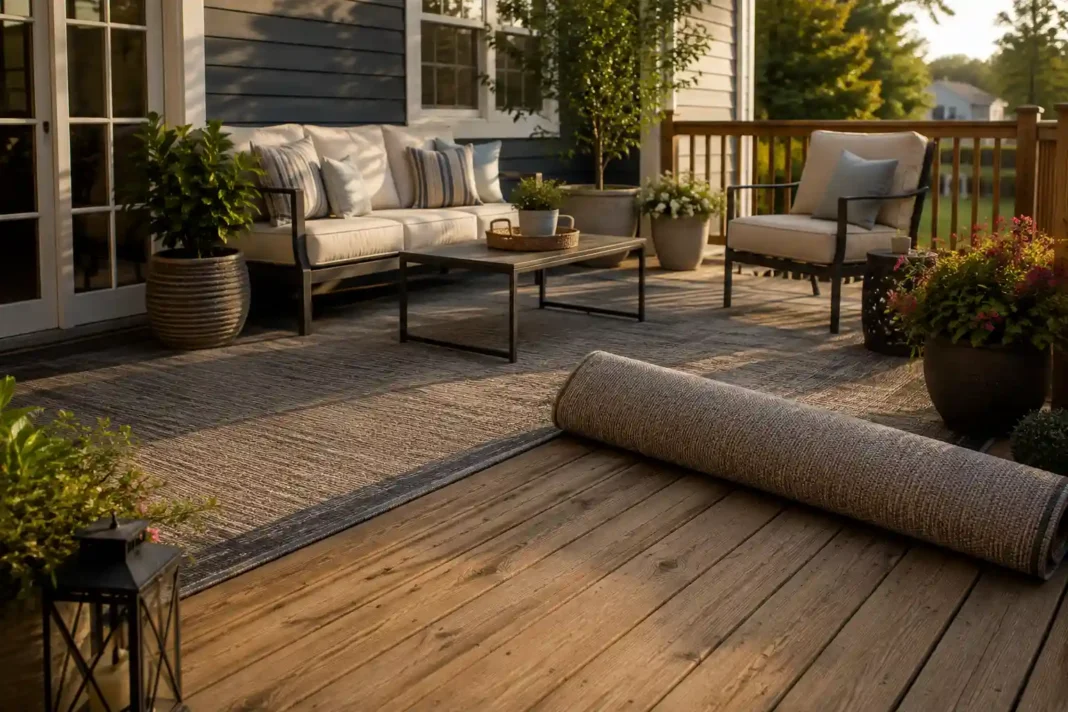

Outdoor Carpet Wooden Deck: What’s Actually Happening Underneath
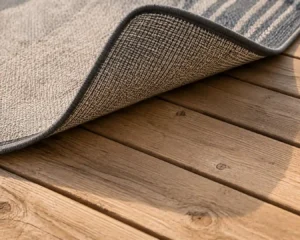

Outdoor carpet feels like the easiest way to cover a wooden deck without spending on a full rug, but that convenience comes with a real trade-off most people don’t discover until the boards underneath start to change color. An outdoor carpet wooden deck combination can look completely fine on top while damage quietly builds underneath for weeks.
The good news is this isn’t guesswork. Backing material and airflow decide almost everything, and once you understand the difference, you can use outdoor carpet on a wood deck without ever risking rot in the first place. This guide breaks down exactly how it happens, what to watch for, and what actually prevents it.
How Outdoor Carpet Backing Affects Wood Moisture
Not all outdoor carpet is built the same underneath and the backing is what actually determines whether an outdoor carpet wooden deck setup stays safe. Solid rubber and vinyl backings create a sealed layer against the wood, trapping any moisture that gets underneath and leaving it nowhere to go. Open-weave and perforated backings do the opposite, letting air move freely so both the carpet and the boards dry out at close to the same rate.
The Carpet and Rug Institute’s installation standards recommend unrolling carpet in a well-ventilated area for at least 24 hours before securing it down, specifically so trapped manufacturing moisture has a chance to escape before it ever touches your deck. It’s a simple habit worth borrowing even for a DIY deck installation.
| Number & Insight | Source (Institute) | Expert / Team |
|---|---|---|
| CRI installation standards call for unrolling carpet in a ventilated area for at least 24 hours before securing it. | Carpet and Rug Institute, CRI 104/105 Installation Standards | CRI Installation Standards Committee |
| Industry moisture testing (the calcium chloride test) measures vapor emissions from a surface before professional carpet installation. | Carpet and Rug Institute Technical Bulletins | CRI Test Standards Committee |
3 Signs Your Outdoor Carpet Is Already Causing Rot
The damage on an outdoor carpet wooden deck setup usually shows up in this order: three signs, each one worse than the last if it’s missed.
A Spongy Feeling Underfoot
Right near the carpet’s edge, this is almost always the earliest sign, and the easiest one to catch before anything else changes. It’s subtle enough that most people walk right over it for weeks before they actually notice, since the give underfoot is small and easy to write off as an uneven board or a normal part of the deck’s texture.
The best way to catch it deliberately is to walk the full perimeter of the carpeted area barefoot every couple of weeks, paying attention to any spot that feels different from the rest. If you find one, lift the carpet at that exact spot rather than guessing, since the softness is usually concentrated in a small area before it spreads any further.
A Darker, Discolored Patch of Wood
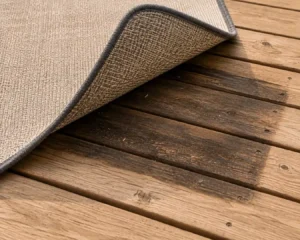
Visible once you lift the carpet to check, this means moisture has already been sitting against the boards for a while, longer than the spongy stage alone would suggest. The discoloration usually shows up as a patch noticeably darker than the surrounding wood, sometimes with a slightly greenish or grayish tint depending on how long it’s been trapped.
Press a thumbnail into the discolored spot; if it leaves a mark or feels soft, that section has already started to decay. At this stage, drying the area out is still usually enough to stop things from getting worse, but it’s worth checking the same spot again a week later to confirm the discoloration hasn’t spread any further.
A Faint Musty Smell With No Visible Source
Coming from underneath even when the surface carpet looks completely dry, this is the sign most people miss, since it doesn’t seem connected to anything they can actually see. By the time the smell is noticeable, the first two signs have usually already been present for a while, which makes this the latest warning of the three rather than the first.
If you notice this smell, treat it as confirmation rather than a first alert; lift the carpet fully in that area and check for both softness and discoloration at the same time. This is also the point where it’s worth checking a wider area than just the spot the smell seems strongest, since moisture tends to spread sideways under carpet before it becomes obvious on the surface.
How to Use Outdoor Carpet Safely on a Wood Deck
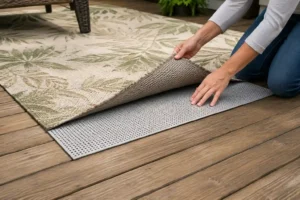
None of this means outdoor carpet is off the table for an outdoor carpet wooden deck setup; the backing just needs attention first. Look for carpet labeled breathable, perforated or open-weave, since that detail matters more than thickness, color or price. Already have solid-backed carpet down? A thin breathable pad underneath solves most of the problem for a fraction of the cost of new carpet.
Lift a corner every couple of weeks, more often during humid stretches, and let the boards air out fully before putting it back down. This one habit prevents most of the damage covered above.
2 Outdoor Carpet Backings Compared: Breathable vs Rubber-Backed
This keyword is a Guide-format search, not budget. Real pricing data shows breathable and rubber-backed carpet actually overlap in cost, roughly $0.50 to $3.50 per square foot for breathable versus $0.70 to $3.00 for rubber-backed, so price isn’t a reliable way to choose between them. The backing label is what actually matters, not which one costs less.
Read the product description for “breathable,” “drainage” or “open weave” rather than assuming a higher price means better moisture protection. A cheaper breathable-backed roll will protect your deck better than an expensive rubber-backed one every time.
3 Signs of Hidden Deck Rot Under Carpet
This keyword is a Number-format search, since the searcher wants a short, checkable list. The three earliest signs are a spongy feeling underfoot, a musty smell with no visible source, and discoloration visible once you lift the carpet.
None of these require special tools, just a habit of lifting a corner to look. Catching any one of them early keeps the fix simple instead of a board replacement.
1 Quick Guide to Test If Your Deck Is Already Damp
This keyword is a Guide-format search, since the searcher wants a process to follow, not a cost comparison or a list. Pressing a thumbnail into a discolored spot is the simplest test; sound wood resists the pressure while decayed wood gives or leaves a mark. Our full breakdown of keeping an outdoor rug safe on a wooden deck covers a second, more detailed moisture-check method that works for rugs and carpet alike.
A moisture meter, cheap at most hardware stores, is the more precise option. Anything reading above roughly 20 percent is worth drying out and monitoring closely.
Conclusion
Outdoor carpet and a wood deck can absolutely work together without any rot risk, as long as the backing lets moisture escape instead of trapping it against the boards. Choose a breathable or open-weave backing when you buy, add a pad if you’re keeping carpet you already own, and build a simple lift-and-check habit into your regular deck routine every couple of weeks throughout the year.
None of this requires ripping out carpet that is currently working fine, just a small routine change and a closer look at what’s already sitting down there. An outdoor carpet wooden deck combination done right adds real value to your space instead of quietly working against it.
Frequently Asked Questions (FAQs)
Does outdoor carpet rot wooden deck boards?
It can, but only when the backing traps moisture against the wood for extended periods. An outdoor carpet wooden deck setup with loose-weave, breathable backing lets air move through and dries fast, while solid rubber or vinyl backing seals water against the boards and speeds up rot within a few humid weeks.
Can you put outdoor carpet directly on wood decking?
Yes, as long as you choose a breathable backing or add a rug pad underneath solid-backed carpet. Direct contact isn’t the issue; trapped moisture from a sealed backing is.
How often should you check under outdoor carpet on a deck?
Lift a corner every two weeks during humid or rainy months, and once a month during drier stretches, so the boards get a real chance to air out.
Does outdoor carpet need a rug pad on a wood deck?
It depends on the backing. Breathable, open-weave carpet usually doesn’t need one, but solid rubber or vinyl-backed carpet benefits significantly from a thin breathable pad underneath.
Will outdoor carpet stain a wood deck?
Yes, carpet left damp against unsealed or lightly finished wood for more than a day or two can leave a visible dark stain, so drying it promptly matters more than most people expect.