Can Quick Dry Cement Pots Stay Light? 3 Genius Ways To Do It

Quick dry cement pots can stay light if you build them from perlite and coir and not from sand. The mix matters more than the cement. Oregon State University Extension builds its lightweight planter from three simple parts and says to stop adding water when the mix holds together like cookie dough. The three ways below cover the mix, the walls and the handling. Each one keeps the pot easy to carry.
Key Takeaways:
- Perlite and coir make a lighter pot than sand. The price is a shorter life, about 10 years versus about 20.
- Add water slowly. Stop when the mix is stiff and holds together like cookie dough or cottage cheese.
- Build walls at least 3 inches thick and press two drainage holes into the base.
- Leave the pot outdoors for 3 to 5 days. Wait about one week after making it before you plant.
- The source uses regular Portland cement. Check your quick-dry bag before you copy the recipe.
One warning comes first. The Oregon State recipe is written for regular Portland cement and its page never mentions rapid-set. A bag marked quick dry sets on its own schedule, so read the label and mix a small test cup before you commit a whole bucket. Wear gloves while you mix, as the page advises. A light pot is also a fragile one, so plan to handle it gently.
Three Ways To Keep A Cement Pot Light Enough To Carry
The mix comes first because water and filler set the character of the pot. The walls sit in the middle because they decide how strong the pot is. Handling comes last because a light pot breaks easier than a heavy one. One table from a university source sits in the middle way. The wider craft set is in the full guide to clear resin yellow flowers and three related craft fixes.
Mix By Volume And Stop Adding Water At Cookie Dough
Quick dry cement pots start in a bucket and not on a scale. Oregon State measures its mix by volume. Put the dry parts in a tray and stir them together first. Then add water a little at a time and mix by hand. The page says to stop when the mix is stiff and holds together. Think cookie dough or cottage cheese. A soupy mix has gone too far.
Use one bucket for every part so the ratio stays the same. Squeeze a handful. It should hold its shape. If it crumbles, add a splash of water and mix again. If it slumps, you have added too much. When your bag says quick dry and not Portland, mix one small cup first and watch how fast it stiffens. Then you know how much time you really have.
Build Walls At Least 3 Inches Thick And Cure The Pot Outdoors

The walls are where most people want to cheat. A thin wall looks like a lighter pot. Oregon State asks for the opposite. Pack the base two to three inches thick and build the walls at least three inches thick. Press two drainage holes into the base. If you want less weight, make the pot smaller. Do not make the walls thinner.
Oregon State University Extension’s hypertufa guide also gives the cure. Leave the molded pot outdoors for three to five days to firm up and then remove the form and plastic. Wait about one week from making it before you plant. Line the form with plastic first so the pot lets go cleanly. The page covers a Portland mix, so a quick-dry bag may set sooner. The table below details lightweight cement pot guidelines established by Oregon State University Extension specialists.
| Number & Insight | Source | Expert/Team |
|---|---|---|
| Base 2 to 3 inches thick and walls at least 3 inches thick | Oregon State University Extension, “Craft stone-look planters with hypertufa” (checked October 2026) | Linda R. McMahan, OSU Extension |
| 2 drainage holes pressed into the base | Oregon State University Extension, “Craft stone-look planters with hypertufa” (checked October 2026) | Linda R. McMahan, OSU Extension |
| 3 to 5 days outdoors to firm up before the form and plastic come off | Oregon State University Extension, “Craft stone-look planters with hypertufa” (checked October 2026) | Linda R. McMahan, OSU Extension |
| About 1 week after making the pot before you plant in it | Oregon State University Extension, “Craft stone-look planters with hypertufa” (checked October 2026) | Linda R. McMahan, OSU Extension |
Choose Perlite For Weight And Handle The Pot Gently
A lighter mix is a weaker mix. Oregon State says a mix made with sand can last about 20 years. Lightweight perlite mixes are less durable but often last around 10 years if handled gently. That is the honest price of a pot you can lift with one hand. Pick perlite for quick dry cement pots on patios and shelves. Pick sand only if the pot will stay in one place and longevity matters more than weight.
Carry the pot with two hands from underneath. The page warns that hypertufa can crack or break with rough use. It also says roots can work into crevices over time and speed breakdown. Rinse your tools and the tray with a hose right after mixing. Do not drag the pot across the patio. Wear gloves the whole time. Oregon State says these pots suit rock gardens and succulents and alpine plants.
3 Mistakes To Avoid When Making Lightweight Cement Pots
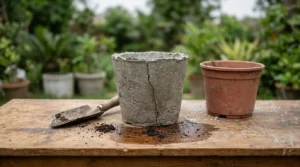
Mistake one is pouring in too much water. A mix that slumps is past the cookie dough stage that Oregon State describes. Add water a little at a time instead. Mistake two is thinning the walls to save weight. The page asks for at least three inches. Build a smaller pot and keep the walls thick. A thin wall is the quickest way to a crack. A cracked pot cannot hold soil.
Mistake three is planting too soon. Oregon State says to leave the pot outdoors for three to five days and then wait about one week after making it before you plant. Give the pot its days first. Waiting costs nothing and a rushed pot can crack. Do not copy the Portland recipe blindly onto a quick dry bag. Read the label and test a cup.
5 Best Checks Before You Plant In A Cement Pot
Check one is the calendar. Three to five days outdoors should be done before the form comes off. Check two is the form. The plastic and the box should be off and the pot should stand on its own. Check three is the week. Oregon State says to wait about one week after making the pot before planting. Do not rush it.
Check four is the drainage. Look at both holes in the base and clear them. Check five is a gentle lift. Carry the pot with two hands from underneath and look for cracks. The page warns that hypertufa can crack or break with rough use. A pot that fails the lift test is easier to patch now than after it holds wet soil.
3 Proven Ways To Smooth A Rough Cement Pot
Way one is a metal tool. Oregon State says to smooth, carve or shape the surface with a trowel, wire brush or another metal tool. Work while the pot is still firm and not fully set. Take light passes. Way two is a thin coat. For a smoother outside, the page says to lightly moisten the surface and rub on a thin coat of dry Portland cement.
Way three is to leave it rough. A rough pot is still a good pot. A rough face suits the stone look that hypertufa is known for. It also hides small flaws. Oregon State suggests these pots for rock gardens and succulents and alpine plants where a weathered surface fits. Pick the finish that matches the plant. Then let the pot rest before it carries any soil.
A Light Cement Pot Starts With A Stiff Mix
Quick dry cement pots stay light when the mix is stiff and the filler is perlite and coir. Walls at least three inches thick and a few days of outdoor curing time keep the pot from cracking. Gentle hands do the rest. Check your quick-dry bag against the Oregon State recipe before you mix a big batch and test a small cup first.
A light pot trades years for weight. Oregon State puts a perlite mix at around ten years if handled gently and a sand mix at about twenty. Pick the trade that fits where the pot will live. Pots that move around should be light. Pots that stay put can be heavy. Did this help you plan a lighter pot? Tell us in the comments and share it with a friend or family member who loves garden crafts.
Frequently Asked Questions (FAQs)
Can quick dry cement pots stay light?
Yes. Quick dry cement pots can stay light if you build them with perlite and coir and not with sand. Oregon State University Extension gives a lightweight mix of 3 parts coir, 2 parts Portland cement and 3 parts perlite. The trade-off is a shorter life. Its page puts perlite mixes at around 10 years if handled gently.
Why are my cement pots so heavy?
A sand mix is the usual reason because sand is a heavy filler. Perlite and coir make a lighter pot. Thick walls add weight too, but Oregon State asks for walls at least three inches thick. Make the pot smaller instead of thinning the walls. Also stop adding water once the mix holds together like cookie dough.
How long should a cement pot cure before planting?
Oregon State says to leave the pot outdoors for three to five days to firm up and then remove the form and plastic. Wait about one week from making the pot before you plant. That timing is for the Portland mix on its page. If you use a quick-dry bag, read the label and test a small cup first.
How long do lightweight cement pots last?
Oregon State says a mix made with sand can last about 20 years. Lightweight perlite mixes are less durable but often last around 10 years if handled gently. Rough handling can crack them. Roots can work into crevices over time and speed breakdown. Carry the pot with two hands from underneath.
Can you use rapid-set cement for planters?
The Oregon State page does not mention rapid-set cement, so it gives no mix for it. Its recipe uses regular Portland cement. If your bag says quick-dry or rapid-set, follow the label and mix one small test cup first. Watch how fast it stiffens before you fill a form. Wear gloves while you mix.