
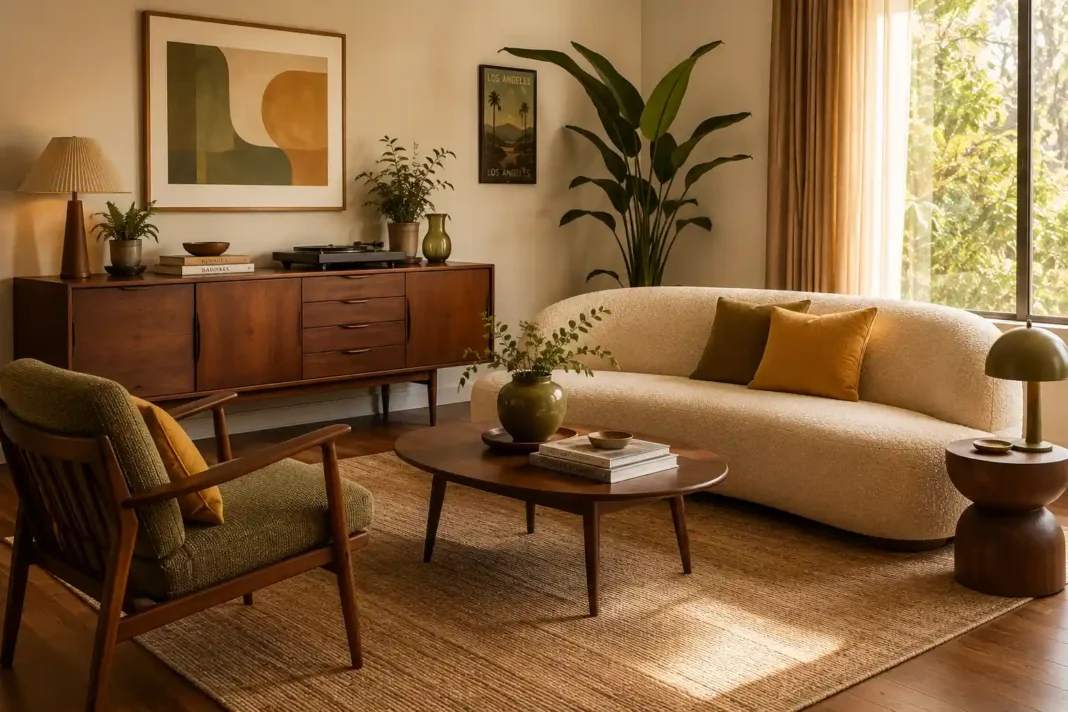
Midcentury Living Room Ideas That Feel Real, Not Rented
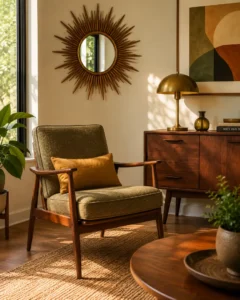
A great midcentury living room doesn’t look like a furniture showroom frozen in 1962; it looks like someone actually lives there. These midcentury living room ideas focus on the specific shapes, wood tones and accent colors that define the era without tipping into costume territory.
You don’t need an estate full of authentic vintage pieces to get this right in your own space. We’ll walk through exactly which details carry the look and where reproductions start to feel cheap instead of charming. By the end, you’ll know exactly where to start.
The Midcentury Balance Beyond the Vintage Showroom Look
Real midcentury living room ideas lean on shape, wood tone and restraint, not on stuffing a room with reproduction pieces. Here’s where you should actually put your money and attention first, before you worry about anything smaller.
Furniture Silhouettes That Actually Define the Era
The fastest way to nail these midcentury living room ideas has nothing to do with color and everything to do with shape. Look for tapered wood legs, low profiles and gently curved backs on your sofa and chairs. Those silhouette details read as authentically midcentury faster than any accent piece ever could. Even a seat height a few inches lower than a standard modern sofa makes a noticeable difference in how the whole room reads.
A boxy, straight-armed sofa immediately breaks the illusion no matter what color or fabric you choose. If you only replace one piece of furniture in your room, make it the sofa or the main seating, since that’s the piece your eye lands on first. Secondhand marketplaces often have solid midcentury frames that just need reupholstering, which costs far less than buying new.
A Wood Tone That Anchors Without Feeling Dated
Warm walnut and teak tones are the backbone of these midcentury living room ideas. Getting the tone right matters more than the specific piece you choose. Skip anything with an orange-ish 1990s oak finish, since that reads as a completely different decade. A quick test: hold a fabric swatch or paint chip up against the wood in daylight to see if the undertones actually complement each other.
One genuine or genuine-looking walnut piece, a credenza, a coffee table or a media console, sets the tone for every other wood element in your entire room. Real Homes’ roundup of midcentury living room ideas makes a similar point about anchoring a room around a few real, period-appropriate pieces rather than scattering reproductions everywhere. Once you’ve picked that anchor piece, try to match any additional wood tones in your room to it as closely as you reasonably can. The table below details official midcentury modern living room design principles established by Real Homes interior styling specialists.
| Insight | Source (Institute) | Expert / Team |
| Balancing clean-lined midcentury iconic furniture with contemporary art, modern textures, and subtle neutral backgrounds prevents spaces from feeling like a dated period display. | Real Homes Design Guide | Real Homes Decor & Styling Team |
| Maximizing low-profile furniture silhouettes, exposed tapered wooden legs, and tailored scaled seating creates an open, spacious feel in compact living spaces. | Real Homes Living Room Ideas | Real Homes Editorial Specialists |
Color Accents That Read as Retro, Not Costume
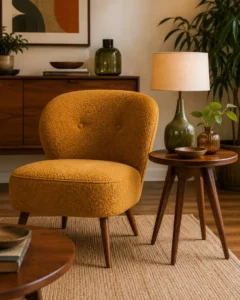
These midcentury living room ideas call for confident color. Keep it limited to small, controlled doses, though. Mustard, burnt orange, olive and teal work well as accent colors on one or two pieces, not across your entire room. Pick one dominant accent color for your space and let the others play a supporting role instead of competing for attention.
Let your walls and large furniture stay neutral and use color in pillows, one accent chair or a piece of art instead. That restraint is what separates a tasteful midcentury room from a themed one. Test any accent color on a small swatch or cushion cover before committing to it on a larger piece of furniture.
Organic Shapes That Soften a Room Full of Straight Lines
Midcentury design leans heavily on geometric shapes, so these midcentury living room ideas need at least one organic, curved element to keep your room from feeling rigid. A boucle accent chair, a curved mirror or an organic-shaped coffee table works well. Even a single curved lamp base can soften an otherwise very angular seating arrangement.
That contrast between angular furniture and one soft, rounded piece is what makes your room feel curated instead of assembled from a catalog page. Don’t skip this step even if the rest of your furniture is already period-accurate. A room with zero curves almost always reads as slightly cold no matter how correct every other detail is.
One Vintage Find Worth Splurging On
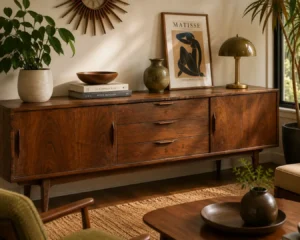
If you only buy one genuinely vintage piece for these midcentury living room ideas, make it a piece with real age and wear: a credenza, a lamp or a side table. That one authentic item does more for your room’s credibility than five new reproductions combined. Look closely at the joinery and hardware details up close, since those are often the hardest parts for reproductions to get right.
Estate sales, vintage dealers and online marketplaces are worth checking before you buy a big-box reproduction. It’s the same one-authentic-piece principle covered in our industrial living room ideas guide, just applied to a different era. The patina on a real vintage piece is nearly impossible to fake convincingly. It’s usually the first thing guests notice when they walk into your room.
Midcentury Lighting Ideas to Avoid Harsh Glare Under $39
Skip a single bright overhead fixture in your midcentury room; it flattens all the warm wood tones you just worked to balance. An arc floor lamp or a Sputnik-style pendant with a warm bulb keeps the mood right without washing out your color and wood choices.
Layer a table lamp with a warm-toned shade near your main seating area for evening reading light that doesn’t compete with your overhead fixture. A dimmer on your main fixture gives you even more control over the mood as the evening goes on.
Ways to Pick a Midcentury Living Room Rug – Top 3
A geometric or abstract wool rug in warm tones does the most work in a midcentury room, since the pattern echoes the era without needing to match anything else in the room exactly.
Size your rug so your main seating pieces sit at least partially on it. A too-small rug is one of the fastest ways to make your otherwise well-styled midcentury room feel disconnected. A vintage-style rug with a slightly worn look also helps tie a brand-new rug into an otherwise period-appropriate room.
Midcentury Wall Decor to Avoid Cluttered Gallery Under $45
One large sunburst mirror or a single piece of abstract art anchors a midcentury wall better than a busy gallery wall of small frames. Choose art with warm undertones to echo the rest of your room.
If you want a gallery wall anyway, keep every frame the same material and finish so it reads as curated instead of accumulated over time. Stick to an odd number of frames, three or five, for a more intentional-looking arrangement on your own wall.
Conclusion
The real test of a midcentury room is simple: does it feel like somewhere you’d actually want to sit down, not just something staged for a photo? Swap one piece for something with the right silhouette, a tapered-leg chair or a proper credenza, before you touch color or accessories. These midcentury living room ideas hold up over time because the shapes themselves have already survived six decades of changing trends.
Let us know in the comments which piece made the biggest difference in your room. Our other interior style guides are worth exploring too if midcentury isn’t quite your direction.
Frequently Asked Questions (FAQs)
What makes a living room feel midcentury instead of just retro?
Specific furniture silhouettes do it: tapered legs, low profiles and curved backs. These midcentury living room ideas lean on shape more than any single color choice in your room. Combining these classic forms with clean, uncluttered styling keeps the space feeling intentional and modern.
Is midcentury modern too retro for a modern home?
Not if you mix in a few contemporary pieces alongside it. The style blends well with plenty of current decor when you don’t go all in on every trend at once, so feel free to keep pieces you already love and trust in your room. Adding modern lighting, simple artwork, or updated fabrics can help create a balanced look that feels fresh rather than stuck in the past.
No, one real vintage piece paired with well-made reproductions works fine in your room. Authenticity in shape and tone matters more than every piece having real age. This approach lets you capture the midcentury look while keeping your budget and lifestyle needs in mind.
What colors work best in a midcentury living room?
Warm wood tones as your base, with mustard, olive or burnt orange accents. Keep the accent colors limited to a few pieces in your room so the overall palette still feels calm rather than busy or overwhelming. Neutral walls and soft textiles can help these vintage-inspired colors stand out without making the space feel dated.
Can midcentury style work in a small living room?
Yes, the low-profile furniture this style favors actually suits small rooms well. Choose fewer, well-chosen pieces for your room instead of trying to fit everything in. Using furniture with clean lines and raised legs can also make the space feel more open and less crowded.


[…] piece never quite manages. It’s a similar shape-first thinking to what we cover in our midcentury living room ideas guide, just pushed even lower to the ground for your own […]