
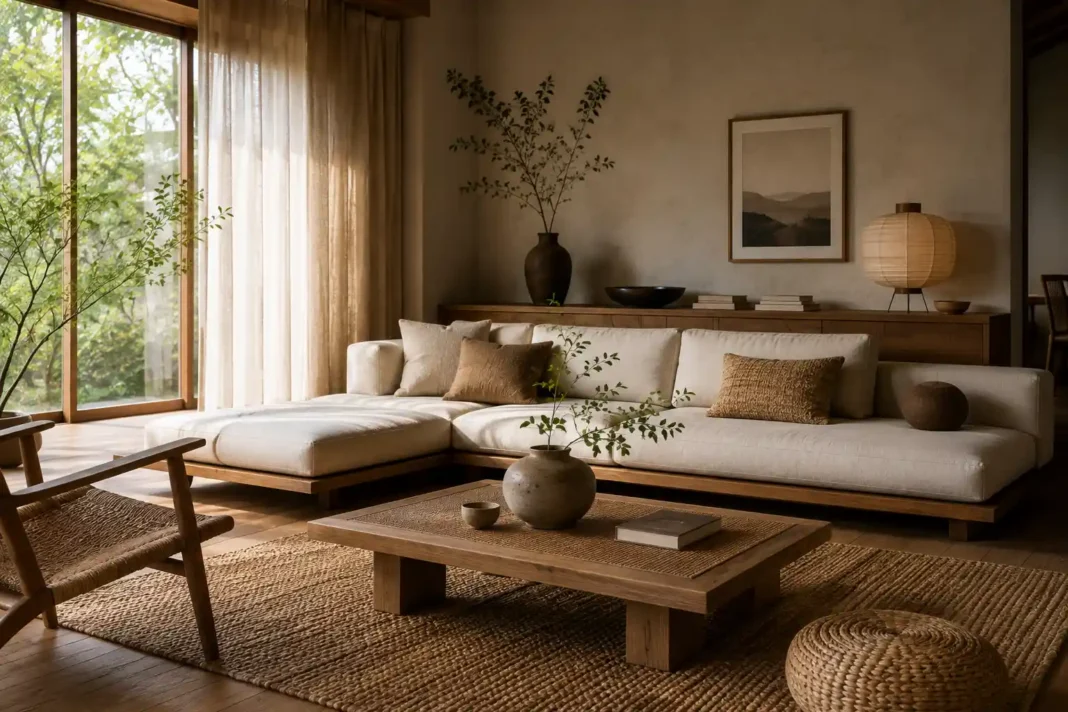
Japandi Living Room Ideas That Feel Warm, Not Sterile
Japandi gets treated like a synonym for beige and empty. That’s exactly where most rooms go wrong. These Japandi living room ideas focus on the actual blend behind the trend: Japanese wabi-sabi warmth paired with Scandinavian function, not a stripped-down room with nothing personal left in it.
You don’t need imported furniture or a design degree to get this balance right in your own space. We’ll walk through the specific details that separate real Japandi from a generic minimalist room with a few plants added. By the end, you’ll have a clear plan for your own living room.
What Japandi Actually Blends Beyond the Hype
Every genuine list of Japandi living room ideas starts with the two traditions actually being combined and balanced: Japanese wabi-sabi and Scandinavian hygge. Wabi-sabi brings an appreciation for natural imperfection and handmade texture. Hygge brings warmth, function and everyday comfort. Neither tradition is about owning less for its own sake.
Treat Japandi as a genuine fusion instead of a trend to copy visually. Your room should feel calm because every piece earns its place, not because the room is empty. That distinction is what separates a real Japandi space from a beige room that photographs well but feels cold to actually live in. Once you understand both halves, every other choice in this guide gets easier to make.
Low, Grounded Furniture That Anchors the Room
These Japandi living room ideas lean on furniture that sits close to the floor: a low platform sofa, a floor-level coffee table and floor cushions instead of tall accent chairs. That lower silhouette is a direct nod to traditional Japanese interiors, where furniture rarely rises far off the tatami.
Keep legs and frames visible rather than hidden behind skirting, since that visible structure is part of the Scandinavian half of the equation. A sofa with slim, exposed wood legs reads as considered in a way a boxy, upholstered-to-the-floor piece never quite manages. It’s a similar shape-first thinking to what we cover in our midcentury living room ideas guide, just pushed even lower to the ground for your own space.
A Muted Earthy Palette Instead of Stark White or Beige
The all-beige version of Japandi living room ideas that floods social media misses the actual palette: warm charcoal, clay, moss and soft stone tones layered together instead of one flat neutral repeated everywhere. Stark white walls read as clinical in your space, not calm.
Pick two or three earthy tones for your room and let them show up in different materials rather than different colors: a clay-toned ceramic vase, a moss-green cushion and a charcoal throw all working from the same muted family. Test a small paint swatch against your existing wood tones before committing to a full wall.
Wabi-Sabi Imperfection: The Detail Most Rooms Skip
Wabi-sabi is the philosophical half of Japandi that most rooms skip entirely in favor of the easier Scandinavian half. As EBSCO’s research overview of wabi-sabi explains, the concept specifically celebrates natural wear and irregularity rather than treating it as something to hide. The table below details foundational Japanese aesthetic principles (wabi-sabi) underlying Japandi design, as published in EBSCO’s Humanities Research collection.
| Insight | Source (Institute) | Expert / Team |
| Wabi-sabi values simplicity, impermanence, and natural materials (wood, stone, clay), encouraging understated elegance and harmony with surroundings rather than artificial perfection. | EBSCO Research Starters (Social Sciences & Humanities) | Janine Ungvarsky (Aesthetics Scholar) |
| A wabi-sabi interior promotes a meditative lifestyle by incorporating calming organic palettes, uncluttered furniture placement, and upcycled items that show natural wear over time. | EBSCO Research Starters (Wabi-sabi Entry) | EBSCO Social Sciences & Humanities Editorial Team |
Let a ceramic bowl with a visible crack or an uneven glaze sit on your shelf instead of swapping it for a flawless replacement. A slightly asymmetrical vase or a hand-thrown mug does more for authentic Japandi character than any perfectly matched decor set. Even a chipped edge, left as is, tells a more honest story than a set bought all at once.
Negative Space That’s Intentional, Not Empty
Space in a Japandi room isn’t a placeholder for furniture you haven’t bought yet; it’s a deliberate choice. Leave one wall or one corner genuinely bare and resist the urge to fill it just because the space is available. This is one of the harder habits to build, especially if you’re used to styling every surface.
That intentional emptiness gives your eye somewhere to rest between the textured, natural elements in the rest of the room. A room with zero breathing room stops reading as calm no matter how muted the palette is.
Natural Materials That Bridge Japanese and Scandinavian Roots
These Japandi living room ideas depend on materials that show up in both traditions: light ash or oak wood, woven rattan, raw linen and wool felt. Those overlapping materials are exactly why the two styles blend so naturally instead of feeling forced together in your room.
Avoid glossy or lacquered finishes, since they read as neither Japanese nor Scandinavian. Matte, textured surfaces are what carry the look across your flooring, your furniture and the frame around a piece of art.
One Handmade Piece That Grounds the Whole Room
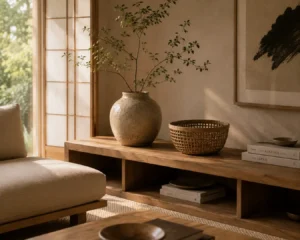
Every one of these Japandi living room ideas benefits from at least one visibly handmade object in your room: a hand-thrown ceramic vase, a woven basket with uneven edges or a piece of pottery with a raw, unglazed base. That single handmade piece signals the wabi-sabi half of the room in a way mass-produced decor never can.
Place it somewhere you will actually see and touch it, not tucked in a corner. The whole point of wabi-sabi is appreciating the object up close, not displaying it as a trophy from across the room.
Japandi Lighting Ideas to Avoid Harsh Glare Under $35
Skip bright overhead lighting in your Japandi room; it flattens the natural texture you just spent time layering in. A paper- or linen-shaded floor lamp or a simple ceramic table lamp keeps the mood warm without adding visual clutter to your space. Choose warm white bulbs to enhance the cozy atmosphere and highlight natural materials.
Layer at least two low, warm light sources rather than one central fixture. That softer, scattered light is closer to how traditional Japanese rooms were actually lit. It reads as considerably calmer in your space by evening. This layered approach also makes the room feel more relaxing for reading, unwinding, or quiet conversations.
Ways to Pick a Japandi Living Room Rug – Top 3
A flatweave wool or jute rug in a muted, earthy tone does the most work in your Japandi room, since the texture reads as natural without competing with anything else already in the space. These materials also add warmth and comfort while staying true to the Japandi aesthetic.
Keep the pattern simple or absent in your own room. A busy printed rug undercuts the calm the rest of the space is working hard to create, even if the colors technically match. A subtle texture is often enough to add interest without disrupting the room’s peaceful feel.
One piece of natural-toned ceramic wall art or a simple woven wall hanging anchors a Japandi wall better than a busy gallery arrangement. Choose texture over imagery when you can, since texture is what actually carries the style through. Natural wood frames or handmade details also reinforce the calm, organic look.
Leave real space around whatever you hang. A single piece with generous breathing room reads as far more intentional than several small pieces crowded together on one wall. This negative space helps the room feel open, balanced, and true to the Japandi philosophy.
Conclusion
Japandi genuinely works when both halves of the name actually show up in the room, not just the easy Scandinavian one. Add a single handmade or imperfect piece this week, a ceramic bowl, a woven basket, anything with visible texture, before you buy another neutral throw pillow.
These Japandi living room ideas hold together because wabi-sabi and Scandinavian function were always compatible, not because either one alone makes a room feel complete. Tell us in the comments which detail brought the most warmth into your space. Our other interior style guides are worth a look too if you’re still deciding on a direction.
Frequently Asked Questions (FAQs)
What’s the difference between Japandi and regular minimalism?
Japandi adds warmth, texture and handmade imperfection that plain minimalism often skips entirely. These Japandi living room ideas lean on natural materials more than empty space alone in your room. The result is a calm, functional space that feels welcoming instead of stark or overly simple.
Do I need Japanese antiques for a Japandi living room?
No, a few genuinely handmade or natural pieces in your own space work just as well as a full set. Authenticity in material and texture matters more than the origin of any single item. Focus on quality over quantity to create a space that feels thoughtful, balanced, and timeless.
What colors work best in a Japandi living room?
Muted earthy tones like clay, moss, charcoal and soft stone work best in most living rooms. Avoid stark white or flat beige across your entire room. Layering a few warm wood accents helps these colors feel richer while maintaining the calm Japandi aesthetic.
Is Japandi style too cold or sparse for a small living room?
It shouldn’t be if you layer in enough natural texture. Keep your space simple, not empty. It will feel warm even in a smaller room. Soft lighting and a few carefully chosen accessories can also make the space feel more inviting without adding clutter.
How do I keep a Japandi room from feeling generic?
Add at least one visibly handmade or imperfect piece to your space. That single detail does more than any amount of matching neutral decor. Natural materials and subtle texture variations also give the room more character while staying true to the Japandi aesthetic.


[…] shade sold at most big-box retailers. It’s the same statement-piece thinking covered in our Japandi living room ideas guide, just dialed toward formality instead of handmade […]