How To Recycle Scrap Paper DIY Style for Papermaking
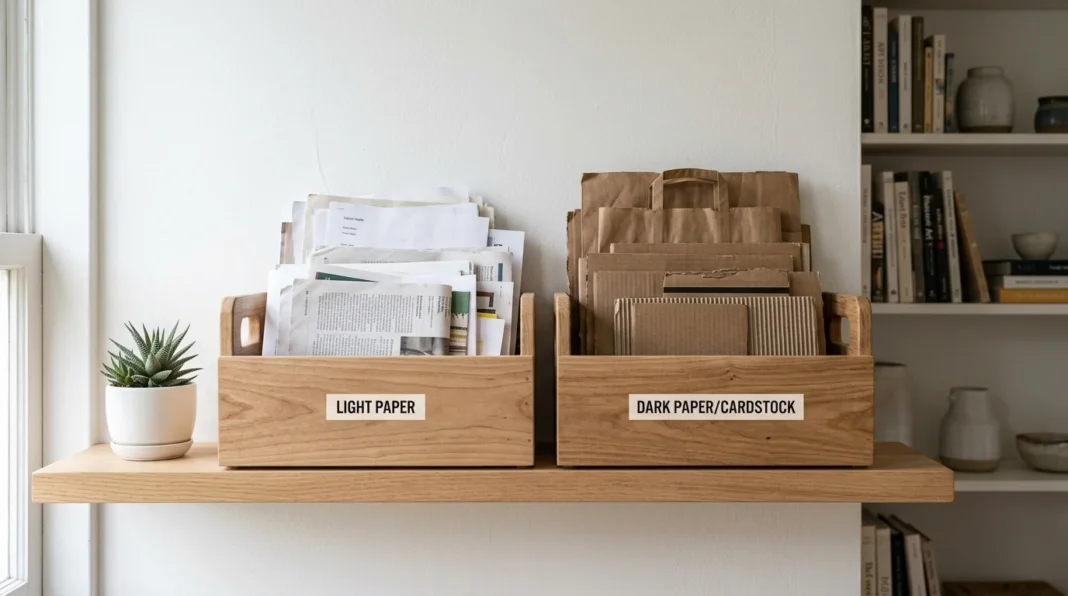
Recycling scrap paper DIY-style for papermaking starts with sorting household paper into what is worth saving (office paper, newspaper, brown bags, plain cardstock) and what to skip entirely (glossy magazine stock, plastic-windowed mail, heavily taped boxes). A simple two-bin system, one for light paper and one for heavier stock, keeps scraps ready to soak and blend the moment a new batch gets started.
Key Takeaways
- Office paper, newsprint, and plain envelopes are the easiest scraps to save; they blend into smooth pulp with the least effort.
- Brown paper bags and plain cardstock are worth a separate pile, since they need a longer soak before blending.
- Glossy magazine paper, laminated stock, and anything with plastic tape or windows should be skipped entirely, not just set aside.
- Shredded paper can go into a pulp batch, but small shreds need to stay contained so they don’t blow away or clump unevenly.
- A two-bin system (light paper, heavy paper) keeps scraps sorted automatically as they accumulate, with no extra sorting step on batch day.
None of this requires a special bin or a trip to a recycling center; scraps that would otherwise go into household recycling or the trash can instead become the next batch of pulp. The five habits below cover what to save, what to avoid, and how to store scraps so they are ready whenever a papermaking session comes up.
Five Habits for Turning Scrap Into Pulp-Ready Paper
The first two habits below cover what’s worth saving (office paper and envelopes, then bags and cardstock), the third covers what to skip entirely, and the last two cover handling shredded paper and storing everything until batch day. None of the five takes more than a minute once it becomes routine.
Save Office Paper, Newsprint, and Envelopes First
Office paper, notebook paper, and newsprint are the easiest scraps to save because their shorter, more uniform fibers blend into smooth pulp the fastest, usually in under a minute once soaked. Plain paper envelopes, including ones with a plastic address window, are also worth keeping in this pile; the plastic window gets pulled out and tossed before tearing the rest of the envelope for soaking.
Save Paper Bags, Tubes, and Plain Cardstock Too
Brown paper grocery bags, cardboard tubes from paper towels or wrapping paper, and plain cardstock all make usable pulp, though their thicker or longer fibers need a longer soak and more blending time than office paper. Keeping this heavier stock in its own pile rather than mixed in with office paper keeps a single batch from ending up with some pieces fully blended and others still in stubborn chunks.
Skip Glossy, Laminated, and Taped Paper Entirely
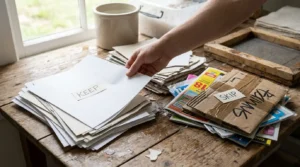
Glossy magazine pages, heavily laminated stock, and anything with a thick layer of tape or a large plastic window should be set aside for regular household recycling rather than a pulp batch, since none of it breaks down cleanly in a blender. Plastic does not dissolve or shred into fiber; it shows up as hard flecks in a finished sheet that straining will not remove.
A quick bend-and-tear test settles most edge cases: paper that tears cleanly with a slightly fuzzy edge is safe to save, while paper that resists tearing or peels apart in a shiny layer is coated or laminated and belongs in the skip pile instead.
Handle Shredded Paper Without Losing the Batch
Shredded paper can go into a papermaking batch without a problem as long as the bits stay contained, and the same is true at an industrial scale: according to the American Forest & Paper Association, the paper industry now recycles nearly 60% more paper than it did in 1990, with member companies operating more than 100 materials recovery facilities nationwide that sort and process recovered paper.
For a home pulp batch specifically, keeping shredded paper in a sealed bag until soaking time solves the small-scale version of the same problem: contained shreds soak and blend just as well as torn pieces, while loose ones make a mess and can clog a blender’s blades if added dry. The table below details paper-recycling guidance established by the American Forest & Paper Association.
| Insight | Source | Expert/Team |
|---|---|---|
| The paper industry recycles nearly 60% more paper today than it did in 1990, a result of voluntary industry recycling goals first set in that year. | American Forest & Paper Association, “Commitment to Improving Paper Recycling” | AF&PA |
| AF&PA member companies own and operate more than 100 materials recovery facilities (MRFs) nationwide, where household recyclables (including paper) are sorted and processed | American Forest & Paper Association, “Commitment to Improving Paper Recycling” | AF&PA |
Store Scraps in a Two-Bin System Until Batch Day
A two-bin system, one bin for lightweight paper and one for heavier stock, keeps scraps sorted automatically as they pile up through the week instead of requiring a separate sorting session right before a batch. Any cardboard box or paper bag works as the bin itself, which keeps this step free even before a single scrap gets torn.
Emptying both bins into their own soaking basins on batch day, rather than combining light and heavy paper into one basin, keeps the soak time appropriate for each: office paper is usually ready in four hours, while bags and cardstock benefit from a full overnight soak.
5 Best Household Papers Worth Saving For Pulp
Office paper, newsprint, plain envelopes, brown paper bags, and plain cardstock cover the large majority of household paper worth saving for a pulp batch, since all five blend into usable pulp without special handling. Junk mail is a partial yes: the paper itself is fine to save once any plastic window or glossy insert has been removed and tossed.
Cardboard tubes from paper towels or wrapping paper are also worth keeping, torn into smaller pieces before soaking since their tightly rolled layers take a bit longer to loosen than flat paper.
3 Proven Signs Paper Should Be Skipped, Not Saved
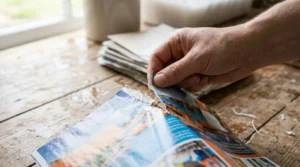
Paper that resists tearing or peels apart in a shiny layer instead of tearing with a fuzzy edge is coated or laminated, and it belongs in regular household recycling instead of a pulp batch. Paper with a thick layer of tape, a large plastic window, or a waxy coating (like some bakery wrap) shows the same resistance and should be skipped for the same reason.
A third sign worth checking: paper that feels stiff and slick rather than slightly textured usually has a plastic or foil laminate bonded to it, even when it looks like plain paper at a glance.
5 Zero-Cost Ways To Collect Scraps Faster
Setting a small bin next to a home office printer or mail-sorting spot catches office paper and envelopes the moment they become scrap, rather than relying on remembering to save them later. A second bin near the kitchen catches paper bags, cereal-box liners, and cardboard tubes as they come up naturally through everyday use.
Asking neighbors, a workplace, or a school office for their scrap paper (rather than just personal scraps) fills a bin far faster than one household alone, and most people are glad to have paper waste put to use instead of thrown out. A standing cardboard box by the front door, labeled for paper scraps, makes it easy for anyone in the house to contribute without a special system to learn.
A Full Bin of Scraps Is a Free Batch of Pulp
Recycling scrap paper DIY-style for papermaking comes down to two habits: sorting what’s worth saving from what belongs in regular recycling, and storing the two kinds of paper separately so a batch soaks evenly instead of unevenly. None of it costs anything beyond the time it takes to sort a stack of mail or empty a printer tray into a bin instead of a trash can.
Once a bin is full enough for a batch, the full process for turning those sorted scraps into usable pulp, including the exact soak times and blending ratio for each paper type saved along the way, is covered in the guide to how to make homemade paper pulp.
Frequently Asked Questions (FAQs)
What household paper is worth saving for DIY papermaking?
Office paper, newsprint, plain envelopes, brown paper bags, plain cardstock, and cardboard tubes are all worth saving for DIY papermaking, since each blends into usable pulp without special handling once torn and soaked.
Can you use glossy or laminated paper to make homemade paper?
Glossy and laminated paper should be skipped for homemade papermaking, since the plastic or coated layer does not break down in a blender and shows up as hard flecks in the finished sheet; it belongs in regular household recycling instead.
Can shredded paper be used for homemade paper pulp?
Shredded paper can be used for pulp as long as the small shreds are kept contained (in a sealed bag, for example) until soaking time, since loose shreds scatter easily and can clog a blender if added dry.
How do you store scrap paper until you have enough for a batch?
Scrap paper stores well in a simple two-bin system, one bin for lightweight paper like office paper and envelopes and another for heavier stock like paper bags and cardstock, kept dry until enough has accumulated for a full batch.
How can you collect scrap paper faster for papermaking?
Placing small bins near a printer, mail-sorting spot, and kitchen catches scraps as they naturally occur, and asking a workplace, school, or neighbors for their scrap paper fills a bin far faster than saving from one household alone.