
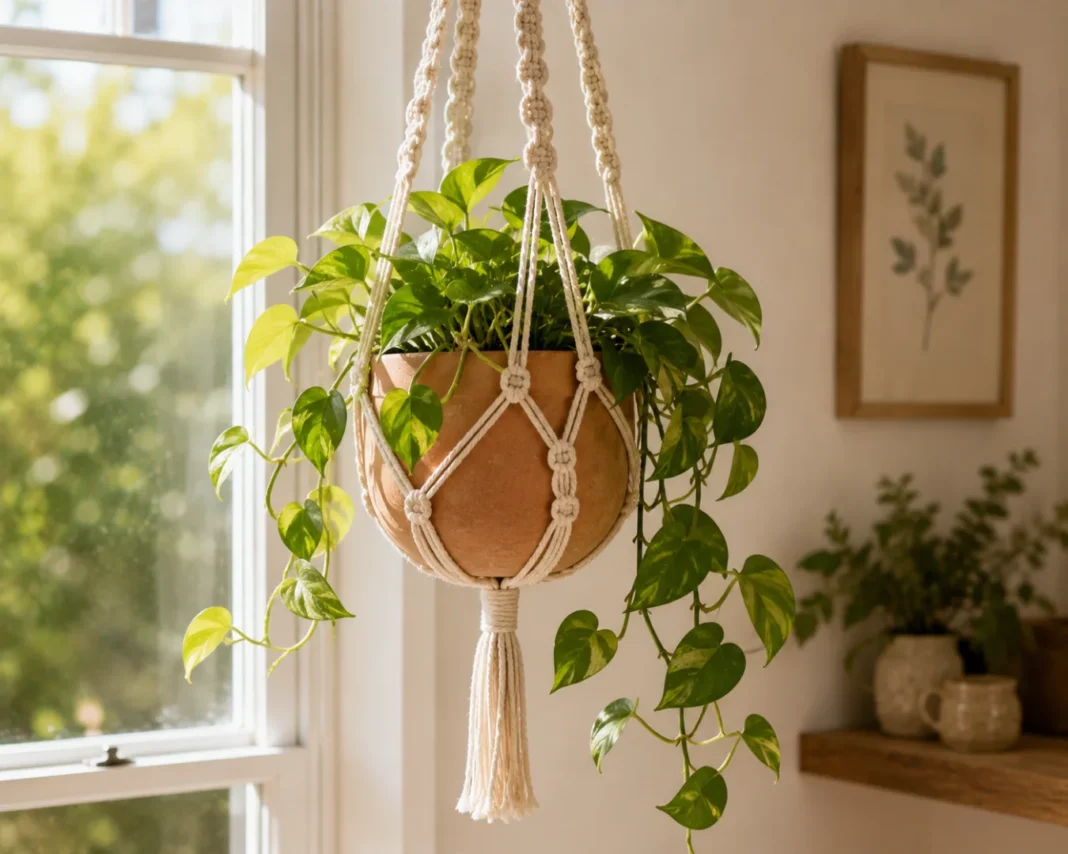
Macrame Plant Hanger Ideas You Can Knot in One Afternoon
A store-bought plant hanger rarely fits the exact look you have in mind. Macrame plant hanger ideas solve that problem since you control every knot, every cord length and every finished size. We think this is one of the most forgiving crafts to start with, since a single mistake just means untying a knot and trying again.
You don’t need fancy tools, just cord, scissors and a bit of patience while you learn the pattern. In this guide, we’ll walk you through the basic knots, a few styles you can build today and how to pick the right cord for your plant’s weight. Let’s get your hands on some cord.
Why Macrame Plant Hangers Are Worth Making Yourself
Macrame plant hanger ideas range from a single quick knot to detailed layered patterns. Every version below uses the same handful of basic techniques you can learn once and reuse anywhere.
The Basic Knots You Need Before You Start Anything
Every macrame plant hanger idea on this list uses just two knots: the lark’s head and the square knot. The lark’s head attaches your cords to a ring or dowel at the top, while the square knot is what actually builds the hanging pattern below it. The Smithsonian American Art Museum has demonstrated basic macrame technique in past public programs if you want to see the knotting motion in action before you start. Once you’re confident with these two knots, you’ll be able to follow almost any pattern you find without needing to learn anything new. The table below details historical textile craft techniques and macrame knotting fundamentals preserved by the Smithsonian American Art Museum.
| Insight | Source (Institute) | Expert / Team |
| Macrame plant hangers utilize foundational square knots, half-square spirals, and gathering knots to create durable structural netting for hanging pots. | Smithsonian American Art Museum Handi-Hour Crafting Series | SAAM Education & Craft Specialists |
| Layering contrasting cord textures (cotton rope, hemp) and varying knot spacing allows modern textile artisans to balance structural tension with minimalist home decor aesthetics. | SAAM Handi-Hour Workshop | Smithsonian American Art Museum Community Program Team |
Practice both knots with a scrap piece of cord before touching your real project. Once your hands get used to the motion, each knot only takes a few seconds. Don’t worry about your first few knots looking uneven. Tension gets more consistent the more you practice. Consistent tension is what separates a rough first attempt from macrame plant hanger ideas that actually look intentional. Give yourself at least ten minutes of practice knots before starting on your actual cord.
A Simple Square Knot Hanger You Can Finish Tonight
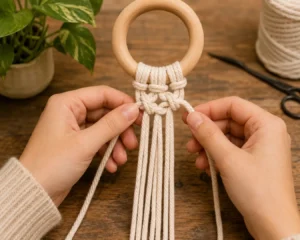
This is the easiest of all the macrame plant hanger ideas here. It’s the one we’d recommend starting with. Cut four cords about six feet long, fold them in half over a ring and secure them with a lark’s head knot. Divide the eight resulting strands into two working cords and six filler cords, then tie a row of square knots about two inches down.
Repeat that same square knot pattern every few inches until you reach the length you want for your pot. Gather all the strands together at the bottom and tie a finishing wrap knot to hold everything in place. Trim the ends evenly or leave a loose fringe, whichever look you prefer. This single pattern alone covers most of the macrame plant hanger ideas people search for online, so it’s worth mastering before you move on to anything fancier.
Adding a Wooden Ring for a More Structured Look
A wooden ring gives your hanger a cleaner, more geometric shape than a simple gathered top. Attach four or six cords to the ring with lark’s head knots, spacing them evenly around the circle. From there, work the same square knot pattern you already know, just adjusted to sit around a curve instead of a flat row.
This style works especially well for larger pots since the ring distributes the weight more evenly across all your cords. A natural wood ring also adds a bit of extra texture next to the knots themselves. If you want something a little different, try a metal ring instead for a more modern feel. Ring-based macrame plant hanger ideas also photograph especially well if you plan on sharing your finished piece online. The extra structure makes it a good choice for a first gift piece too.
Choosing Cord Weight and Length for Different Pot Sizes
Thin cotton cord, around three millimeters, works well for small pots and delicate-looking hangers. Thicker cord, closer to five or six millimeters, holds up better for heavier ceramic pots and gives the knots a bolder, chunkier look. Match your cord weight to your actual pot before you start tying, not after. Most macrame plant hanger ideas online use one of these two weights, so you don’t need to overthink the decision. Buy slightly more cord than the pattern calls for just in case.
As a rough guide, cut your cords about eight times the finished length you want your hanger to be, since knotting eats up a surprising amount of cord. It’s always better to cut a little extra than to run short halfway through a pattern. Extra cord can always be trimmed once you’re finished. This small buffer has saved more than one nearly finished hanging project from running short.
Where to Hang Your Macrame Plant Hanger for Healthy Plants
Most trailing plants that pair well with macrame plant hanger ideas, like pothos and string of pearls, want bright but indirect light. A spot a few feet back from a south or east-facing window usually works well. Avoid hanging directly over a heating vent since the dry air can stress both the plant and the cord.
Check that the ceiling hook or wall bracket you’re using can actually support the combined weight of the pot, soil and water once everything is in place. A secure hook matters more than people expect, especially for larger pots. Give your hanger a gentle tug after installing it just to be sure it’s holding properly. Well-placed macrame plant hanger ideas can last for years with almost no maintenance beyond an occasional dusting. A stable spot also keeps your plant healthier since it isn’t constantly swinging or bumping the wall.
Boho Plant Hanger Patterns That Look Wonderful Under $19
Boho plant hanger patterns lean into texture, mixing fringe, wrapped sections and open knot work in the same piece. Jute and unbleached cotton are the most common cord choices for this look since they read as naturally rustic. Adding a few wooden beads between knots is an easy way to break up the pattern.
Layer two or three hangers at different lengths instead of one single piece for a fuller boho look. Mixing knot types, like alternating square knots with spiral rows, keeps a single hanger visually interesting on its own. This style pairs especially well with trailing plants that spill over the sides of the pot. A few uneven knots actually work in this style’s favor since the whole look leans intentionally imperfect. If you’re building out a full boho corner, our dried flower wall art guide pairs especially well with a hanging plant like this one.
Hanging Planter For Beginners That Look Gorgeous Under $15
A hanging planter for beginners should use forgiving materials, so stick with cotton cord instead of stiffer jute for your very first attempt. Cotton holds its shape without fighting you the way jute sometimes does when you’re still learning tension. One knot type and one plant is plenty for a first project.
Start small, with a five or six-inch pot, so mistakes are cheap and easy to redo. Once you’re comfortable with the basic pattern, sizing up to a larger pot uses the same technique. Give yourself permission to untie and retry a knot as many times as you need. Keeping your first project small also means you’ll finish it in a single sitting instead of losing momentum halfway through.
Plant Hanger Cord Types That Look Stunning Under $17
Plant hanger cord types range from smooth cotton to rougher jute and even paracord for a more modern look. Cotton is the easiest to knot evenly and holds dye color well if you want a tinted hanger. Jute has more texture but can be rougher on your hands during long knotting sessions.
Paracord works if you want something more durable for an outdoor porch hanger, though it knots a little differently than natural fiber cord. Whatever type you choose, buy a little more than you think you need since running short mid-project is frustrating. Most cord types can be mixed in the same piece for contrast. Cotton stays the safest default if you’re not sure which type to pick for your very first hanger.
Conclusion
A ring hanger by a sunny window, a simple square knot piece in the kitchen or a layered boho version above the reading chair all start with the same two knots and a few feet of cord. Macrame plant hanger ideas don’t require expensive tools or years of practice, just patience while your hands learn the pattern.
Start with the simplest style on this list, then work your way up to rings and layered patterns once the basic knots feel natural. We’d love to see what you tie, so share a photo once your first piece is hanging. Your plants deserve a home that’s actually yours.
Frequently Asked Questions (FAQs)
How much cord do most macrame plant hanger ideas actually need?
Most simple hangers use around 24 to 32 feet of cord total, depending on length and knot density. Buying a little extra is always smarter than running short.
Can I use paracord instead of cotton cord?
Yes, paracord works fine and holds up especially well outdoors. It just knots a little stiffer than natural fiber cord, so tension takes some getting used to. A slightly thicker needle or crochet hook can help push tight paracord knots into place if your fingers struggle.
How long does a beginner hanger take to finish?
Most simple patterns take about one to two hours once you know the knots. Ring styles and layered patterns take longer since there’s more repetition involved. Layered or multi-ring designs can take closer to three hours since each layer needs its own set of knots.
Will the knots come loose over time?
Properly tightened square knots rarely loosen on their own. A dab of clear glue at the very top knot adds extra security if you’re hanging something heavy. Check your knots every few months and re-tighten anything that feels looser than the rest.
Where’s the worst spot to hang macrame plant hanger ideas?
Skip spots directly above heating vents or in constant direct sun, since both dry out the cord and fade its color. A stable ceiling hook matters more than the exact location.


[…] thing guests notice when they walk into the room. If you like the idea of handmade wall pieces, our macrame plant hanger ideas use a similar handful of tools and would sit nicely on a nearby […]
[…] display ideas if you like changing things up often. If you enjoyed tying knots for this style, our macrame plant hanger ideas use a similar simple twine setup for a different kind of wall […]