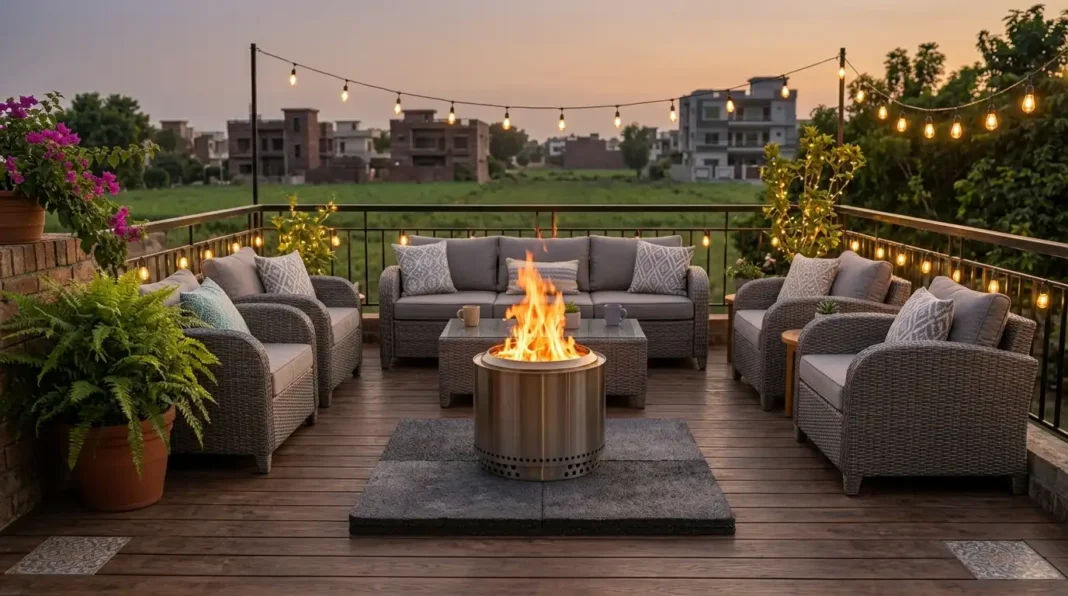
The Best Fire Pits Wooden Decks Options for 2026
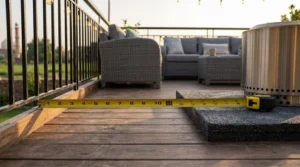
Fire pits wooden decks pairings work when the fuel type and clearance distance both respect how easily wood ignites, not just how good the fire looks in a photo. Look for a smokeless design rated for deck use specifically, a heat shield or fire-resistant mat underneath, and at least 10 feet of clearance from the house per standard fire-safety guidance. Most wood-deck owners either skip a fire feature entirely or place one too close, and neither is necessary once fuel type and clearance are treated as the actual decision instead of an afterthought.
Key Takeaways
- Smokeless design reduces ember and smoke output but does not reduce radiant heat near the deck.
- Standard fire-safety guidance calls for at least 10 feet of clearance from anything combustible.
- A heat shield or fire-resistant mat underneath is required regardless of fuel type.
- Electric infrared heaters avoid combustion entirely, ideal for covered decks with limited ventilation.
- Most residential wood decks handle 300+ pounds in a concentrated area, but older decks should be inspected first.
This guide ranks five heating options built for exactly that constraint, from tabletop bioethanol bowls to full propane fire pit tables. Every pick below gets checked against real fire-safety clearance standards, since a fire feature that scorches the boards beneath it defeats the entire purpose of adding one. Scroll past the takeaways below and jump to whichever option matches your deck.
Five Ways to Heat a Wood Deck Safely
Every one of these fire pits wooden decks picks below solves a slightly different version of the same problem: real outdoor warmth without turning a wood deck into a fire hazard. Four of the five preview the fuel-specific spokes covered elsewhere on this site, and the middle pick covers the clearance and fuel-safety standards worth checking regardless of which option gets chosen.
The Tabletop Bioethanol Fire Bowl
A tabletop bioethanol bowl burns clean liquid fuel with no smoke, no ash, and no embers, which makes it one of the lowest-risk open-flame options among fire pits wooden decks buyers consider, provided a proper heat-resistant base sits underneath. The flame itself still radiates real heat, so the same clearance thinking that applies to any open flame still applies here.
That said, the fuel reservoir and burn time run smaller than a full fire pit, and pairing this pick with tabletop bioethanol fire bowls for patio ambience covers the full range of sizes and styles available. Because these units burn actual liquid fuel rather than gas from a line, refueling only happens between uses, which removes one common source of spills near an open flame. The table below details open-flame safety guidelines established by NFPA specialists.
| Number & Insight | Source | Expert/Team |
|---|---|---|
| NFPA’s wildfire and outdoor-fire guidance applies to any open-flame device, including tabletop units, and stresses keeping flammable material clear of the burn area | NFPA | National Fire Protection Association |
The Electric Infrared Patio Heater
An electric infrared heater produces zero open flame and zero combustion byproducts, which makes it the safest fire pits wooden decks alternative here for a covered deck or a gazebo where ventilation is limited. Heat radiates directly from the element to people and surfaces nearby rather than warming the surrounding air first, so it works even in a breeze that would blow out a flame-based option.
Matching this pick with an electric infrared patio heater for gazebo placements covers mounting height and coverage area in more depth. The main safety consideration shifts from fire clearance to standard electrical safety: a heater rated for outdoor use, plugged directly into a GFCI-protected outlet, kept clear of curtains or cushions per the standard heater safety distance.
| Number & Insight | Source | Expert/Team |
|---|---|---|
| CPSC’s space heater guidance recommends at least three feet of clearance from furniture, bedding, and curtains, a rule that applies to electric outdoor heaters as much as indoor ones | CPSC | CPSC Consumer Safety Education |
The Smokeless Fire Pit Built to Real Clearance Standards
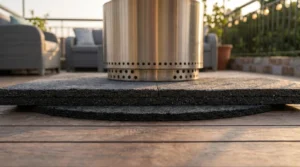
Every one of these fire pits wooden decks buyers consider comes down to the same two variables: how much heat it radiates and how far that heat sits from anything that can burn. A smokeless design reduces visible smoke and ember output significantly compared to a traditional wood-burning pit, but it does not reduce radiant heat, which means the clearance distance protecting the deck boards has to come from spacing and a heat-resistant barrier, not from the smokeless design itself.
Standard fire-safety guidance calls for at least 10 feet of clearance from the house and anything else combustible, plus a heat shield or fire-resistant mat directly underneath the unit regardless of fuel type. That clearance number is a baseline, not a ceiling, and local fire codes or HOA rules can require more, so buyers should confirm both before finalizing a spot on the deck. The table below details open-flame clearance guidelines established by NFPA specialists.
| Number & Insight | Source | Expert/Team |
|---|---|---|
| NFPA wildfire-prevention guidance recommends keeping fire pits and other outdoor fire sources well clear of anything that can burn, with a heat-resistant barrier underneath regardless of fuel type | NFPA | National Fire Protection Association |
The Propane Fire Pit Table for Covered Porches
A propane fire pit table runs on a refillable tank rather than an open wood fire, which cuts ember output to effectively zero while still delivering real visible flame and radiant heat, a strong middle ground among fire pits wooden decks and covered porches both need to consider. That makes it one of the few open-flame options with any reasonable case for use under a covered porch, provided the manufacturer explicitly rates it for covered or partially enclosed use.
Reviewing propane fire pit table for covered porch options in more depth covers BTU ratings and tank placement specifics. Tank placement matters as much as the table itself: a spare propane cylinder needs to sit well clear of the active flame, not tucked underneath the table where heat can build up around it.
| Number & Insight | Source | Expert/Team |
|---|---|---|
| NFPA guidance on propane and gas-fueled outdoor appliances stresses tank clearance from the flame and confirming manufacturer approval before using any fire feature under a covered structure | NFPA | National Fire Protection Association |
The Portable Outdoor Heater for Small Balconies
A portable outdoor heater, whether electric or small-tank propane, solves the heating problem on a balcony too small or too restricted by HOA rules for the full fire pits wooden decks setups covered elsewhere in this guide. Electric versions avoid combustion entirely, while small propane units still produce an open flame and need the same clearance considerations as a full-size fire pit, just scaled to a smaller unit.
Checking portable outdoor heater for small balcony picks in more depth covers which fuel type fits which balcony restriction. Many apartment and condo balconies restrict open flame entirely regardless of unit size, which makes confirming the building’s actual policy a required step before buying either fuel type.
| Number & Insight | Source | Expert/Team |
|---|---|---|
| CPSC’s space heater safety guidance applies directly to portable outdoor heaters, recommending clearance from combustible material and outlet-rated, GFCI-protected power for electric models | CPSC | CPSC Consumer Safety Education |
Is a Smokeless Fire Pit Actually Safe on a Wood Deck? (2026 Pick)
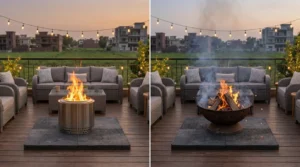
Among fire pits wooden deck options, a smokeless design is safer than a traditional wood-burning pit in terms of ember and smoke output, but it is not automatically safe on a wood deck without the same clearance and heat-barrier precautions any open flame requires. The reduced smoke addresses air quality and visibility, not radiant heat, which is what actually damages deck boards over time.
Pairing a smokeless design with a heat-resistant mat and the standard 10-foot clearance guidance gives the best combination of a cleaner-burning fire and a protected deck surface.
Propane vs Electric Heating: Which Adds $150 in Upfront Cost?
Electric infrared heaters typically cost $100 to $200 more upfront than a comparable propane option at the same heat output, and that premium buys simpler operation with no fuel tank to refill or store. Propane closes the gap over time on running cost in areas with cheap propane refills, but electric wins on covered or enclosed spaces where combustion byproducts are a real concern.
Buyers on a small balcony with strict HOA rules against open flame should lean electric regardless of the price difference, since it may be the only option permitted at all.
How Much Weight Can a Wood Deck Handle Under a Fire Pit? (300-Pound Check)
Most residential wood decks built to standard code handle well over 300 pounds in a concentrated area without an issue, which covers the vast majority of fire pit tables even before accounting for guests and furniture nearby. Older decks or those with any visible sagging or rot should get inspected before adding a heavy fire feature rather than being assumed safe.
Spreading that weight across a wider base, or confirming joist spacing underneath the planned spot, adds a real safety margin on any deck older than 15 to 20 years.
Conclusion
A fire feature earns its spot on a wood deck the moment it adds real warmth without turning the boards underneath into a liability. The lesson from every pick above is the same: check the fuel type and clearance distance before checking the finish, since a smokeless design still radiates enough heat to scorch wood at close range. Pair the right heat source with the right distance and the scorched-deck problem that ends most fire-pit purchases early simply goes away.
This is really a clearance-and-fuel question wearing a lifestyle upgrade, and it shows up the same way on covered porches, gazebos, and open decks everywhere. Get the fuel type and distance right, and the finish and size become simple taste calls. Save this whole guide, measure your own deck carefully before ordering anything, and check out our companion pillar on outdoor sectional small patio setups if seating is still an open question worth solving.
Frequently Asked Questions (FAQs)
Are smokeless fire pits safe for wooden decks?
Yes, smokeless fire pits are one of the better fire pits wooden decks options because they cut ember and smoke output significantly compared to a traditional wood-burning pit, though the same clearance distance and heat-resistant barrier still apply since radiant heat is not reduced.
How far should a fire pit sit from a wood deck railing?
Standard fire-safety guidance calls for at least 10 feet of clearance from anything combustible, including deck railings, though local fire codes or HOA rules can require more distance depending on the jurisdiction.
Can I use a propane fire pit table under a covered porch?
Some propane fire pit tables are rated by the manufacturer for covered or partially enclosed use, but this must be confirmed on the specific model rather than assumed, and wood-burning pits should never be used under any overhead structure.
Do electric patio heaters work as well as gas or propane heaters?
Electric infrared heaters heat people and surfaces directly rather than warming surrounding air, which makes them effective even in light wind, though they generally cover a smaller direct radius than a comparable propane or gas unit.
What’s the safest fire feature for a small apartment balcony?
An electric infrared heater is generally the safest option for a small balcony since it avoids combustion entirely, though many buildings restrict any open flame regardless of fuel type, so checking the building’s actual policy matters more than the unit itself.