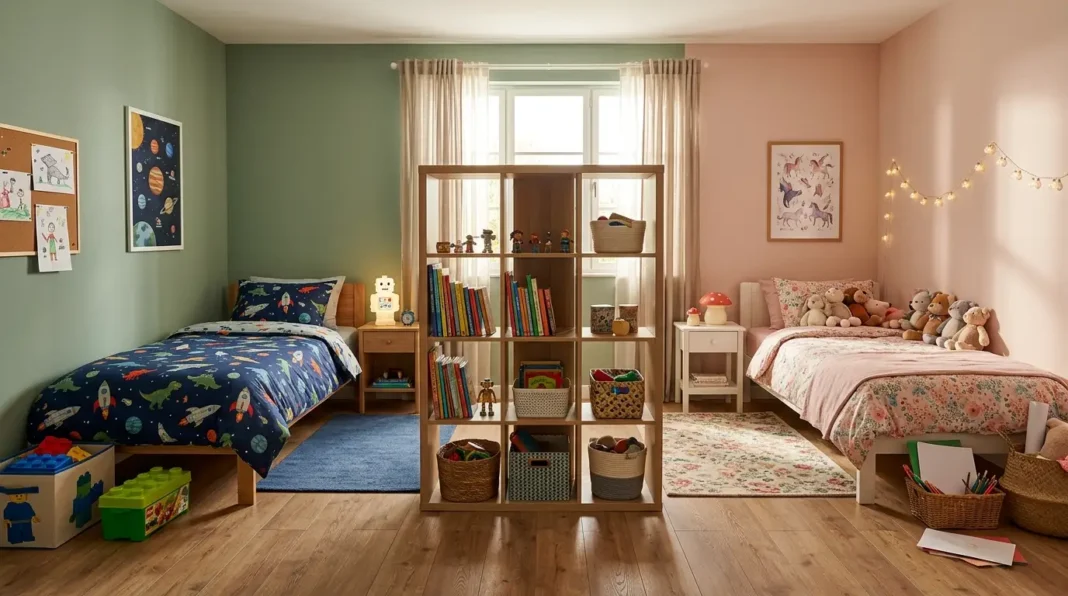
Divide Bedroom Boy/Girl Spaces Without Knocking Down a Wall
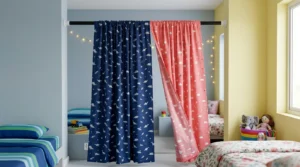
You can divide bedroom boy/girl spaces without any construction by using a freestanding bookshelf, a curtain track, or a large rug to mark two distinct zones. Most of these methods cost under fifty dollars total and can be finished in a single weekend without hiring anyone.
KEY TAKEAWAYS
- A freestanding bookshelf or curtain track splits a room without touching a wall, which matters most in rentals.
- Pick one divider method, not three, or the room ends up feeling busier than before you started.
- Add the divider after furniture is already placed, never before, so it lines up correctly.
- Rugs and color-coded storage are the cheapest options, most landing under $30.
- Letting each child pick their side of the divider cuts down on daily boundary disputes.
Splitting one bedroom between two kids of different genders gets harder as they get older, even when the room itself is plenty big enough on paper. The seven ideas below range from a fifteen-dollar string light divider to a freestanding bookshelf wall, and every one of them was picked because it works in a rental too, with nothing permanently attached to the floor or the walls. If the room also still needs a proper bed and desk layout worked out first, that groundwork is covered in how to fit queen bed desk combinations before any divider goes in.
7 Ways to Split a Shared Kids Bedroom
Each idea below stands on its own, so pick whichever one matches the room’s layout, the budget, and how permanent the split needs to be for a boy/girl room share.
They are ordered roughly from least to most involved, starting with dividers that need zero tools and ending with ones that take a full afternoon to build.
Hang a Tension Rod Curtain Divider
A spring-loaded tension rod mounted between two walls, paired with a floor-length curtain, is one of the fastest ways to split a boy/girl shared room in under an hour with zero drilling. This is the fastest option on the list and the easiest to remove entirely if the kids later decide they would rather share the space fully.
Most tension rod and curtain combinations run $20 to $25 total, and heavier blackout curtains double as a sound buffer if one child goes to bed earlier than the other. This option works best in rooms with a ceiling under nine feet, since taller ceilings need a longer curtain that starts pushing the budget past the $50 mark.
Build a Freestanding Bookshelf Wall
A tall, open-back bookshelf pushed perpendicular to a side wall creates a soft visual divider while adding real storage on both sides at once. Secondhand bookshelves in the 60 to 72 inch height range typically run $30 to $45 depending on condition, and open-back styles let some light pass through so neither side feels boxed in.
This option works especially well when the room is already tight on storage, since it solves two problems with one purchase. Anchor the shelf to the wall with an anti-tip strap if either child is under six, since a freestanding shelf in the middle of a room is a tipping risk without one.
Paint or Wallpaper Each Side a Different Accent
Painting or wallpapering just one wall on each side of the room in a different color creates a clear visual boundary without adding any furniture at all. A single gallon of paint or one roll of peel-and-stick wallpaper typically covers one accent wall for $25 to $35, well within budget for both sides combined if using paint samples instead of full cans.
This is the cheapest option that does not require any physical divider object, which matters in very small rooms where even a bookshelf eats up needed floor space. Keep the two accent colors in the same tonal family, such as a soft blue and a soft green, so the room still reads as one cohesive space from the doorway.
Give Each Side Its Own Rug or Floor Zone
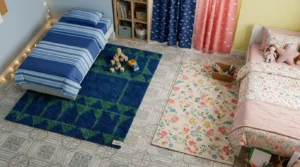
Placing two separate area rugs, one on each child’s side of the room, creates an instant floor-level boundary that costs less than almost any other option on this list. This works particularly well paired with any of the wall-based dividers above, since the rug reinforces the same line the curtain or bookshelf is already drawing.
A 5×7 foot rug in a budget-friendly material typically runs $25 to $40 per side depending on the retailer, and choosing two different colors or patterns, one per child, makes the split obvious even to a toddler. This approach also lines up with how child development specialists at Healthline describe shared rooms for opposite-sex children, framing the split as something to plan around gradually rather than a fixed requirement, which means there is no single “correct” age to start using a rug divider, only what works for the two kids actually sharing the room. The table below details room-sharing guidelines established by Healthline specialists.
| Insight | Source | Team |
|---|---|---|
| Licensed counselor Emily Kircher-Morris notes there is no required cutoff age for separating opposite-sex siblings, but privacy needs become harder to manage once puberty starts, and any sign of sexually aggressive behavior between siblings warrants immediate separation regardless of age. | Healthline | Emily Kircher-Morris, LPC |
Hang String Lights or a Canopy to Mark the Line
A single strand of string lights hung from the ceiling, running the length of the dividing line, gives each side a soft visual boundary that doubles as a nightlight. This is one of the cheapest options on the list, with most warm white LED strands running $12 to $18, including basic ceiling hooks.
Fabric canopy panels work the same way for a slightly bigger budget, hanging from a single ceiling anchor point on each side to create a tent-like sense of separation without blocking sightlines. This option suits younger kids especially well, since it feels playful rather than like a hard boundary being enforced.
Color-Code Storage Bins for Each Kid
Assigning each child their own bin color, used consistently for toys, laundry, and school supplies on their half of the room, reinforces the divide without adding a single new object to the floor plan. A basic set of stackable bins in two different colors typically costs $15 to $20 for enough storage to cover one child’s belongings.
This is the lowest-effort option on the list and pairs well with any of the other six ideas rather than replacing them. It also tends to cut down on the “that’s not mine” arguments that come up constantly in shared rooms, since ownership is color-coded at a glance.
Use Removable Wall Decals to Mark Territory
Peel-and-stick wall decals, applied in a distinct pattern or theme on each child’s side, mark territory the same way paint does but without any commitment or wall damage on move-out. A set of removable decals typically runs $10 to $18 depending on size and design complexity.
This option is the easiest to change as kids get older and their interests shift, since decals peel off cleanly in most cases without stripping paint underneath. It works especially well as a starter option for families not yet ready to commit to a permanent paint or wallpaper split.
3 Signs It’s Time to Split a Shared Kids Room
The three clearest signs are a consistent lack of privacy complaints from either child, one child regularly disrupting the other’s sleep schedule, and either child reaching an age where undressing or changing in front of a sibling of the opposite gender starts causing visible discomfort. Any single one of these is usually enough of a reason to add a divider, even if a full room swap is not yet possible.
Most families notice the sleep-schedule issue first, especially once one child starts school and needs an earlier bedtime than a younger sibling. A simple curtain or rug divider often resolves this specific complaint faster than any of the other six ideas on this list, since it primarily just needs to dim light and muffle sound rather than create full visual separation.
Cheapest Divider Option Under $20
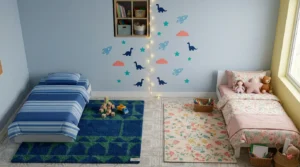
Removable wall decals and string lights are consistently the cheapest options on this list, both landing in the $10 to $18 range depending on size and coverage needed. Neither requires tools, ceiling anchors strong enough for weight-bearing loads, or any drilling into a rental’s walls.
Color-coded storage bins come in just above that range at $15 to $20 but arguably deliver the most practical daily benefit for the price, since they solve a storage problem at the same time they mark territory. Combining any two of these three budget options, such as decals plus bins, still lands well under the $50 mark for the entire room.
Best Room Divider Style for 2026 (Editor’s Pick)
For most people planning a boy/girl room split in 2026, a tall open-back bookshelf paired with a floor rug on each side is the strongest overall pick, since it adds storage, marks a clear boundary, and stays completely landlord-friendly. This combination typically lands between $55 and $75 total, slightly over the strict $50 ceiling for a single method but still well below custom built-in alternatives.
For families who need to stay strictly under $50, the tension rod curtain paired with color-coded storage bins is the next best combination, coming in around $35 to $45 total while still delivering a real visual and functional split. Either combination outperforms a single divider method used alone in rooms where the kids’ age gap is more than two years.
Two Kids, One Room, Two Clearly Marked Sides
Pick one method instead of combining three or four at once, since a room with a bookshelf wall, a curtain, and a painted line usually feels more chaotic than a room split just one clean way. Add the divider after the bed and desk layout is already settled, not before, so it lines up with furniture that is already anchored in place.
This same weekend-project approach works for shared rooms of any age combination, not only opposite-gender siblings, and it scales down easily if a landlord will not allow anything mounted to the walls. Kids also tend to respect a boundary more when they helped choose it, so let each child pick their side of the rug or their half of the shelf. Try one of these seven ideas this month, then tell us in the comments which divider actually survived two kids sharing one room.
Frequently Asked Questions (FAQs)
How do you divide a bedroom for a boy and a girl?
The easiest way to split a boy/girl bedroom is a freestanding bookshelf, a curtain on a tension rod, or two separate area rugs, all of which mark a clear boundary without any permanent construction or wall damage.
What is the cheapest way to split a shared bedroom?
Removable wall decals and string lights are usually the cheapest options, both typically costing $10 to $18 and requiring no tools or drilling.
At what age should a boy and girl stop sharing a bedroom?
There is no single required age, since child development specialists treat opposite-sex sibling room sharing as something to plan around gradually rather than a fixed rule, though most families start adding privacy dividers once either child begins expressing discomfort with the arrangement.
Do room dividers need to reach the ceiling?
No, a divider does not need to reach the ceiling to be effective, since even a floor-to-waist-height bookshelf or a rug-based split provides enough visual separation for most daily privacy needs.
Can you divide a small bedroom for two kids?
Yes, small bedrooms can still be divided using low-footprint options like color-coded storage, wall decals, or a single accent wall, all of which mark territory without eating into already-limited floor space.