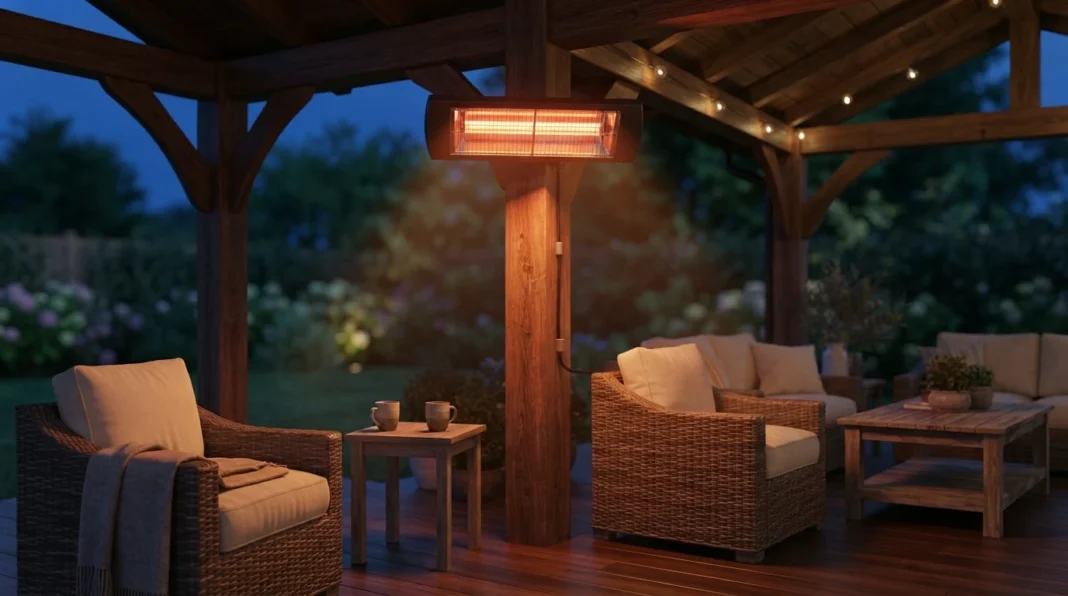
The Best Electric Infrared Patio Heaters for 2026
Electric infrared patio heaters solve the gazebo problem a fire pit or propane heater cannot: real warmth in a partially enclosed space with limited ventilation, without any combustion byproducts to worry about. Look for a unit rated for outdoor or wet-location use, mounted at the height the manufacturer specifies, and plugged into a GFCI-protected outlet rather than a standard extension cord. Most gazebo owners either skip heating entirely once fall arrives or bring in an indoor-rated heater that was never built for the exposure, and neither is necessary once the right infrared unit takes over that job.
Key Takeaways
- Outdoor-rated (IP65+) units handle humidity and splash exposure; indoor-rated heaters do not.
- Plugging into a GFCI-protected outlet adds real protection against outdoor electrical failure.
- A 3-foot clearance from combustible material applies to any electric heater regardless of setting.
- Wall and ceiling mounts free floor space; freestanding units suit rentals where drilling is not an option
- Dual-zone systems cut running costs by letting unused parts of a larger gazebo stay powered down.
This guide ranks five heaters built for exactly that setting, from a compact wall-mounted design to a dual-zone unit for larger layouts. Every pick below gets checked against real electrical safety standards, since a heater with the wrong clearance or a damaged cord defeats the entire purpose of adding one. Scroll past the takeaways below and jump to whichever heater matches your gazebo.
Five Infrared Heaters Built for Gazebo Use
Every one of these electric infrared patio heaters solves a slightly different version of the same problem: real warmth in a partially enclosed space without the ventilation concerns an open flame brings. The middle pick covers the electrical safety standards worth checking regardless of mounting style, and the other four cover placement, coverage area, and zone control.
The Wall-Mounted Infrared Heater for Gazebo Corners
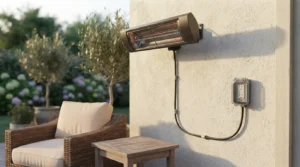
A wall-mounted heater tucked into a gazebo corner keeps the unit clear of foot traffic while still directing heat toward the seating area below, a common configuration among electric infrared patio heaters built for corner installs. Mounting height matters as much as wattage here, since a unit hung too low radiates heat unevenly and one hung too high loses effectiveness at floor level.
Most wall-mounted designs cover a 6 to 8 foot radius directly in front of the unit. This pick suits a compact gazebo where ceiling-mounted options are not practical due to low overhead clearance or an open-lattice roof structure.
The Freestanding Infrared Heater on a Weighted Base
A freestanding infrared heater on a weighted base skips permanent mounting entirely, which suits a rented property or a gazebo where drilling into the structure is not an option. The weighted base keeps the unit stable in wind, though it still needs a stable, level surface to sit on rather than uneven decking or gravel.
Coverage runs similar to a wall-mounted unit at comparable wattage, just from floor height instead of an elevated position. This pick works well paired with a compact sectional, where the heater can be repositioned as the seating arrangement changes.
The Heater Built to Real Electrical Safety Standards
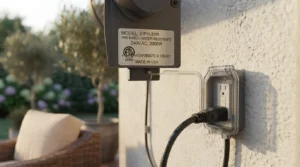
Every one of these electric infrared patio heaters comes down to the same core safety question: is the unit rated for the environment it sits in, and is the power source protected the way an outdoor appliance requires? A heater rated for outdoor or wet-location use handles humidity and occasional splash exposure that an indoor-rated unit was never built to tolerate, and using the wrong rating in a gazebo is one of the most common mistakes buyers make.
Plugging directly into a GFCI-protected outlet, rather than a standard extension cord, adds a real layer of protection against the specific failure mode electrical appliances face in damp outdoor settings. Clearance from combustible material matters here too; the same three-foot rule that applies to any electric heater regardless of setting, and buyers should treat this clearance as a fixed requirement rather than a suggestion. The table below details electrical safety guidelines established by NFPA specialists.
| Number & Insight | Source | Expert/Team |
|---|---|---|
| NFPA reports that heating equipment, including electric space and patio heaters, is a leading cause of home fires, peaking in December, January, and February, and recommends at least three feet of clearance from anything combustible | NFPA | National Fire Protection Association |
The Ceiling-Mounted Infrared Heater for Open Gazebos
A ceiling-mounted heater directs warmth straight down across the entire seating area beneath it, which works especially well in a gazebo with an open lattice or partially open roof structure where a wall-mounted unit’s angled heat would miss much of the space. Among electric infrared patio heaters, this style scales best to larger open-roof structures.
Installation typically requires a qualified electrician for permanent wiring, unlike a plug-in wall-mounted or freestanding unit. Coverage area scales with height and wattage, generally covering more total floor space than a comparable wall-mounted design, and this pick suits a gazebo used regularly enough to justify the higher upfront installation cost.
The Dual-Zone Infrared Heater for Larger Gazebo Layouts
A dual-zone system pairs two heating elements controlled independently, which lets one side of a larger gazebo run warm while the other stays off when only part of the space is in use. This flexibility reduces running costs compared to a single large unit sized for the whole space, since unused zones simply stay powered down.
Installation complexity roughly doubles compared to a single-zone unit, since each element needs its own wiring run back to the control point. This pick fits a gazebo large enough to host separate conversation areas or a dining zone alongside a lounging zone.
How Many Watts Does a Gazebo Heater Need? (2026 Pick)
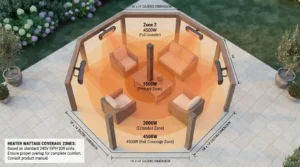
A gazebo under 150 square feet typically needs 1,500 to 2,000 watts for effective warmth, while a larger structure closer to 300 square feet needs 3,000 watts or more, often split across two units rather than one oversized heater. These figures assume a partially open structure rather than a fully enclosed room, since open sides let heat escape faster than an enclosed space would.
Climate matters as much as square footage, so buyers in consistently cold regions should size up from these baseline figures rather than down.
Wall-Mount vs Ceiling-Mount Heaters: Which Adds $50 in Install Cost?
Ceiling-mounted heaters typically cost $50 to $150 more to install than a comparable wall-mounted unit, mostly reflecting the electrician labor required for permanent overhead wiring versus a simpler wall bracket. Wall-mounted units close that gap further when a compatible outlet already exists nearby, avoiding new wiring runs entirely.
Buyers planning a gazebo renovation from scratch often find the price difference negligible once electrical work is already underway for other reasons, making ceiling mounts worth the modest premium at that point.
Is It Safe to Run an Infrared Heater in Rain? (IP Rating Check)
An outdoor-rated infrared heater with an IP65 rating or higher handles light rain and splash exposure without issue, since that rating specifically covers protection against water jets from any direction. Heaters rated below IP65, or units explicitly marked for covered or sheltered use only, should not run during active rain, no matter how sturdy they look.
Checking the specific IP rating on the product listing before buying, rather than assuming “outdoor use” automatically means “rain safe,” prevents a costly mistake in an open or partially covered gazebo.
Conclusion
An infrared heater earns its spot in a gazebo the moment it adds real warmth without the ventilation concerns an open flame would bring to a partially enclosed space. The lesson from every pick above is the same: check the mounting clearance and electrical rating before checking the finish, since a heater installed too close to fabric or wood siding defeats the entire purpose of buying one. Pair the right heater with the right mounting height and the cold-gazebo problem that ends most fall evenings early simply goes away.
This is really an electrical-safety question wearing a comfort upgrade, and it shows up the same way on covered porches, pergolas, and screened patios everywhere. Get the clearance and outlet type right, and wattage and finish become simple taste calls. Save this complete buying guide, measure your gazebo carefully before ordering anything, and check out our companion pillar on fire pits wooden decks if an open-flame option is still worth considering.
Frequently Asked Questions (FAQs)
Are electric infrared patio heaters safe for gazebos?
Yes, electric infrared patio heaters are one of the safer heating options for a gazebo because they avoid combustion entirely, though they still need outdoor-rated construction, GFCI-protected power, and the standard three-foot clearance from combustible material.
How much does it cost to run an infrared patio heater?
A 1,500-watt heater running for four hours typically costs $1 to $2 depending on local electricity rates, making infrared heaters relatively inexpensive to operate compared to their upfront purchase price.
Can I use an indoor heater in a gazebo instead?
No, indoor-rated heaters lack the weatherproofing and electrical safety features required for outdoor humidity and splash exposure, and using one outdoors risks both heater failure and electrical shock.
Do infrared heaters work well in windy gazebos?
Yes, infrared heaters warm people and surfaces directly rather than heating the surrounding air, so they remain effective in light to moderate wind that would reduce the effectiveness of a convection-style heater.
How far should seating be from a wall-mounted infrared heater?
Most manufacturers recommend at least three feet of clearance between the heater and any seating or combustible material, with actual heating range extending 6 to 8 feet depending on wattage and mounting height.