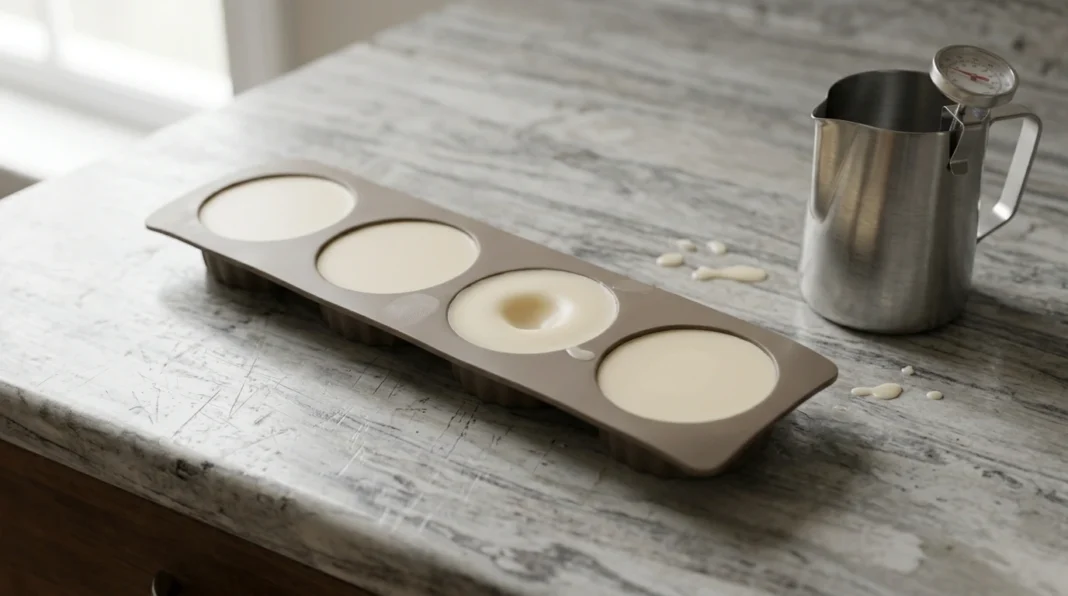
Why Do Soy Wax Melts Sink In Center And 3 Amazing Ways To Stop It

Soy wax melts sink in the center because the wax shrinks as it cools and the surface pulls down. Three ways to stop it: pour cooler and let the melts set at room temperature, level any dip with a second thin pour and choose a blend that shrinks less. This works for clamshell molds and silicone molds and tart molds. It works for pure soy and for soy blends.
Key Takeaways
- Wax is liquid when you pour it and solid when it sets. Solid wax takes up less room. The dip is that loss showing.
- Pour at the cooler end of your supplier’s range and let melts set at room temperature, away from vents and the fridge.
- A second thin pour levels a dip. The patent says candle makers re-melt the top or pour a second time.
- In the patent, a wax with about 50% n-paraffin shrank 6 to 8% by volume and one with about 75% shrank 8 to 12%.
- The patent covers petroleum waxes and not soy. Test your own wax on one small batch.
Why does the middle drop? A melt does not set all at once. The outside firms first and the center follows. As the center solidifies, it shrinks and the top falls into the gap. ExxonMobil’s candle wax patent measured shrinkage for petroleum waxes. It found that waxes with more n-paraffin shrank more. Soy wax is a different material, so treat those numbers as the idea and not a soy figure.
Three Moves That Take A Dipped Wax Melt Back To Flat
Each move works on a different part of the problem. Pouring cooler comes first because it prevents most dips before they form. The second pour sits in the middle because it repairs the dip you already have. Choosing a blend comes last because it needs a fresh batch of wax. One table from a patent source sits under the middle move. The wider craft set is in the full guide to stencil paint bleed wood and three related craft fixes.
Pour Cooler And Let The Melts Set At Room Temperature
Melt the wax in a double boiler and check it with a thermometer. Then pour at the low end of the range on your supplier’s data sheet. Soy wax melts sink less when the pour is cooler because the wax has less distance to cool. Stir in the fragrance oil at the temperature the supplier gives. Pour slowly into a mold that sits flat and level on the counter.
Let the melts set at room temperature. Keep them away from vents and windows and the fridge. Fast cooling firms the outside while the middle is still soft and the middle then drops. Do not move the mold until the wax is solid. The patent’s own shrinkage test filled jars to a line and let the wax solidify at ambient temperature. Copy that habit for a fair look at your dip.
Level The Dip With A Second Thin Pour

A dip is easy to repair while the wax is still a little soft. Melt a small amount of the same wax and warm it to your pour temperature. Pour a thin layer into the dip and stop at the rim. Let it set at room temperature. A heat gun on low can also smooth a shallow dip. Keep it moving so the surface does not bubble.
ExxonMobil’s candle wax patent describes the same repair. It says candle makers must often re-melt the top portion or pour a second time to level the top. It defines a sink hole as a spot where the center fell further and faster than the normal curve. The patent covers petroleum waxes and never mentions soy, so treat the repair as craft practice. The table below details candle wax shrinkage guidelines established by ExxonMobil Research and Engineering specialists.
| Number & Insight | Source | Expert/Team |
|---|---|---|
| 8 to 12% shrinkage by volume on cooling for a wax of about 75% n-paraffin | ExxonMobil Research and Engineering, US patent 7,445,648, “Wax blends for candles with improved properties” (checked October 2026) | Carl Wayne Hudson, Christopher Jeffrey Kent and Anthony Patrick Hennessy |
| 6 to 8% shrinkage by volume on cooling for a wax of about 50% n-paraffin | ExxonMobil Research and Engineering, US patent 7,445,648, “Wax blends for candles with improved properties” (checked October 2026) | Carl Wayne Hudson, Christopher Jeffrey Kent and Anthony Patrick Hennessy |
| Re-melt the top portion or make a second pouring to level the top | ExxonMobil Research and Engineering, US patent 7,445,648, “Wax blends for candles with improved properties” (checked October 2026) | Carl Wayne Hudson, Christopher Jeffrey Kent and Anthony Patrick Hennessy |
| Shrinkage measured in 1/16-inch units after jars were filled to the fill line and the wax solidified at ambient temperature | ExxonMobil Research and Engineering, US patent 7,445,648, “Wax blends for candles with improved properties” (checked October 2026) | Carl Wayne Hudson, Christopher Jeffrey Kent and Anthony Patrick Hennessy |
Choose A Blend That Shrinks Less And Test A Small Batch
Soy wax melts sink more or less depending on the blend. In the patent, the shrinkage fell as the share of n-paraffin fell. Those are petroleum waxes and soy blends differ. Ask your supplier which blend suits melts and tarts and whether it is pure soy or a mix. Buy a small bag first. Pour one test batch before you commit to a big one and write down what you see.
Skip the costly fixes. The patent calls microwax and petrolatum and polyol additives costly. It says some soften the candle or change its color and texture. For melts, the cheaper path is a cooler pour and a second pour. If your melts still sink after that, ask your supplier for a blend made for tarts. Record the pour temperature and the room temperature for each batch.
3 Mistakes To Avoid When Pouring Soy Wax Melts
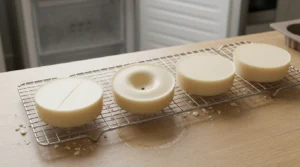
Mistake one is pouring too hot. Soy wax melts sink deeper after a hot pour because the wax has the furthest to cool. Check it with a thermometer and wait until it drops. Mistake two is rushing the cool. A fridge or freezer or a fan firms the outside fast and the center then pulls down or cracks. Let the melts set at room temperature on a level surface.
Mistake three is moving the mold too soon. A melt that looks set can still be soft in the middle. A knock or a tilt can leave a dip or a ridge. Leave the mold alone until the wax is fully solid. Keep it clear of drafts from vents and windows while it sets. Pour a second thin layer only after the first has set.
5 Best Ways To Tell Why A Wax Melt Is Sinking
Way one is the depth of the dip. A shallow dip is plain shrinkage and a second pour fixes it. Way two is the hole. A deep hole in the center is the sink hole the patent describes. It means the center fell further and faster than the rest. Way three is the room. Look for a vent or a window or a fan near the mold.
Way four is cracks. A crack across the top points to fast cooling. Way five is oily beads on the surface. Beads can point to too much fragrance oil. Write down what you see with the pour temperature and the room temperature. After two or three batches, you will see which cause is yours. Then change one thing at a time so you know what worked.
3 Proven Ways To Fix Wax Melts That Already Set
Way one is to re-melt the whole batch. Break the melts into pieces and warm them in the double boiler. Pour again at a cooler temperature and let them set at room temperature. The wax is not wasted. Way two is the second pour. Top up each dip with a thin layer of the same melted wax and let it set before you touch it.
Way three is to use them as they are. A dipped melt works in a warmer just like a flat one. Only the look suffers. Pack them, dip down in a clamshell or tuck them in a gift box with the dip out of sight. If you plan to sell them, fix the dip first. A flat top is what buyers expect.
A Flat Top Starts With A Cooler Pour
Soy wax melts sink because wax shrinks as it cools and the surface falls into the gap. A cooler pour and a slow cool at room temperature prevent most dips. A second thin pour fixes the rest. A blend that shrinks less helps on the next batch. The patent shows shrinkage changes with the wax and that is why a small test batch pays off before a big pour.
The same habit helps every craft in this guide. Find the cause first. Fix the cheapest thing first. Then change the material only if you must. Start with the cheapest fix before you try the next one and write down exactly what changed. Did this save a batch you nearly melted down? Tell us in the comments and share it with a friend or family member who loves candles.
Frequently Asked Questions (FAQs)
Why do soy wax melts sink in the center?
Soy wax melts sink in the center because the wax shrinks as it cools. The outside firms first and the center follows. When the center solidifies it takes up less room and the top falls into the gap. A hot pour and fast cooling make the dip deeper. A cooler pour and a slow cool at room temperature make it shallower.
How do you fix a sunken wax melt?
Melt a small amount of the same wax and warm it to your pour temperature. Pour a thin layer into the dip and stop at the rim. Let it set at room temperature. The ExxonMobil candle wax patent describes the same repair. It says makers re-melt the top portion or pour a second time to level the top.
What temperature should you pour soy wax melts at?
Use the pour temperature on your wax supplier’s data sheet and start at the cooler end of the range. I found no source that gives one number for every soy wax. Brands differ. Check the wax with a thermometer and write down the pour temperature and the room temperature for each batch so you can compare.
Does a heat gun fix sinkholes in wax melts?
A heat gun on low can smooth a shallow dip when soy wax melts sink only a little. Keep it moving so the surface does not bubble. For a deeper hole, a second thin pour works better. Pour the melted wax into the dip and let it set at room temperature. Neither fix is covered by the patent, so both are craft practice.
Do soy wax melts shrink more than paraffin?
I found no source that measures soy wax against paraffin. The ExxonMobil patent covers petroleum waxes only. It shows shrinkage depends on the blend and that a wax with more n-paraffin shrank more. Ask your supplier about your blend and pour one small test batch before a big one.