Heavy Duty Retractable Deck Awnings Explained
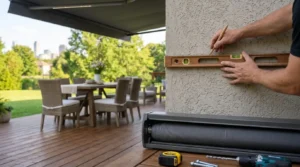
Heavy duty retractable deck awnings install in five steps: measure the deck, find solid framing, set a wind limit, hang the brackets and test the sensor. The National Weather Service says umbrellas are used with difficulty at 25 to 31 mph, so an open awning needs to be rolled in before the wind gets there.
Key Takeaways:
- Measure width and projection before you shop.
- Mount into solid framing, never siding alone.
- Set your wind limit from the Beaufort scale.
- Use two people to hang the roller tube.
- Test the motor and sensor before the first storm.
Each step prevents a different failure: a short awning, a loose bracket, a gust that bends the arms, a dropped tube, a sensor that never fires. None of it needs special skill. Do the steps in order and the awning gives shade for years. Keep reading to install yours the right way.
Five Steps From Tape Measure to Shade
A heavy duty retractable deck awning is a motorized or crank-driven shade that rolls out from a wall bracket and rolls back into a roller tube or cassette. It gives shade. It does not give shelter from storms. Five jobs cover the install: the size, the framing, the wind limit, the hanging and the testing. Each has a quick check.
Measuring the Deck and Choosing the Size
Measure twice and write the numbers down. You need three: the width of the wall you want shaded, the projection you want out over the deck and the height of the wall mount. Add a little width on each side since the sun moves through the day. Stand at the mounting spot with a tape measure. That beats guessing from the floor.
Check the clearance on heavy duty retractable deck awnings before you commit. The front bar should sit high enough to walk under without ducking and low enough to block the afternoon sun. Look at swinging doors and at railings. Mark the outline on the wall with painter’s tape. View it from your chair. If it looks right in tape, it will look right in fabric.
Finding Solid Framing to Mount To
A heavy duty retractable deck awning pulls on its brackets all day and harder in a gust. Siding and trim can’t carry that load. Find the studs, rafters or ledger board behind the wall with a stud finder. Mark each one with a pencil before you drill. Brackets belong on structural wood or masonry that is meant to hold them and nowhere else.
Spread the load across several mount points and use the fasteners the maker supplies. Pre-drill so the wood doesn’t split. Seal every hole that passes through siding with exterior caulk so water stays out of the wall. Water in a wall does hidden damage. Can’t find solid framing? Stop there. Ask a pro to check the wall before a single bracket goes up.
Setting Your Wind Limit

Every awning has a wind rating and every deck has its own wind. Treat the rating as a ceiling and not a target. The National Weather Service describes what each wind speed looks like on the ground. At 13 to 18 mph, small branches begin to move. At 25 to 31 mph, large branches stay in motion and umbrellas become hard to use. The table below details wind scale guidelines established by National Weather Service specialists.
| Number & Insight | Source (Institute) | Expert / Team |
|---|---|---|
| Beaufort Force 6, a strong breeze, covers winds of 25 to 31 mph. Large branches are in motion and umbrellas are used with difficulty. | National Weather Service | NWS Beaufort Wind Scale |
| Beaufort Force 7, a near gale, covers winds of 32 to 38 mph. Whole trees are in motion and walking against the wind is inconvenient. | National Weather Service | NWS Beaufort Wind Scale |
Pick a limit well below your awning’s rating. Make the first sign of moving branches your signal to roll in. Set the wind sensor to match. Post the limit by the back door. Gusts always run higher than the steady wind you feel. Read the service’s Beaufort Wind Scale guide and keep the signs in mind each time you step onto the deck.
Hanging the Brackets and Arms
Lay everything out on the deck and read the maker’s steps first. Mark the bracket line with a level and a pencil. Drill pilot holes and fasten the brackets one at a time. Check each one with the level before you move on to the next one. A line off by a little becomes a crooked awning once the fabric is out.
Hang the roller tube with a helper. Heavy duty retractable deck awnings are heavy and awkward. A dropped tube can bend the arms. Set a slight downward pitch toward the outer edge if the instructions allow so rain runs off. Tighten every fastener a second time after the first hour. Then extend the awning halfway and step back to check the line.
Testing the Motor and Wind Sensor
Power the motor only after the brackets are done. Run the awning out and back a few times and listen. A grinding sound or a jerky start means something is binding. Stop and check the arms and the tube before you go on. Keep hands clear of the arms. Set the end limits so the awning stops where it should in both directions.
Mount the wind sensor where it feels the same wind the awning does. Set its trigger below your wind limit. Test it with the maker’s step so you know it works. Check the sensor and the motor again each spring and fall. A sensor that never fires protects nothing. Give it a few minutes of your time twice a year. Note the dates.
1 Proven Habit to Avoid a Painful Storm Surprise
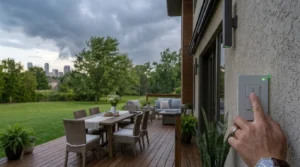
Roll the awning in every time you leave the house. That one habit beats any sensor. Storms don’t announce themselves. A gust can arrive while you are at work. Check the forecast before you go. If wind is on the way, roll in early. An awning left out overnight meets the weather alone. Make it part of the routine like locking the door.
Roll in for heavy rain too, since fabric holds water and the weight can strain the arms. In winter, roll in and leave it that way. Snow and ice add weight an awning isn’t built to carry. Let the fabric dry before you roll it so it doesn’t grow mildew inside the tube. Check the arms for bends after any storm. Small bends grow.
1 Amazing Fix for a Noisy Flapping Awning
Flapping starts with slack. Fabric or arms that have loosened over time let the wind grab the edge. Extend the awning fully and look for sag in the fabric and play in the arms. Tighten the arm tension the way your manual describes. Check the brackets too. A loose bracket can rattle like loose fabric. Loose fabric flaps louder as the wind picks up.
If it still flaps in a light breeze, roll it in. The sound is a warning. Wind that moves a heavy awning is wind it was not meant to face. Fix the cause before the next breeze arrives. Ask a helper to steady the awning while you adjust it. Never work under an arm you can’t support. Take a photo if you find damage.
Best Heavy Duty Retractable Awning for a Deck: 2026 Pick
Start your heavy duty retractable deck awning search with the frame. Aluminum doesn’t rust. Steel is stronger but needs a sound finish to stay that way. Look for a cassette or hood that covers the fabric when it is rolled in. That one feature protects the fabric from sun and rain between uses. Pick a motor with a wind sensor if you are often away.
Match the projection to the depth of your deck and the width to the wall you measured. Ask for the wind rating in writing and compare it with the limit you set. Bring the numbers from your measuring step. A rating you can’t verify isn’t worth much. Check that the kit includes every bracket and that the brackets suit your type of wall.
Heavy Duty Awning Install Takeaways
Heavy duty retractable deck awnings reward a patient install. Measure the deck. Mount to solid framing. Set a wind limit well below the rating. Hang the brackets level. Test the motor and the sensor before the first storm. Each step is quick and each one prevents a failure that is costly to fix later. A good awning should add shade to a deck and not a worry. The install is where that gets decided. Spend a weekend on it. Put the twice-a-year check on the calendar. Post your wind limit by the door. No step is optional. Then enjoy the shade for the rest of the season.
If you are also planning a water feature beside the deck, our guide on how to install solar water fountains with battery covers the power math. If this guide helped you plan your install, let us know in the comments below and share it with friends or family who are shopping for an awning.
Frequently Asked Questions (FAQs)
What is the best heavy duty retractable awning for a deck?
The best heavy duty retractable awning for a deck has a strong frame and a wind sensor. Measure your wall width and the projection you need. Then check the maker’s wind rating against your own limit.
How much wind can a retractable awning take?
Check your model’s rating since it varies. As a guide, the National Weather Service says umbrellas are used with difficulty at 25 to 31 mph. Roll your awning in well before that.
Can you install a retractable awning yourself?
Yes. Heavy duty retractable deck awnings install well with a helper if you can find solid framing. Never lift the roller tube alone. If the framing is unclear, ask a pro.
Do retractable awnings need to come down in winter?
Check the manual first. Roll the awning in and leave it in, since snow and ice add weight it isn’t built to carry.
What height should you mount a deck awning?
Mount it high enough to walk under without ducking and low enough to block the afternoon sun. Mark the outline with painter’s tape first.