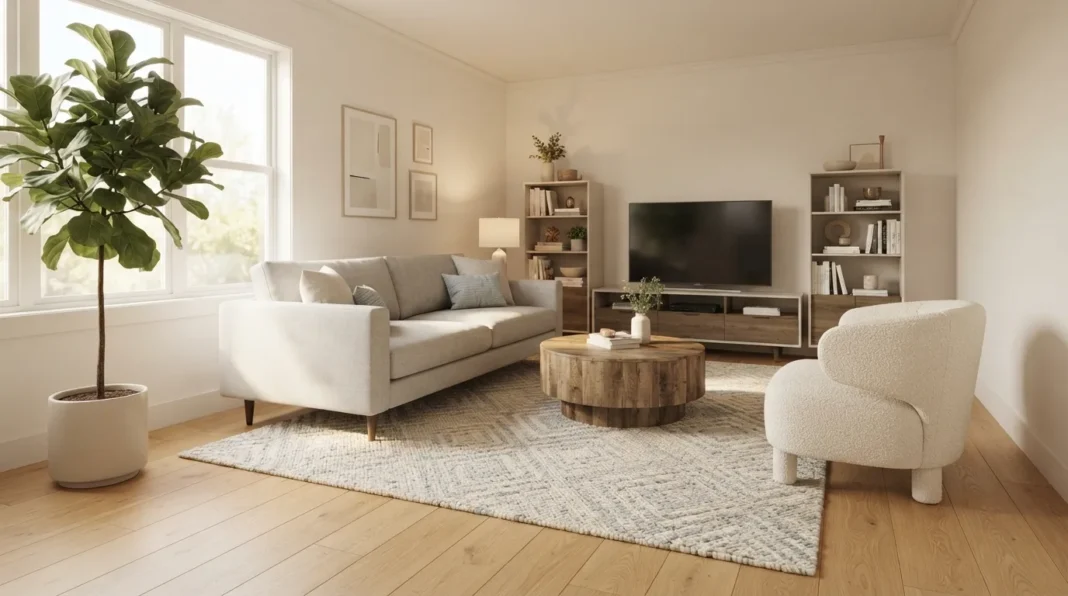
Float Furniture Small Room Layouts Without Losing Space
You can float furniture small room layouts successfully by anchoring the piece to a properly sized rug, leaving at least one foot of clearance on every side, and testing the position with painter’s tape before committing to anything permanent. Skipping the clearance check is the single most common reason a floated sofa ends up feeling more cramped than one pushed flat against the wall.
KEY TAKEAWAYS
- A rug anchors floated furniture visually, so skipping it makes the piece look like it’s drifting in the room.
- Leave at least one foot of clearance on every side of a floated piece, following the designer-recommended minimum.
- Narrow, rectangular rooms limit how much furniture can realistically float, so check shape before committing.
- A floated sofa’s back can define a second zone in an open-plan space without adding a wall.
- Test the layout with painter’s tape on the floor before moving any actual furniture.
Floating furniture has a reputation for only working in large, open rooms, but the technique still applies in smaller spaces as long as the clearance and scale are handled correctly. A sofa floated with too little room around it does more harm than good, turning a small room into an obstacle course instead of an open one. The five hacks below fix that by treating rug size, clearance, and room shape as separate checks, expanding on the floating approach already introduced in how to arrange small living room furniture more broadly.
5 Hacks for Floating Furniture in a Small Room
Each hack below solves a different piece of the puzzle for anyone trying to float furniture small room layouts, from anchoring the layout visually to confirming it actually works before anything gets moved permanently.
Work through them roughly in order, since the earlier checks decide whether the later hacks are even worth attempting in a specific room.
Anchor the Layout With a Rug First
A floated piece of furniture needs a rug underneath it to visually ground the layout, since furniture pulled away from the walls without a rug can read as drifting or unintentional rather than deliberately placed. The rug should extend under the front legs of the floated piece at minimum, ideally reaching further for a fully anchored look.
This step matters more for floating than it does for a wall-hugging layout, since the wall itself usually provides enough visual anchoring on its own. Without a rug, even a well-measured floating layout can feel unfinished, which is why this hack goes first on the list rather than last.
Check the Room Shape Before Committing
A narrow, rectangular room limits how much furniture can realistically float, since pulling a piece toward the center in a long, thin space often blocks the room’s main walkway instead of opening it up. Square or more evenly proportioned rooms generally give floating furniture more room to work with than long, narrow ones.
This check should happen before measuring clearance or buying a rug, since a room shape that doesn’t support floating makes the rest of the process moot. Some larger pieces, like sofas, may still need to stay against a wall in a genuinely narrow room even if smaller pieces elsewhere in the space can float.
Follow the One-Foot Clearance Rule
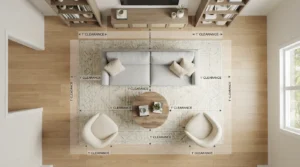
Once the room shape checks out, clearance is the number that actually determines whether a floated layout feels open or cramped. Too little space around a floated piece is worse than not floating it at all, since it creates a gap that’s too narrow to walk through comfortably but too wide to ignore.
According to The Spruce, interior designer Brittny Button recommends leaving at least one foot of space to move around each floated piece, with anything less making the surrounding space essentially unusable. The table below details furniture floating guidelines established by The Spruce specialists.
| Insight | Source | Team |
|---|---|---|
| Beyond the basic one-foot clearance rule, Button specifically recommends that roughly two feet of any floated furniture piece should sit on the anchoring rug, with enough room left on the rug between pieces like a coffee table and the seating around it. | The Spruce | The Spruce Editorial Team |
Use the Sofa’s Back to Define a Second Zone
In an open-plan space, a floated sofa’s back can define a second zone, like a dining area or entry space, without adding an actual wall. This works especially well when the sofa sits perpendicular to the main walkway, using its own bulk as a soft visual divider between two functions.
This hack turns floating from a purely aesthetic choice into a functional one, which matters most in studio apartments or open-concept living areas where every piece of furniture needs to earn its keep. A console table placed behind the sofa can reinforce the zone division further, adding a landing spot for keys or mail on the far side.
Test With Painter’s Tape Before Moving Anything
Before actually moving a heavy sofa or sectional, mark out the proposed floated position on the floor with painter’s tape, including the one-foot clearance zone around it. This catches sizing and clearance problems before any furniture gets moved, which matters more with floating layouts than wall-hugging ones since there are more open sides to account for.
Walking through the taped-out space at normal pace, the way it would actually get used day to day, reveals clearance problems that measuring alone sometimes misses. This final check takes fifteen minutes and prevents the far more common mistake of moving furniture twice.
3 Signs Floating Furniture Isn’t Working in Your Room
Floating furniture isn’t working when the clearance around the piece drops under one foot, when the room’s narrow shape forces the walkway to bend awkwardly around it, or when the floated piece has no rug or other anchor beneath it. Any one of these three signs usually means the piece should go back against the wall rather than staying floated as-is.
Most people notice the clearance problem first, since it’s the most immediately obvious issue once the furniture is actually moved. That specific complaint is almost always solved by rechecking Hack 3’s one-foot rule rather than abandoning the floating concept entirely.
Cheapest Way to Test Floating Furniture Under $50
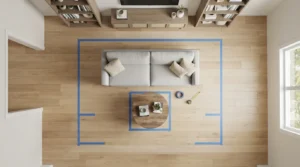
Painter’s tape and an existing tape measure, both already in most households or available for under $10 combined, are all that’s needed to test a floated layout before committing to it. Marking out the furniture’s footprint and the one-foot clearance zone on the actual floor catches most problems before any heavy lifting happens.
For anyone needing a rug to anchor the layout, a budget-friendly option in the $30 to $40 range does the job just as well as a more expensive piece for testing purposes, since the goal at this stage is confirming the layout works, not finalizing the final decor. This combination keeps the entire test well under $50.
Best Floating Furniture Setup for 2026 (Editor’s Pick)
For most people trying to float furniture small room layouts in 2026, a floated sofa anchored on a properly sized rug with a full foot of clearance on every side remains the strongest overall setup, balancing openness with genuine walkability. This approach works particularly well in square or evenly proportioned rooms where the shape doesn’t fight the layout.
For narrower rooms where a full float isn’t realistic, floating just the smaller pieces, like a pair of accent chairs or a console table, while keeping the sofa against the wall, is the next best option. Either approach outperforms floating furniture without checking clearance and room shape first.
A Small Room That Finally Has Room to Breathe
Check the room’s actual shape before deciding whether floating is even the right move for it at all, since a narrow, rectangular room limits how much a piece can realistically pull away from the wall. Anchor whatever gets floated to a rug sized correctly to match, then confirm at least one foot of clearance on every side before calling the layout finished and done.
This same clearance-first approach works whether the floated piece is a sofa, a pair of armchairs, or a media console pulled away from the wall to define a second zone. A small room can absolutely support floated furniture, but only when the clearance math actually works out, not just when the idea looks good in a photo online somewhere. Try taping out your own floated layout on the floor before moving a single piece of furniture, then tell us whether the one-foot rule left more or less room than you expected.
Frequently Asked Questions (FAQs)
How can you float furniture in a small room?
You can float furniture small room layouts by anchoring the piece to a properly sized rug, leaving at least one foot of clearance on every side, and checking that the room’s shape actually supports pulling furniture away from the walls before committing.
Does floating furniture make a small room feel bigger or smaller?
Floating furniture generally makes a small room feel bigger when clearance is handled correctly, since it opens sightlines around the piece, but it can make a room feel smaller or more cramped if the clearance is too tight.
How much space do you need to float a sofa?
Interior designers generally recommend at least one foot of clearance on every side of a floated sofa, with less than that making the surrounding space feel unusable rather than open.
Can furniture float in a narrow living room?
Floating works best in square or evenly proportioned rooms, and a narrow, rectangular living room often limits how much a large piece like a sofa can realistically pull away from the wall.
Do you need a rug to float furniture?
Yes, a rug helps visually anchor floated furniture, since a piece pulled away from the wall without one can look unintentional rather than deliberately placed.