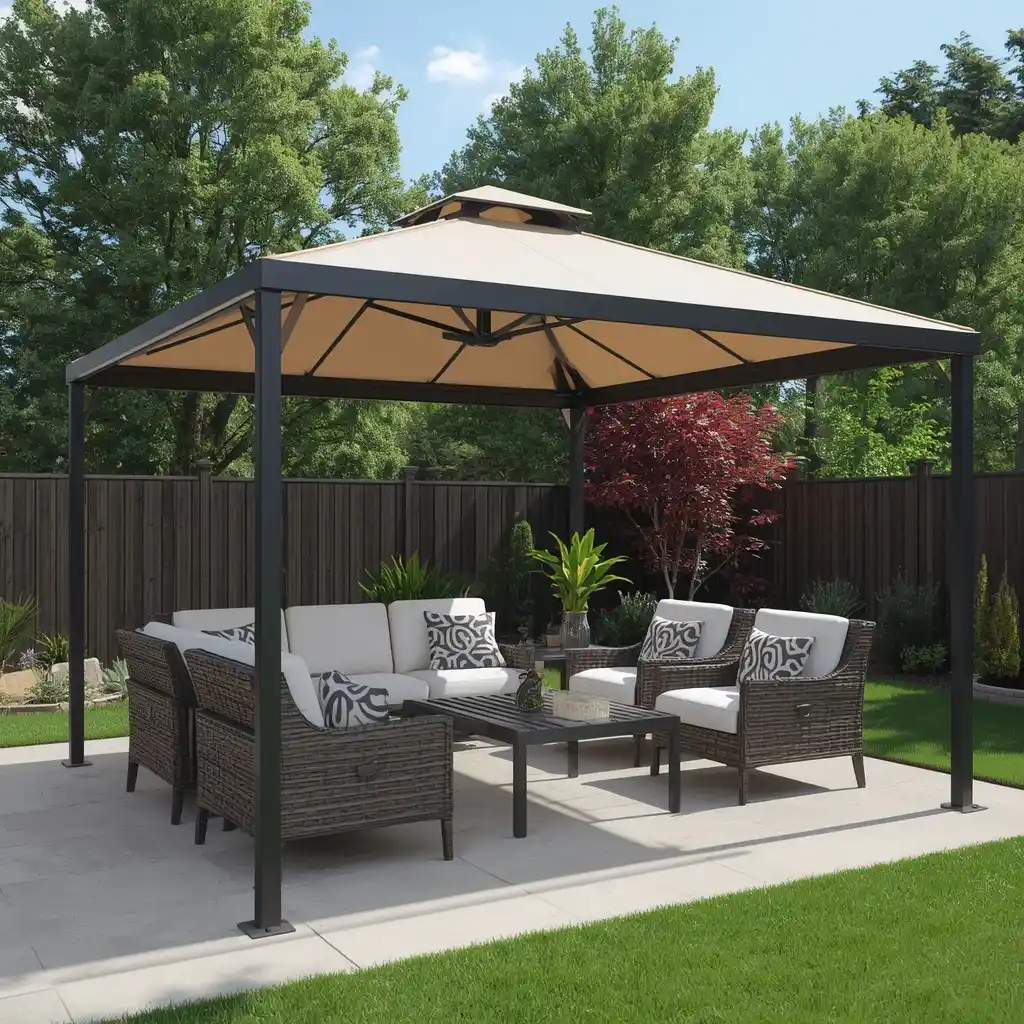
Anchoring a Gazebo on Concrete Without a Single Drilled Hole
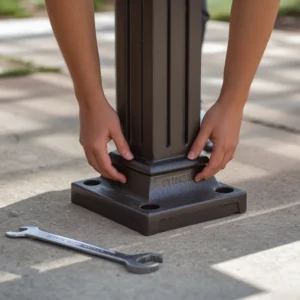
A patio gazebo concrete anchor built entirely from weighted bases holds a standard frame securely without touching the slab underneath at all. Instead of drilled bolts driven into the concrete slab, dense leg weights counter wind force through sheer mass and careful, correct placement at every single corner.
Key Takeaways
- Weighted leg bases replace drilled bolts entirely on hard surfaces
- Roughly 60 pounds per leg is a common baseline for a standard 10×10 frame
- A basic weighted anchor kit runs under $80 for four legs
- Setup takes about 30 minutes once weights are on hand
- Removing the gazebo leaves the concrete exactly as it was
This guide covers the full weighted anchoring method for building a proper patio gazebo concrete anchor, plus how to check your setup is actually holding before you leave it unattended overnight. The five real practical steps below work on most standard gazebo frames and typical residential wind conditions.
Why Weighted Bases Beat Stakes on Hard Surfaces
Ground stakes work well in soil but concrete gives them nothing to bite into. Mastertent’s own guidance on securing canopy structures notes that base weights and ballast systems handle hard surfaces like concrete far better than stakes, which are suited to grass and dirt instead. The table below details the official surface-matching guidance established by Mastertent.
| Number & Insight | Source (Institute) | Expert / Team |
|---|---|---|
| Base weights and ballast systems are the recommended securing method for hard ground surfaces like concrete, while ground stakes and anchors work better on soft surfaces like grass or dirt. | Mastertent | Mastertent Product Engineering Team |
Matching the anchoring method to the surface matters more than most people expect. A stake driven repeatedly against unyielding concrete does nothing, while the same effort spent placing a proper weight actually solves the problem.
What You’ll Need Before You Start
Four leg-rated weights, sized to your gazebo’s frame and local wind conditions, are the core requirement for any patio gazebo concrete anchor. Many kits come pre-drilled to bolt directly onto the leg base, so a wrench or ratchet set handles the attachment itself.
A tape measure helps confirm your gazebo’s actual footprint before ordering weights, since undersized weights are a common and avoidable mistake. Rubber grommets or padding under each weight protect the concrete finish from scratching during placement and a helper makes lifting heavier weights considerably easier.
Installing a Patio Gazebo Concrete Anchor: Step by Step
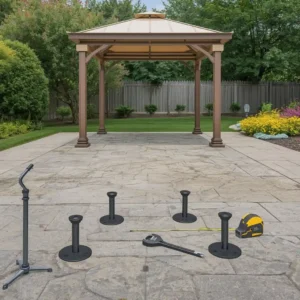
The full setup takes about 30 minutes for a standard frame once the weights are on site. Working through the steps in order avoids having to reposition a fully weighted leg later.
Measure Your Gazebo Footprint and Plan Weight Placement
Confirm the exact spacing of all four legs before ordering or placing any weights, since even standard-sized gazebos vary slightly between manufacturers. Mark each leg location on the concrete with chalk to keep the layout accurate during setup and double-check the marks against the frame itself before moving to the next step.
Choose Your Weighted Base System
Select weights rated for your frame size and typical local wind exposure, erring toward the heavier option if your patio sees regular gusts. Stacked plate systems and single dense blocks both work, as long as the total weight per leg meets the manufacturer’s recommendation for a proper patio gazebo concrete anchor.
Position the Weights at Each Leg
Set each weight directly under its corresponding leg, centered rather than offset to one side. An offset weight loses effective holding power even if the total mass is correct, so take the extra minute to check alignment before locking anything in place.
Secure the Frame to the Weights
Bolt or clip the gazebo leg to its weight according to the kit’s hardware, tightening every connection fully. A loose connection here undermines the entire setup no matter how heavy the weights themselves are, so work through each leg methodically rather than rushing the last one.
Test Stability Before Leaving It Unattended
Push firmly against each corner of the assembled gazebo, checking for any shift or lift at the base. Add supplemental weight to any leg that moves more than the others before considering the setup finished, since an uneven gazebo is only as stable as its weakest corner.
Knowing When to Take the Gazebo Down
Weighted anchoring handles routine wind well but sustained gusts beyond what your specific weight rating covers call for taking the canopy down entirely rather than trusting the anchors to hold. Checking the manufacturer’s stated wind rating against your local forecast before a storm takes the guesswork out of that decision.
For the rest of your no-drill patio projects, our guide on how to hang outdoor string lights without drilling covers another common upgrade that skips permanent fasteners entirely.
How Much Does It Cost to Anchor a Gazebo on Concrete (Under $80)
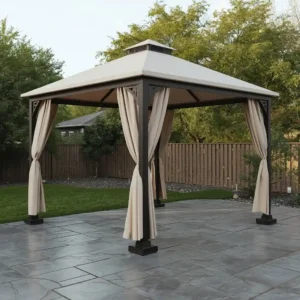
A basic weighted anchor kit for a standard 10×10 gazebo typically costs under $80, covering four leg weights sized for moderate wind conditions. Heavier-duty weights built for stronger gusts can push the total closer to $150 for a full set.
Professional anchoring services generally charge $100 to $200 depending on gazebo size and local wind requirements. For most residential setups, the DIY route handles the job just as effectively for less.
How Much Weight Does a Gazebo Need Per Leg on Concrete (60 Pounds)
A standard 10×10 gazebo frame typically needs around 60 pounds per leg as a baseline for moderate wind resistance, totaling roughly 240 pounds across all four corners. Larger frames or locations with regular strong gusts often call for closer to 75 to 100 pounds per leg.
Splitting that weight across a two-piece stacked system rather than one solid block makes placement and adjustment considerably easier without sacrificing total holding power.
How Long Does a Weighted Gazebo Anchor Last (10 Plus Years)
Quality cast iron or concrete leg weights typically last ten years or more with no meaningful wear, since there are no moving parts or fabric to degrade. The gazebo frame and canopy fabric usually need replacement well before the weights themselves do.
Rinsing weights occasionally and storing them dry over winter in harsher climates prevents surface rust from building up on lower-quality metal weights.
Conclusion
A patio gazebo concrete anchor built from weighted bases holds up through normal wind without a single hole drilled into the slab underneath. The five steps above cover matching the weight to your frame, positioning it correctly and confirming the setup actually holds before you trust it unattended.
Check your weights each season as hardware settles and the same setup can anchor your gazebo reliably for years. Try this method on your own patio, then tell us how it held up or share this guide with a friend whose concrete patio could use the same fix.
Frequently Asked Questions (FAQs)
How do you anchor a patio gazebo on concrete without drilling?
You anchor a patio gazebo on concrete without drilling by attaching rated weighted bases to each leg, sized around 60 pounds per leg for a standard frame, positioning them centered under each corner, then testing every connection before leaving the structure unattended.
Can a gazebo blow away if it’s only weighted, not bolted?
A properly weighted gazebo, using manufacturer-recommended weight per leg, resists normal wind reliably, though sustained gusts beyond the rated capacity call for taking the structure down rather than trusting weights alone to hold it in place.
Are sandbags a good substitute for rated leg weights?
Sandbags can work as a substitute in a pinch but rated leg weights distribute mass more predictably and attach securely to the frame, while loose sandbags can shift or split open over time in ways that reduce their effective holding power.
Does gazebo weight need to match wind speed exactly?
Gazebo weight should meet or exceed the manufacturer’s stated minimum for your typical wind conditions and erring toward heavier weights rather than the bare minimum gives a real safety margin during unexpected gusts.
Will weighted anchors scratch a concrete patio?
Weighted anchors will not scratch a concrete patio when used with the rubber grommets or padding most kits include, though placing bare metal or stone weights directly on the surface without any protective layer can leave marks over time.