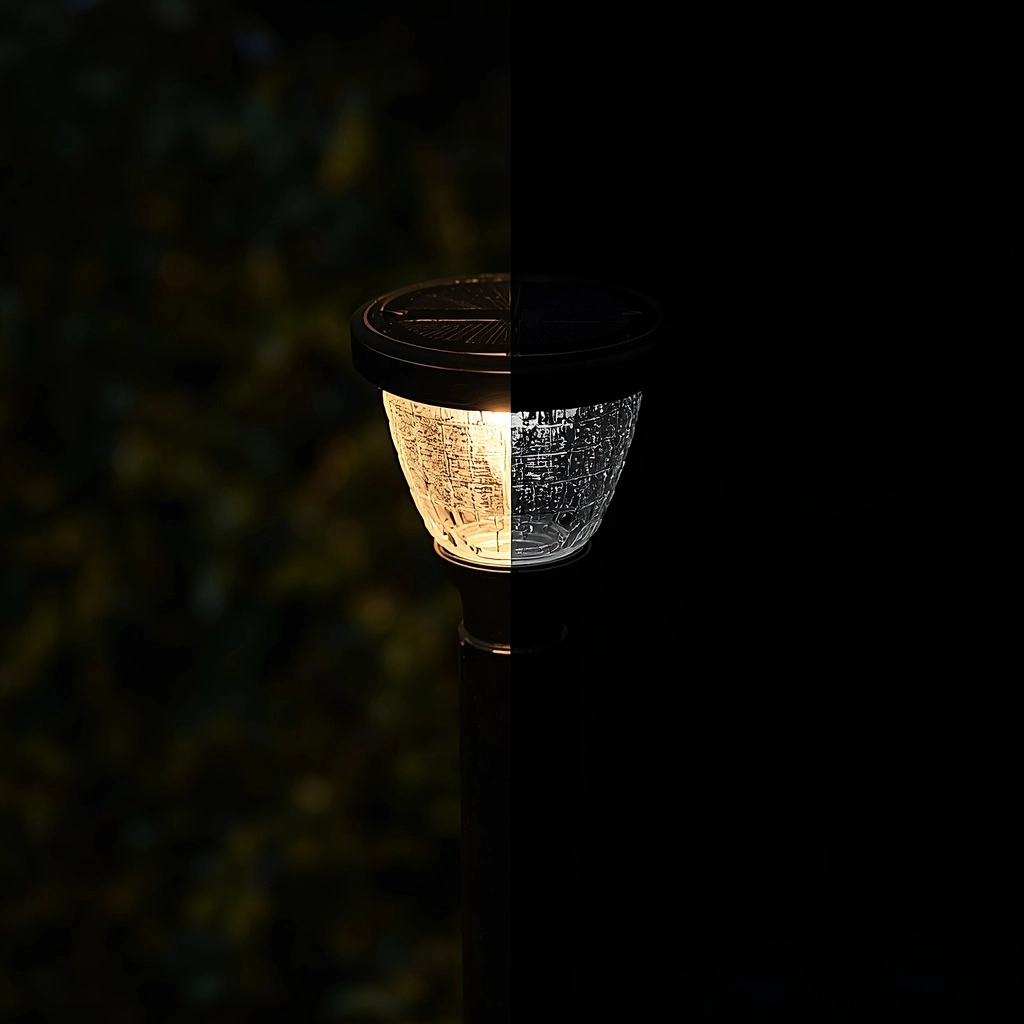
Outdoor Solar Lights Flash: Here’s the Real Cause
Outdoor solar lights flash on and off most often because the small light sensor is confused, not because the fixture is failing. A blocked, dirty or aging sensor cannot settle on whether it’s dark enough to stay lit.
Key Takeaways
- A dirty or blocked sensor is the single most common cause of flashing.
- Low battery voltage can mimic sensor problems as power drops.
- Covering the sensor briefly for 30 seconds usually forces a diagnostic reset.
- Nearby light sources, like a porch light, can confuse the sensor into flashing.
- Faulty wiring is the least common cause but the hardest to fix yourself.
A flashing light rarely means the fixture itself is broken; it usually means one small component is sending mixed signals about whether it’s actually dark outside. That distinction matters, because the fix for a confused sensor takes under a minute, while a dead unit is a different problem entirely, the kind covered in our full breakdown of why solar lights stop working.
Keep reading and you’ll walk through the five real causes in order of how often they actually happen, starting with the sensor itself before moving on to battery, wiring, nearby light and weather, each one paired with the specific fix that actually resolves it rather than a generic troubleshooting checklist.
Why the Sensor Is Almost Always the First Suspect
The tiny light-dependent resistor inside most solar fixtures works by changing its electrical resistance based on how much light hits it, and that change is what tells the fixture to switch on or off. GL5528 photoresistor datasheet specs show a standard CdS sensor reading roughly 10 to 20 kilohms at 10 lux and a minimum dark resistance between 1 and 10 megohms, a swing large enough that any partial blockage, dust, condensation or a stray cobweb can push the reading into an unstable middle zone where the sensor genuinely can’t decide which state it’s in. The table below details standard photoresistor resistance-range guidelines established by GL55 series datasheet specialists.
| Number & Insight | Source (Institute) | Expert / Team |
|---|---|---|
| A standard GL5528 CdS photocell reads roughly 10 to 20 kilohms at 10 lux illumination and a minimum of 1 to 10 megohms in full darkness, with unstable intermediate readings causing flicker. | GL55 Series Photoresistor Datasheet, components101.com technical library | Photoresistor Component Specification Team |
That middle zone is exactly where flashing happens; the sensor keeps flipping between “dark enough” and “not dark enough” as the resistance hovers between its two extremes. A speck of dust or a thin layer of pollen is often all it takes to create that instability.
How to Reset a Confused Solar Light Sensor
Wipe the sensor lens gently with a dry cotton swab or a soft, dry cloth first, since debris is the most common trigger and the easiest one to rule out. A cotton swab reaches into the small recessed housing most sensors sit inside without scratching the lens surface.
If the lens is already clean, cover it completely with your hand or a piece of opaque tape for a full 30 seconds during daylight. This forces the sensor to register a sudden, complete darkness reading, and releasing it afterward often resets the internal circuit and stops the flashing immediately.
2026 Pick: Best Sensor Cleaning Kit for Solar Lights
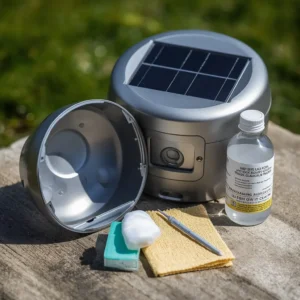
A basic kit of cotton swabs, a microfiber cloth and a small bottle of rubbing alcohol covers nearly every sensor cleaning need across a whole yard of fixtures. Rubbing alcohol evaporates without leaving residue, which matters since any leftover film on the lens can cause the same instability dust does. Avoid household glass cleaner, since the ammonia in most formulas can leave a faint haze on plastic sensor covers over repeated use.
3 Signs Your Solar Light Needs a Battery, Not a Sensor Reset
The light still flashes after a full sensor reset and cleaning is the first sign, since that rules out the sensor as the cause entirely. A light that comes on dimmer than it used to, even before it starts flashing, is the second sign worth watching for.
The third is a light that flashes specifically in the first hour after dark but then stays steady, since batteries often have just enough residual charge to power a brief, unstable startup before settling or failing completely.
2026 Pick: Do Nearby LED Lights Cause Solar Sensor Confusion
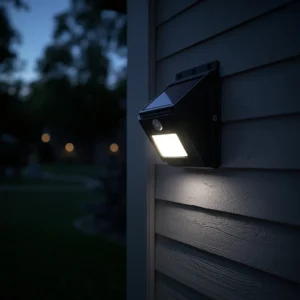
Streetlights, porch lights and even bright neighboring solar fixtures can trick a sensor into reading the area as not-yet-dark, causing on-again, off-again flashing at dusk specifically. This is more common in tightly spaced installations than most people expect.
Repositioning the fixture a few feet away from the competing light source, or angling the sensor away from it, usually resolves this without needing to clean or replace anything.
Outdoor Solar Lights Flash for Fixable Reasons Most People Overlook
A flashing solar light almost always comes down to one confused sensor, and that confusion almost always comes down to something simple: dust, a stray cobweb, a nearby competing light or a battery running low enough to make the sensor’s job harder than it needs to be. Work through the sensor check first, since it genuinely solves the vast majority of cases in under a minute without spending a dollar on parts or a replacement fixture, and it’s worth doing before assuming anything else is wrong.
That’s the real story behind why outdoor solar lights flash: a small, cheap component doing a delicate job that ordinary dust and time can easily disrupt. If a thirty-second fix saved you from replacing a fixture that was never actually broken, pass this along to whoever else on your street has been living with a flickering front path for longer than they should have.
Frequently Asked Questions (FAQs)
Why do outdoor solar lights flash on and off?
Most commonly because the light sensor is confused by dust, debris or a nearby light source, not because the fixture has failed. Cleaning the lens or covering it briefly to force a reset resolves most cases immediately.
Can a low battery cause a solar light to flash?
Yes, low battery voltage can make the sensor’s readings unstable in the same way debris does, so testing with a fresh battery is worth doing if cleaning the sensor doesn’t help.
How long should you cover the sensor to reset it?
About 30 seconds of complete darkness is usually enough to force a full reset. Longer covering doesn’t speed up the process meaningfully.
Does cold weather make solar lights flash more?
Yes, cold temperatures reduce battery efficiency and can cause condensation on the sensor lens, both of which contribute to flickering during winter months specifically.
Should you replace a solar light that keeps flashing after cleaning?
Not immediately. Try a fresh battery next, since that resolves most cases that cleaning alone doesn’t fix. Replacement is really only necessary if both steps fail.