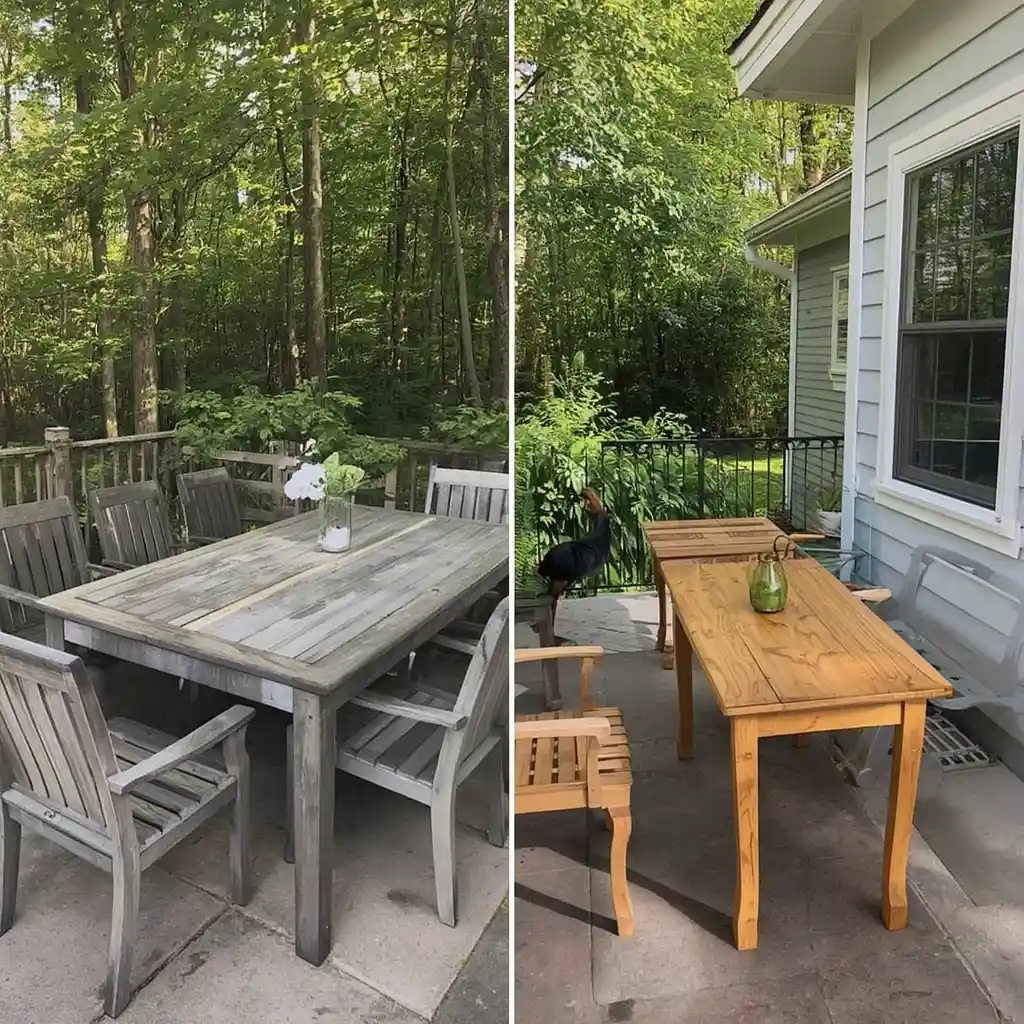
Bringing Weathered Teak Wood Furniture Back to Its Original Color
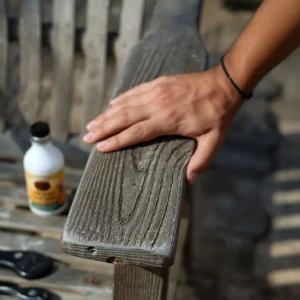
Weathered teak wood furniture has a very recognizable look, a soft silver-gray finish that gradually replaces the warm honey-brown color the wood originally started with. For a lot of owners, that shift feels like a sign something has gone seriously wrong, especially when it happens within the first year of owning a brand new set. In reality, the wood is doing exactly what teak has always done outdoors.
Whether you want to bring that original color back or simply understand what is actually happening to your furniture, the process is more approachable than most people expect. A short cleaning and oiling routine restores the honey tone in an afternoon, no professional refinishing required. Keep reading for the full four-step restoration method, plus how to decide whether restoring the color is even the right move for your own set.
Why Teak Wood Turns Silver-Gray Over Time
Teak’s transformation from brown to gray is driven by ultraviolet exposure breaking down the wood’s surface tannins, not by any kind of decay or damage. According to Westminster Teak, teak contains a high concentration of natural oils that act as a built-in moisture repellent and its natural silica content adds a further layer of protection against wear, insects and harsh weather, which is why the wood does not require heavy sealants to survive outdoors even while its surface color shifts. The table below details the official protective-properties insight established by Westminster Teak.
| Number & Insight | Source (Institute) | Expert / Team |
|---|---|---|
| Teak’s natural oils act as a built-in moisture repellent and its natural silica content adds further protection against wear, insects and weather, which is why the wood survives outdoors without heavy sealants. | Westminster Teak | Teak Care Specialists |
That built-in protection is part of why weathered teak wood furniture is never actually damaged furniture. The gray patina sits on the surface only, a cosmetic shift rather than a sign the wood underneath has weakened in any way.
What You’ll Need Before You Start
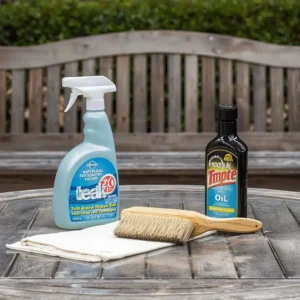
The full restoration process uses a short, simple list of supplies. A dedicated teak cleaner or a mix of mild dish soap and warm water, a soft-bristle brush and a couple of clean rags handle the cleaning stage without any specialty equipment. A garden hose or bucket for rinsing rounds out what the first stage requires.
For the sanding and finishing stage, fine-grit sandpaper in the 120 to 150 range works best for restoring an even surface without removing too much wood. A sanding block helps keep pressure even across flat surfaces, while a folded piece of sandpaper works better for curved arms or carved details. A teak oil or teak sealer, applied with a natural-bristle brush or a lint-free cloth, finishes the job and locks the color back in once the wood is clean and dry.
Restoring Weathered Teak Wood Furniture: Step by Step
The full process takes about two to three hours for an average-sized piece, most of that time split between drying and curing rather than active work. Each step below builds directly on the last, so working through them in order gives the most even result.
Clean the Wood Thoroughly
Scrub the entire surface with a teak cleaner or a mild soap and water solution, working with the grain rather than across it to avoid roughing up the fibers. Pay extra attention to carved details, joints and the underside of arms, where dirt and mildew tend to collect unnoticed. Rinse thoroughly with a hose and let the piece dry completely, which usually takes a few hours in direct sun or overnight in shade.
Sand Lightly With the Grain
Once dry, sand the surface lightly with 120 to 150-grit sandpaper, always moving with the wood grain rather than in circles. This step removes the thin gray layer sitting on top of the wood and exposes the fresh, lighter tone underneath, without needing to sand deeply enough to change the piece’s shape or dimensions. A sanding block keeps pressure even on flat panels, while a folded sheet works better around curves and joints.
Apply Teak Oil or Sealer
Wipe away all sanding dust with a dry cloth, then apply teak oil or a dedicated teak sealer in thin, even coats using a natural-bristle brush. Work in the direction of the grain and avoid pooling in joints or carved details, since excess product left sitting on the surface can turn sticky or attract dust as it cures. A lint-free rag can smooth out any drips or heavy spots within the first few minutes of application.
Let It Cure and Reapply as Needed
Let the first coat cure fully, typically 24 hours, before deciding whether a second coat is needed for deeper color or added protection. Most pieces look their best with two thin coats rather than one heavy one, since thin layers cure more evenly and resist the blotchy look a single thick coat can leave behind. Keep the furniture out of direct rain during the curing window, since moisture can interfere with an even finish.
Deciding Whether to Oil or Let It Weather Naturally
Oiling is a purely cosmetic choice, not a structural necessity, since teak’s own natural oils and silica already protect the wood whether or not any product ever touches the surface. Furniture left untreated simply weathers to a stable silver-gray patina and holds up just as long as furniture that gets oiled every year, sometimes longer, since skipping oil also means skipping the risk of an uneven or improperly cured coat.
The tradeoff comes down to maintenance preference rather than durability. Oiled teak needs reapplication every six months to a year to keep the honey color looking fresh, while natural teak needs nothing beyond an occasional wash with mild soap and water. Neither choice is objectively better; it really comes down to whether you prefer the original golden tone or the relaxed, driftwood-gray look many outdoor spaces are designed around. If the rest of your patio set needs attention too, from faded plastic to rust on metal pieces, the same seasonal care mindset applies across the board. Our guide on how to fix faded plastic patio furniture covers five more common patio problems worth tackling in the same weekend.
How Much Does It Cost to Restore Weathered Teak Furniture (Under $30)
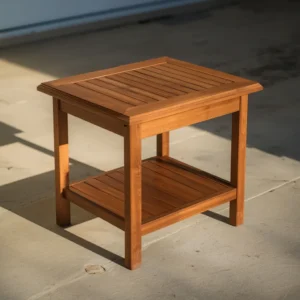
Restoring a single piece of weathered teak furniture at home typically costs under $30 in materials, covering teak cleaner, sandpaper and a bottle of teak oil or sealer. A full patio set with a table and several chairs can usually be refreshed for under $100, well below the cost of buying new teak furniture, which often runs several hundred dollars per piece.
Professional teak restoration services generally charge $75 to $150 or more per piece depending on size and condition. For anything short of deep cracking or structural rot, the DIY method handles the job just as effectively for a fraction of that price.
How Many Times a Year You Should Oil Teak Furniture (2 Times)
For owners who want to maintain the honey-brown color year-round, oiling twice a year, once in spring and once mid-summer, generally keeps the tone consistent through the outdoor season. Furniture in especially harsh sun may need a third light coat toward the end of summer.
Owners who are fine with the natural gray patina do not need to oil at all, beyond an occasional wash with mild soap and water to remove surface dirt and pollen buildup.
How Long Does It Take to Restore Weathered Teak Wood Furniture (2 to 3 Hours)
The full restoration process, from initial cleaning through the final oil coat, takes about two to three hours of hands-on time for an average chair or small table, spread across a full day once drying and curing time is included. Larger pieces like a full dining table can take closer to four hours of hands-on work.
Skipping the sanding step and simply cleaning and oiling an already-smooth piece cuts the process closer to an hour, though the color restoration will not be quite as complete as when sanding is included.
Conclusion
Weathered teak wood furniture is never truly a sign of damage; it is simply the wood doing what teak has always done when left outdoors, protected the whole time by its own natural oils. A short cleaning, light sanding and fresh coat of oil bring the honey color back in an afternoon for anyone who prefers that original look.
For anyone who does not mind the silver-gray patina, skipping the restoration entirely is just as valid a choice, since the wood underneath stays fully sound either way. Take a close look at your own teak furniture before deciding which route fits your taste and your maintenance appetite going forward. If you tried this method on your own furniture, tell us in the comments or share this guide with a friend whose teak set could use the same refresh.
Frequently Asked Questions (FAQs)
How do you restore weathered teak wood furniture?
You restore weathered teak wood furniture by cleaning it thoroughly with a teak cleaner or mild soap, sanding lightly with the grain to remove the gray surface layer, then applying one or two thin coats of teak oil or sealer to bring back the original honey-brown color.
Does weathered teak furniture need to be restored?
Weathered teak furniture does not need to be restored, since the gray patina is a cosmetic surface change rather than damage and the wood underneath remains fully protected and structurally sound whether or not it is ever oiled.
Can you sand teak furniture too much?
Sanding teak furniture too aggressively or too many times over the years can gradually thin the wood and round off sharp edges and details, which is why a light touch with fine-grit sandpaper is enough for most restoration jobs.
Is teak oil the same as regular wood oil?
Teak oil is not the same as regular wood oil, since it is formulated specifically to penetrate teak’s dense, oily grain and using a generic wood oil or varnish instead can trap moisture or cure unevenly on outdoor teak furniture.
Will restored teak furniture turn gray again?
Restored teak furniture will turn gray again over time once the oil coat wears away, typically within six months to a year outdoors, which is why owners who want to keep the honey color need to reapply oil on a regular schedule.