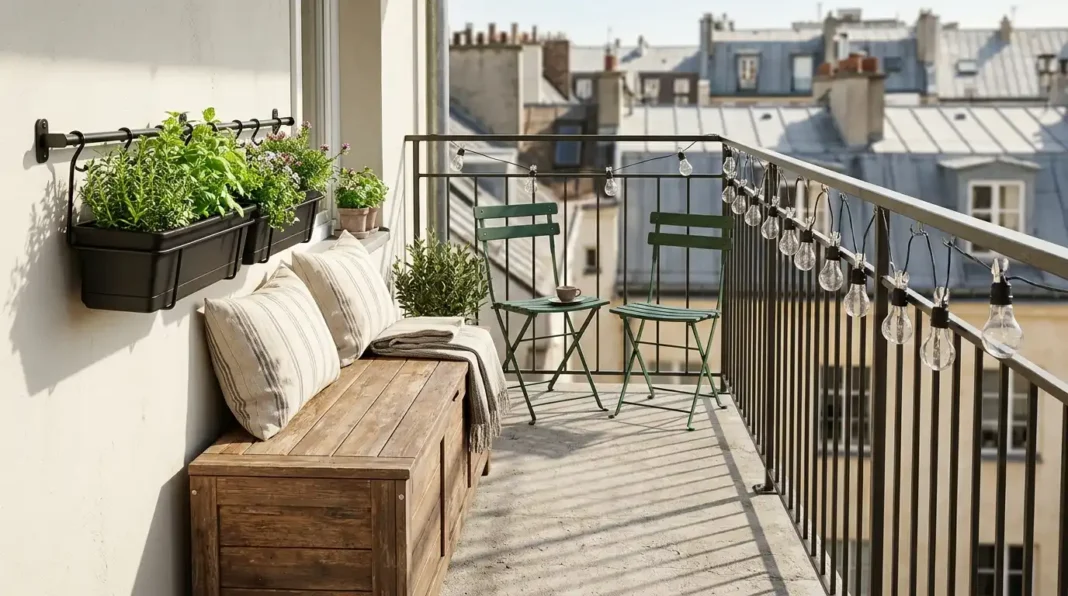
Organize Small Balcony Storage: What Fits, What Goes Up and What Stays Out

To organize small balcony storage, go vertical first, choose pieces that do double duty and keep a clear walking path, because every square foot of a small balcony has to earn its place. Most balcony clutter comes from storing things at floor level, where they block movement and collect rain, so the fixes below lift items onto walls and rails, tuck them into seating and give every object one dry, reachable home.
Key Takeaways
- Go vertical first, using walls and railings instead of floor space.
- Choose double-duty pieces such as lidded benches and slim deck boxes.
- Keep a clear path, because walking room matters more than extra furniture.
- Check weight limits with building management before loading a balcony.
- Give every item one dry home, since moisture ruins cushions, tools and cords.
A small balcony rarely needs more space, only a better plan for what already lives there. The five ideas below cover cushions, plants, built-in storage, cords and furniture layout and they work in apartments, condos and small houses alike. Pick the area that bothers you most, fix it this weekend and build the rest of the plan around it.
How a Tiny Balcony Becomes a Working Room
A small balcony usually fails for a few common reasons. Cushions pile up on chairs, plants crowd the floor, cords snake across the deck, storage boxes steal the walking path and the furniture was never sized for the space. Each of the five areas below helps organize small balcony storage by fixing one of those pain points, so the whole space works together.
Start with whatever you trip over most. Moving cushions into a ventilated bench or lifting plants onto a wall rail frees floor space immediately, which makes every later change easier to judge. Treat the five guides as a menu rather than a checklist, because a compact ten-square-foot balcony needs different choices than a roomier forty-square-foot one with a table.
Tuck Cushions Away Without Crushing or Soaking Them
Cushions are the bulkiest items on most balconies and storing them wet or dirty is what turns them musty. According to the University of Missouri Extension, soiled textiles are more likely to mildew than clean ones, so wash the covers and dry the foam completely before anything gets stacked away inside a bench or box for the season. The table below details the official textile-storage guidelines established by University of Missouri Extension specialists.
| Number & Insight | Source (Institute) | Expert / Team |
|---|---|---|
| Soiled articles are more likely to mildew than clean ones and even on mildew-resistant synthetic fabrics such as acrylic and polyester, soil can supply the food that starts mildew. | University of Missouri Extension | MU Extension Textiles Specialists |
Storage that fits a small balcony usually means a lidded bench or a slim ventilated deck box, filled loosely rather than packed tight. Rotate cushions through the box as the season changes and keep off-season sets indoors. Our full guide on how to store outdoor cushions in small space covers compact, breathable ways to protect them.
Grow Up the Wall Instead of Across the Floor
A vertical garden turns a bare wall or railing into planting space without eating any floor area. Utah State University Extension notes that vertical gardening maximizes space and raises plants off the ground, which improves air circulation and plant health, two real advantages on a crowded, humid balcony where pots on the floor stay damp for days. The table below details the official vertical-gardening guidelines established by Utah State University Extension specialists.
| Number & Insight | Source (Institute) | Expert / Team |
|---|---|---|
| Vertical gardening maximizes space and raises plants off the ground for better air circulation, pest control and improved plant health. | Utah State University Extension | USU Extension Gardening Team |
Choose lightweight pockets, rail planters and trellises over heavy ceramic pots, because wet soil adds weight fast and every fixture has to be secure. Check what your railing or wall can support before hanging anything and keep drip trays in place so water does not run onto neighbors below. Our guide on how to make DIY vertical garden for small patio walks through the build.
Build Storage Into the Balcony Itself

Built-in storage is the heart of any plan to organize small balcony storage. A lidded bench, a slim deck box, wall hooks and a narrow cabinet each hold something that would otherwise sit on the floor but weight adds up quickly once they are full. The International Code Council’s residential code sets a minimum live load of 40 pounds per square foot for exterior balconies and decks. The table below details the official balcony load guidelines established by International Code Council specialists.
| Number & Insight | Source (Institute) | Expert / Team |
|---|---|---|
| The International Residential Code sets a minimum uniformly distributed live load of 40 pounds per square foot for exterior balconies and decks in one- and two-family homes and townhouses. | International Code Council | ICC Building Code Development Team |
That figure is a design minimum, not a promise about your balcony and apartment buildings can follow different rules, so ask building management before loading a bench or cabinet. Spread weight out and seal wooden pieces so they last. Our guide on how to weatherproof outdoor wooden furniture covers sealing a wooden storage bench or deck box.
Keep Cords and Cables Off the Walking Path
Cords are the quiet clutter on a small balcony, running across the floor to string lights, a heater or a speaker. The Electrical Safety Foundation International advises using cords rated for outdoor use, plugging into a GFCI-protected outlet and never running a cord under a rug or through a door or window, which makes routing a safety job as well as a tidy one. The table below details the official outdoor cord safety guidelines established by Electrical Safety Foundation International specialists.
| Number & Insight | Source (Institute) | Expert / Team |
|---|---|---|
| Outdoor extension cords should be rated for outdoor use and plugged into a GFCI-protected outlet and cords should never run under rugs or carpets or through doors or windows. | Electrical Safety Foundation International | ESFI Consumer Education Team |
Keep cords along the wall or railing line with clips and cord covers, away from foot traffic and standing water and use one longer cord rather than daisy-chaining several together. Our full guide on how to hide outdoor cords on concrete patio shows clean, safe routing options for outdoor spaces. Always check that no cord crosses a doorway or sits in a puddle.
Arrange Furniture So the Narrow Space Still Flows
A narrow balcony works when furniture follows the walking path instead of blocking it. The U.S. Access Board’s ADA standards set a minimum clear width of 36 inches for walking surfaces on accessible routes, narrowing to 32 inches for no more than 24 inches of length, a handy benchmark for keeping a small balcony easy to cross even though home balconies are not bound by it. The table below details the official clear-width guidelines established by U.S. Access Board specialists.
| Number & Insight | Source (Institute) | Expert / Team |
|---|---|---|
| The 2010 ADA Standards require walking surfaces on accessible routes to be at least 36 inches wide, with a reduction to 32 inches allowed for no more than 24 inches of length. | U.S. Access Board | Access Board ADA Standards Staff |
Choose folding chairs, a slim bistro table or a bench against the wall, then measure the open walking width after the furniture is in place. If you cannot pass comfortably, drop one piece instead of squeezing everything in. Our guide on how to arrange furniture on narrow deck shows layouts for long and skinny spaces.
How Much Does It Cost to Organize Small Balcony Storage (Under $75)
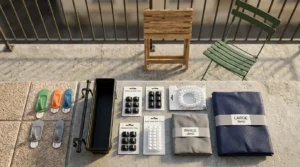
Hooks, a rail planter, cord clips, a cord cover and a couple of breathable storage bags usually total under $75 and the bench or deck box is the one big purchase worth planning around. Many renters start with removable hooks and a folding stool to test a layout before spending more on anything permanent. Buying slowly also shows you what you really need.
Compare that with renting an off-site storage unit for seasonal items, which can cost more in a few months than the entire balcony setup. A plan that keeps cushions, tools and plants at home saves money and saves the trip every time you want to sit outside and enjoy the space. It is the practical choice for a small home.
How Much Weight Can a Balcony Hold (40 Pounds per Square Foot)
The International Residential Code sets a minimum live load of 40 pounds per square foot for exterior balconies and decks in homes, which means a 5-by-8-foot balcony is designed for roughly 1,600 pounds of people and belongings spread across its whole surface area. Real loads vary with railings, planters and furniture, so treat the number as a starting point rather than a limit to push.
That is a design minimum and apartment buildings, older structures and local rules can differ, so confirm the limit with your landlord or building manager before adding a heavy planter, a full deck box or a row of large pots. Spread heavy pieces out instead of stacking them in one corner of the balcony. A little caution protects people below as well.
3 Kinds of Items That Should Never Live on a Small Balcony
Propane cylinders and other flammable fuels top the list, since many building rules and fire codes restrict storing them on balconies, so check your lease and local code before keeping any. Open containers of paint thinner and charcoal lighter fluid belong in the same category and should live somewhere safer. If you are unsure, a quick call to the landlord settles it.
The third group is anything that needs a dry, temperature-stable home, such as electronics, important documents and open food bags, because balcony weather and pests ruin them quickly. Keep those indoors and use the balcony for items that can take a rainy week without harm or fuss. That simple split keeps the balcony useful and the valuables safe.
Conclusion
A small balcony stays tidy when every item has one dry, reachable home and the walking path stays clear. The five ideas above lift storage onto walls and rails, tuck cushions and tools into seating and keep cords and furniture from crowding the floor, so you can organize small balcony storage once and keep it working. The same habits suit window ledges, rooftop terraces and any other small outdoor space.
Even one change, like adding a lidded bench, can free up a surprising amount of floor. Small fixes add up when space is tight. Pick one simple, easy, quick idea to try this weekend, then tell us in the comments how your balcony looks afterward or share this guide with a friend whose outdoor space has turned into a storage closet.
Frequently Asked Questions (FAQs)
How do you organize small balcony storage?
To organize small balcony storage, go vertical first with wall hooks, rail planters and narrow shelves; add a lidded bench or slim deck box for cushions and tools, route cords along the wall and keep a clear walking path of about 36 inches. Check weight limits with building management before loading any storage piece onto the balcony.
What is the best storage for a small balcony?
The best storage for a small balcony does two jobs at once, such as a lidded bench or a slim ventilated deck box that doubles as seating. Add wall-mounted hooks, a narrow shelf or rail planters to use vertical space and choose weather-resistant materials so stored items stay dry through rain. Measure the space first so the piece fits without blocking the door.
How do you store outdoor cushions in a small space?
Wash the covers, dry the foam completely and store cushions loosely in a ventilated bench or deck box, since soiled textiles mildew more easily than clean ones. Rotate cushions seasonally, keep off-season sets indoors and avoid sealed plastic bags that trap moisture and lead to musty smells later. Check them once during storage for hidden dampness.
How much weight can a balcony hold?
The International Residential Code sets a minimum live load of 40 pounds per square foot for exterior balconies and decks in homes but apartment buildings and local rules can differ. Ask your landlord or building manager for the actual limit, spread heavy items out and avoid stacking storage in one corner. Check again after adding new planters or furniture.
Can you store things on an apartment balcony?
You can usually store weather-safe items on an apartment balcony but many leases and fire codes restrict propane cylinders and flammable liquids and some buildings limit what can sit on rails or be visible from outside. Check your lease, keep walkways clear and bring moisture-sensitive items indoors where they stay safe. Ask building management if you are unsure about any item.