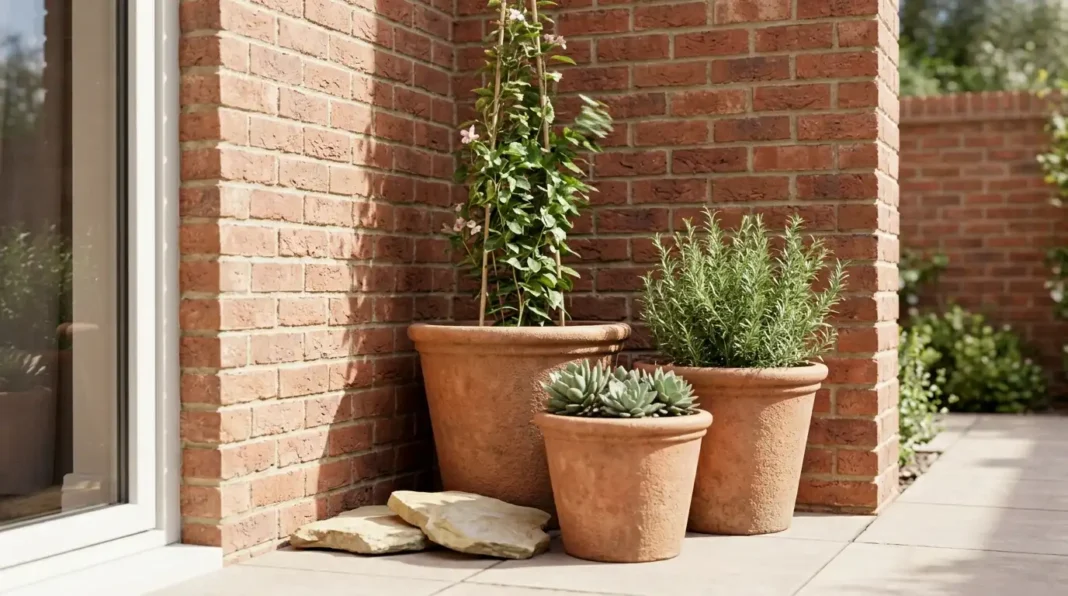
Keeping Potted Plants From Wind Damage Before the Next Gust

To protect potted plants from wind tipping, lower the pot’s center of gravity with a wide, heavy base, add weight inside the container and shelter the pot from the strongest gusts before the next storm arrives. Wind catches a tall leafy plant like a sail, so the real fix is matching the weight of the pot and soil to the size of the plant above it, long before a single gust has the chance to knock the whole container over.
Key Takeaways:
- Match weight to the plant, so the pot and soil balance the leaves above.
- Choose wide, low pots, because tall narrow ones act like sails.
- Add ballast such as stones or bricks at the bottom of the pot.
- Shelter and group pots against a wall, fence or corner.
- Anchor tall plants with stakes, ties or straps before storms.
Most tipped pots were never truly unstable, only top-heavy for a few windy hours. The five steps below cover choosing the right pot, adding ballast, sheltering, anchoring tall growth and preparing for storms. They rely on inexpensive supplies, fit into a normal weekend and work on most patios, decks and balconies. Pick the step that fits your patio or balcony and try it before the next gusty forecast arrives.
Why Potted Plants Tip Over in the First Place
A potted plant works like a lever. The leaves and stems catch wind high above the base while the pot’s weight sits low, so a gust that barely moves the foliage can still push the whole container past its tipping point. Illinois Extension’s container gardening guidance says wind can blow containers over and the combined weight of container and soil should be proportional to the upper plant. The table below details the official container-stability guidelines established by Illinois Extension specialists.
| Number & Insight | Source (Institute) | Expert / Team |
|---|---|---|
| Wind may cause containers to blow over, so the combined weight of the container and soil should be proportional to the upper portions of the plant and relocating the container is one way to address wind problems. | University of Illinois Extension | Illinois Extension Container Gardens Team |
That proportion explains why a healthy plant often tips later in the season than it did in spring. The leaves grow and the sail gets bigger while the pot stays the same weight, so a container that stood fine in April can topple in August. The fix is usually adding weight or moving the pot, not replacing the plant.
What You’ll Need Before the Next Windy Forecast
The kit to protect potted plants from wind is cheap and mostly reusable. A few bricks or flat stones, a bag of gravel or sand, sturdy plant ties, bamboo stakes and a non-slip grip pad cover most patios. On balconies, adjustable straps or brackets let you fix a pot to a railing without drilling into anything permanent.
Think about the pots themselves too. Terra cotta, ceramic and concrete are heavy and stay put, while thin plastic and resin pots are light and tip easily once the plant grows. Wide, low containers beat tall, narrow ones and soil-based potting mixes weigh more than airy soilless blends, which helps in a very windy spot.
Protecting Potted Plants From Wind Tipping: Step by Step

Wind rarely tips a pot that was set up well. Most tipping comes from a handful of small mismatches, such as a narrow base, a dry light pot or a plant that outgrew its container. These steps fix each mismatch in turn, so the pot stays upright even on the gustiest afternoons of the year. Think of them as a quick checklist.
Work through the steps in order the first time and keep the ones that suit your space. Several take only minutes and a few can happen during a quick watering round. A routine you actually repeat before storms protects plants far better than a perfect arrangement you only manage once. Consistency matters more than perfection here.
Choose a Wide, Low, Heavy Pot
Choose the lowest, widest container the plant can comfortably live in, since a broad base resists overturning far better than a tall, narrow one. Heavy materials such as terra cotta, ceramic and concrete add stability that thin plastic cannot match and a slightly roomier pot also gives the roots space to hold the plant steady. It is the simplest upgrade of all.
If you love a lightweight pot, keep it for small plants or sheltered spots. A tall pot holding a big top-heavy plant is the classic tipper, so reserve those for corners or for spots against a wall, where gusts cannot reach them from every side and the pot has something solid to lean on. Rotate pots now and then so growth stays balanced.
Add Weight Where It Counts
Lower the center of gravity by placing flat stones, bricks or a layer of gravel at the bottom of the pot before adding potting mix. Keep the drainage hole clear so water still escapes and favor a soil-based potting mix over a very airy blend when wind is a regular problem in your yard. A little extra weight early saves a lot of repotting later.
For decorative pots that are too light, set the plant in its plastic nursery pot inside a heavier outer container and put stones or sand in the bottom of the outer one. This double-pot trick keeps the weight low, protects the plant and makes it easy to lift the plant out for repotting later. It also hides ugly nursery pots nicely.
Move and Shelter Exposed Pots
Relocation is the simplest fix and Illinois Extension lists moving the container as one way to deal with wind. Shift exposed pots against a wall or fence, into a corner or behind sturdier furniture, so the structure breaks the wind before it ever reaches the leaves and stems. Even moving a pot a few feet can change how much wind it sees.
If pots must stay in the open, set the tallest and heaviest ones on the windward side with the lighter ones behind them. Keep pots away from balcony edges and stairs, where a tip becomes a fall and leave a little space between them so one toppling pot does not take its neighbors down. That small gap also makes watering easier.
Anchor Tall and Top-Heavy Plants
Tall plants and climbing vines need support that is firmly anchored, because the bigger and heavier the plant gets, the more easily wind knocks it over. Push a sturdy stake or trellis into the pot before planting if you can, then tie stems loosely so the plant moves with the wind instead of fighting it. Soft ties and room to grow keep stems healthy.
On balconies, secure the pot itself with an adjustable strap or bracket around the railing, which holds it in place no matter how light it is. Check ties and straps after strong gusts, since stretch and slippage are common and loosen ties as stems thicken so they never cut into the plant. A quick check takes only a minute.
Prepare Before the Storm Arrives
When strong wind is forecast, water pots the day before, since wet potting mix weighs noticeably more than dry mix and gives the pot extra stability. Trim dead or crowded growth to cut the sail area and pull light pots and hanging baskets into a sheltered spot or indoors until the worst has passed. Skipping this prep is how most pots end up on their sides.
For the heaviest gusts, lay small and medium pots on their sides against a wall, where they cannot fall any farther and the plant can ride out the storm. Stand them up again afterward, check for cracked pots or snapped stems and note which spots took the worst wind so you can improve them next time. Small notes like that pay off every windy season.
What to Do After a Pot Has Already Tipped
If a pot has already tipped, check the plant first. Gently lift the pot, scoop the spilled soil back, press the root ball upright and water lightly so the roots settle. Look for cracked containers and snapped stems, trim broken parts cleanly and keep the plant in a sheltered spot while it recovers over the next few days.
Check the surface underneath too. Wet soil and terra cotta can stain or mark wood and pots that sit on a deck trap moisture against the boards. Our guide on how to weatherproof outdoor wooden furniture covers the same wood-sealing basics for decks, benches and plant stands that carry heavy pots all season. Seal in dry weather so the finish can cure.
How Much Does It Cost to Protect Potted Plants From Wind (Under $30)

A bag of gravel or a few paving stones, a roll of plant ties and a couple of bamboo stakes usually total under $30 and many gardeners already have spare bricks or stones lying around. Adjustable railing straps cost a little more but hold a pot in place no matter how light it is. Buy once and reuse it every season.
Compare that with replacing a toppled ceramic pot and a damaged plant, which can cost several times more than the ballast and ties. Prevention is clearly the cheaper side of this project and the same supplies protect every pot you add to the patio in later seasons. That is a strong return for a very small budget and a single saved plant often pays for the whole kit.
How Many Pots Should You Group Together (3 Pots)
A cluster of three pots is an easy starting point, with one tall anchor pot at the back and two lower pots in front of it. The group shelters itself, shares the load of a gust and takes up less of the exposed patio than three separate containers scattered around. Bigger groups work too if space allows.
Place the cluster against a wall or in a corner rather than the middle of the deck and keep the heaviest pot on the side the wind usually comes from. If one pot still wobbles, add weight to it or move it to the back of the group where it is better protected. Check the group again after each storm.
3 Pot Materials That Stay Put in Wind
Terra cotta, glazed ceramic and concrete are the usual heavy choices and all three give a low, stable base that wind has a hard time pushing over. Concrete is the heaviest of the three, while terra cotta is the easiest to find and to move when you need to. Glazed ceramic sits between them for weight and looks.
Thin plastic and resin pots are light and cheap but tip easily once a plant grows large and top-heavy. If you already own them, add ballast, keep them in sheltered corners or double-pot them inside a heavier container and save the lightweight ones for small plants. Wide shapes and a few stones in the base improve their odds a lot.
Conclusion
A tipped pot is a weight problem long before it is a wind problem. The five steps above match the weight of the pot and soil to the plant above it, so a normal gust never has enough leverage to push the container over. Wide bases, ballast, shelter and anchors protect the plant, the pot and the patio together. It is a small routine with a large payoff over several windy seasons.
Even one change, like adding stones to the bottom of a light pot, can make a real difference. Small fixes add up when the weather keeps blowing. Your plants will thank you the next time a gust rolls through. Pick one simple step to try before the next gusty forecast, then tell us in the comments which pot finally stayed put or share this guide with a friend whose patio plants keep ending up on their sides.
Frequently Asked Questions (FAQs)
How do you protect potted plants from wind tipping?
To protect potted plants from wind tipping, use a wide, heavy pot and add stones or bricks at the bottom so the pot and soil weigh enough to balance the plant above; then move pots against a wall or fence, anchor tall plants with stakes or straps and water pots the day before strong gusts arrive.
Why do my potted plants keep falling over?
Potted plants keep falling over when the plant above the soil is heavier or taller than the pot can balance. Light plastic pots, narrow bases, dry potting mix and plants that have outgrown their containers all raise the risk, because wind pushes on the leaves like a sail while little weight holds the pot down. Adding weight fixes most cases.
What is the best pot shape to stop tipping over?
The best pot shape to stop tipping is a wide, low container with a base broader than its height, since that spreads weight over a larger area and resists overturning. Straight-sided and square pots are generally steadier than tall tapered ones and heavy materials like terra cotta or concrete add stability. Choose a size that suits the mature plant.
Should you water plants before a windstorm?
Watering the day before a windstorm helps because wet potting mix weighs more than dry mix, which gives the pot extra stability. Water normally rather than soaking the pot and make sure the drainage hole is clear and no saucer holds standing water, since waterlogged roots can harm the plant. Skip watering if the soil is already wet.
Can you secure potted plants to a balcony railing?
You can secure potted plants to a balcony railing with adjustable straps or brackets that wrap around the rail and hold the pot in place regardless of its weight. Check that the railing is sturdy, keep pots inside the rail line and confirm your balcony’s weight limits before adding heavy pots or ballast. Never rely on a strap alone for very heavy pots.