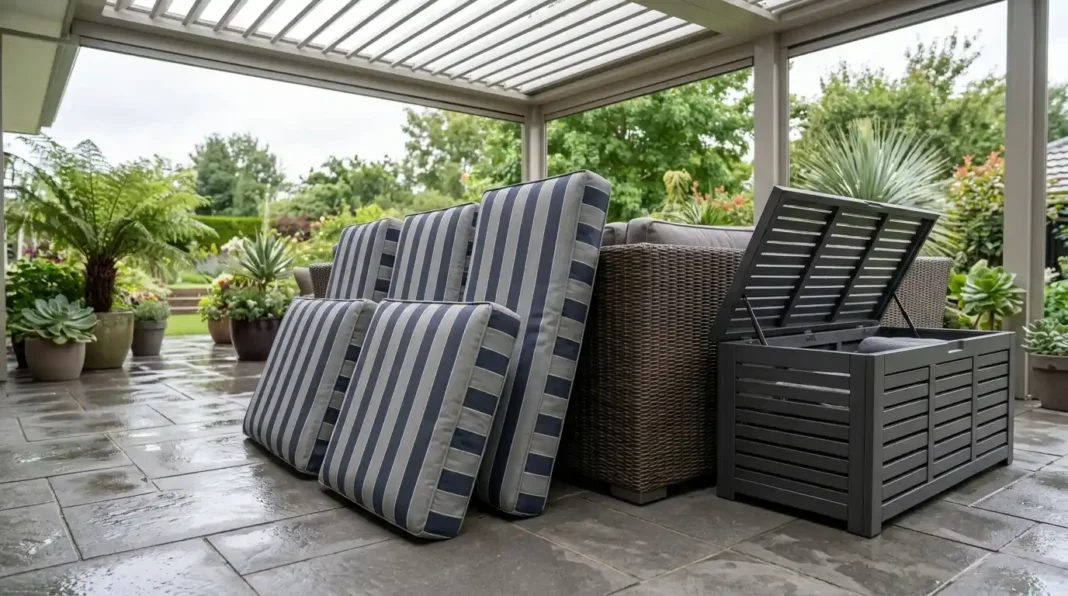
Keeping Cushions From Smelling Musty After Every Rainy Week
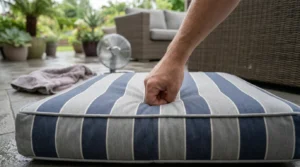
To keep outdoor cushions from smelling musty, dry them completely after every soaking, store them upright with air moving on all sides and wash off the grime that mildew feeds on before it builds up. That smell is a sign of mold growing in damp foam and fabric, so the fix is not a stronger fragrance but removing the moisture and the dirt that give mildew a place to live, long before the odor ever gets strong.
Key Takeaways:
- Dry cushions fully within a day or two, because mold needs moisture to grow.
- Stand them on edge so air reaches foam and fabric on every side.
- Wash with detergent instead of masking the smell, since fragrance removes nothing.
- Store in a ventilated box, never in a sealed plastic bag while damp.
- Choose quick-dry foam and mildew-resistant covers when you replace cushions.
Most musty cushions were never truly dirty, only damp for too long. The five steps below cover drying, cleaning, storing, covering and choosing better materials so the smell never gets a foothold. They use cheap supplies, fit into a normal weekend and work for most patio sets, so pick the step that matches your space and start before the next rainy stretch.
Why Outdoor Cushions Start to Smell in the First Place
Foam is a sponge wrapped in a cover, so rain and humidity soak into a core that air cannot reach while the fabric on top still feels dry. Wikipedia’s indoor mold entry explains that the effective way to clean mold is a detergent solution that physically removes it and that killing mold with a biocide is not enough on its own. The table below details the official mold-cleaning guidelines established by Wikipedia specialists.
| Number & Insight | Source (Institute) | Expert / Team |
|---|---|---|
| The effective way to clean mold is to use detergent solutions that physically remove it and killing mold with a biocide is insufficient because the chemical substances and proteins that cause reactions in humans remain in dead mold. | Wikipedia (Indoor mold) | Wikipedia Contributors |
The same page notes that a smell is a good indicator that mold growth needs attention, which means a musty cushion is already a late warning. Drying fast and cleaning with detergent matter far more than any air freshener or spray, which only covers up a problem that keeps growing quietly inside the foam. The better habit is to dry first and clean second.
What You’ll Need Before the Next Rainy Week
The kit to keep cushions from smelling musty is cheap and mostly reusable. Gather a mild dish detergent, a soft scrub brush, a hose, a few towels and a fan. A ventilated deck box or breathable storage bag keeps cushions dry between uses and a breathable waterproof cover protects them on the patio itself. Baking soda helps absorb leftover odor once the foam is dry.
Look at the cushion label as well. Covers made from solution-dyed acrylic or polyester shed water and resist mildew better than plain cotton and open-cell, quick-dry foam lets water drain instead of holding it. If your cushions are already old, the fabric and foam may be past the point where cleaning alone brings them back.
Keeping Cushions From Smelling Musty: Step by Step
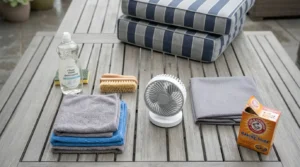
Musty cushions are almost never a cleaning failure. They are a drying failure and these steps cut the hours that moisture stays trapped in foam and fabric. Each one targets a different weak point, from the first rainy afternoon to the long weeks of storage, so the odor never gets the chance to start. Think of them as a short checklist.
None of the steps take more than an hour of real effort and several take only a few minutes. Work through them in order the first time to reset old cushions, then keep the routine that fits your patio. Consistency beats intensity here, because mold only needs a few damp days to get going. A little routine beats a big rescue.
Dry Cushions Fast After Every Soaking
Stand soaked cushions on edge in open air with the zipper side down so water drains out and turn them every few hours. Squeezing gently from the edges toward the opening pushes water out of the foam, while towels pressed into the fabric lift moisture from the surface. A fan blowing across the cushion speeds up the slow part.
Aim for completely dry, not just dry to the touch. Foam holds water deep in its core, so press the center with your palm and check for any cool, damp feeling before the cushion goes back on the furniture. If it still feels cool after a day, give it more airflow rather than hoping it finishes drying on the seat.
Clean With Detergent Instead of Fragrance
Remove the cover if it unzips and wash it according to the care label, then scrub the foam core lightly with a mild detergent solution and a soft brush. Detergent that physically lifts mold off the material works, while simply killing it does not remove the compounds that make it irritating, which is why sprays and strong fragrances fall short.
Rinse thoroughly with a hose or damp cloth so no soap film remains, since residue attracts the dirt that feeds mildew later. Then dry the foam completely before the cover goes back on. Skip heavy air fresheners, which only mask the smell while the growth underneath keeps going and the odor returns within days. A clean, dry cushion has nothing for the smell to hold onto.
Store Cushions With Airflow, Not in Sealed Bags
Between seasons, store cushions in a ventilated deck box, a breathable storage bag or on a dry garage shelf where air can move around them. Sealed plastic bags look tidy but trap any leftover moisture, which turns the bag into a warm, humid pocket that mold loves and that no amount of folding will fix. Airflow is the whole point of good storage.
Stack cushions loosely rather than packing them tight and add open boxes of baking soda to absorb odor if the space is closed. Check them once during a long storage stretch, because a cushion that felt dry in the fall can still hold hidden dampness in the core and start to smell by spring. A quick sniff test tells you a lot.
Cover or Bring Cushions In Before Rain
When rain is forecast, move cushions into a deck box or indoors or at least stand them on edge under a covered patio. A breathable waterproof cover helps if they must stay out, because it keeps rain off the fabric while letting trapped humidity escape instead of sitting against the foam all night. Even a loose cover beats a tight one.
Avoid wrapping cushions tightly in plastic on the furniture, since that traps condensation against the fabric overnight. Remove covers as soon as the weather clears so everything can air out and shake off puddles that collect on top of the cover before they soak through the seams and into the cushion below. A broom handle works well for pushing the water off.
Choose Quick-Dry Foam and Mildew-Resistant Covers
When it is time to replace cushions, look for quick-dry or open-cell foam, which lets water pass through instead of holding it. Solution-dyed acrylic and polyester covers tolerate repeated wetting and resist mildew far better than plain cotton, which stays damp and feeds on the dust that settles into the weave over a season. Check the label before you buy.
Removable, washable covers make routine cleaning realistic and a slightly firmer cushion often dries faster than a thick plush one. Buying better materials once costs more up front than a bargain set, but it often costs less than replacing musty cushions every second season and it saves the weekend scrubbing as well. Warranty details are worth a quick read too.
What to Do When Cushions Already Smell Musty
If the smell is already there, start with the moisture. Pull the cushions off the furniture, dry the foam completely, then wash the cover and scrub the foam with detergent. Wikipedia’s guidance is that the first step in solving a mold problem is removing the moisture source, because new mold can begin on moist, porous surfaces within 24 to 48 hours.
Check the furniture underneath too. Wooden slats that stayed damp beneath a soaked cushion can stain or soften over time and sealing them helps protect the frame. Our guide on how to weatherproof outdoor wooden furniture covers the same sealing basics for patio sets and benches that sit under cushions all season. Seal in dry weather so the finish cures properly.
How Much Does It Cost to Keep Cushions From Smelling Musty (Under $40)
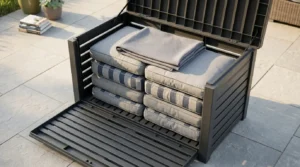
A mild detergent, a soft brush and a couple of breathable storage bags usually total under $40 and most households already own the towels and the fan. A ventilated deck box costs more but it protects a whole set of cushions every season and pays for itself over several wet years of regular use. Buying once and caring for it is the cheap path.
Compare that with replacing a full set of quality outdoor cushions, which often costs several times more than the cleaning and storage gear. Prevention is clearly the cheaper side of this project and every dry season you add to the cushions’ life stretches that return even further. A single saved set usually pays for all of it and that math improves every dry season.
How Long Do Outdoor Cushions Take to Dry (24 to 48 Hours)
With good airflow, aim for fully dry within 24 to 48 hours, the same window Wikipedia’s indoor mold entry gives for new mold to begin on moist, porous surfaces. Thin covers dry quickly, but the foam core is the slow part, so test the center rather than trusting the fabric on top. Press firmly and give the foam a sniff too.
Thick foam, humid weather and stacked storage push drying toward the long end. If a cushion still feels cool and damp after two days, move it somewhere with more airflow, add a fan and consider whether the foam itself is holding water it can no longer release. Old foam sometimes stays wet because its cells have broken down, which is usually the sign to replace it.
3 Cushion Materials That Resist Mildew Best
Solution-dyed acrylic, polyester and quick-dry open-cell foam are the usual outdoor choices and the combination dries faster than plain cotton over dense foam. All three tolerate repeated wetting and are generally easier to clean with a simple detergent wash after a long wet week of showers. Check the label for fiber content before you buy, since labels vary and ask about the foam type too.
Plain cotton covers and dense, closed foam look comfortable in a showroom but hold water for days once rained on. Keep those pieces under cover or indoors whenever rain is coming and let better materials handle the open patio where weather reaches the seating every season. That split keeps each cushion in the setting it handles best and makes cleanup a lot easier.
Conclusion
A musty cushion is a drying problem long before it is a cleaning problem. The five steps above remove the damp, dirty conditions that let mildew settle into foam and fabric, so the odor never gets a start. Drying, cleaning, storing and covering protect the cushions, the frame and the patio around them together. It is a small habit with a large payoff over several rainy years.
Even one change, like swapping a sealed bag for a ventilated box, can make a real difference. Small fixes add up when the weather keeps coming. Your nose will tell you quickly whether it worked. Pick one step to try before the next forecast turns wet, then tell us in the comments how your cushions smelled afterward or share this guide with a friend whose patio seating never seems to dry out.
Frequently Asked Questions (FAQs)
How do you prevent outdoor cushions from smelling musty?
To keep outdoor cushions from smelling musty, dry them completely within a day or two after every soaking, stand them on edge so air reaches all sides, wash them with a mild detergent and store them in a ventilated deck box instead of a sealed bag. Choose quick-dry foam and mildew-resistant covers when you replace them.
Why do outdoor cushions smell musty?
Outdoor cushions smell musty because mold and mildew grow in damp foam and fabric, where dust and dirt supply food and the foam core stays wet long after the cover feels dry. A smell is a good indicator that mold growth needs attention, so the odor is a late warning that moisture has been trapped for a while.
Can you get the musty smell out of outdoor cushions?
You can usually get the musty smell out of outdoor cushions if the growth is limited. Dry the foam completely, wash the cover, scrub the foam with a mild detergent solution, rinse well and dry again, then sprinkle baking soda once it is dry. If the smell returns after cleaning, the foam is probably too far gone and needs replacing.
Does bleach or vinegar work on musty cushions?
Detergent solutions that physically remove mold are the effective method and killing mold with a biocide such as bleach is not enough on its own because the compounds that cause reactions remain in dead mold. If you use a disinfectant anyway, follow the label, test a hidden spot first and rinse thoroughly, since strong products can fade fabric.
Is it safe to store outdoor cushions in plastic bags?
Plastic bags are only safe for cushions that are completely dry, because a sealed bag traps any leftover moisture and creates a warm, humid pocket where mold thrives. For longer storage, choose a ventilated deck box or a breathable storage bag, stack the cushions loosely and check them once during the season for hidden dampness.