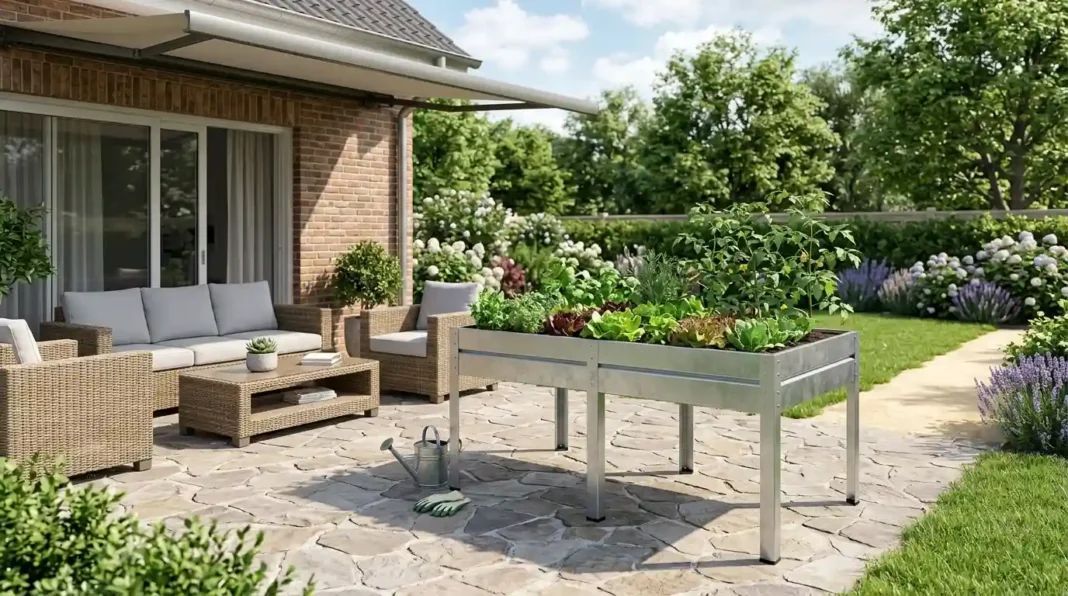
Elevated Raised Garden Beds With Legs Explained
Elevated raised garden beds with legs are planting boxes lifted off the ground on a sturdy frame. That’s the whole idea. They fix two big complaints about ground-level raised beds. No more kneeling down. No more hauling in extra soil. The growing surface sits 18 to 32 inches up. So you plant, weed and harvest standing up, instead of bending over a low box or stepping into the dirt.
Key Takeaways
- 24-inch minimum height clears a wheelchair footrest for accessible gardening
- Galvanized steel legs resist rust for decades without repainting
- Wicking reservoirs cut watering chores on self-watering vertical models
- Elevated beds need noticeably less soil than a full-depth ground box
- A basic metal kit with legs typically lands under $150
This guide walks through the leg-height and material questions people search for the most. It also covers four related raised-bed builds worth comparing before you buy. Keep reading, and you’ll find the setup that fits your knees, your patio space and your budget.
Seven Elevated Raised Bed Guides Worth Comparing
Not every elevated raised garden bed with legs looks the same. Leg height, soil mix, watering method and frame material all change how the bed performs. That’s true on a patio. It’s also true in a vegetable plot.
The seven guides below cover four related raised bed builds worth comparing, the core leg-height and stability question, and two extra build details. Those two details shape how well any elevated bed actually performs once it’s planted.
Tiered Raised Beds With a Greenhouse Cover
A tiered bed stacks two or three planting levels on one frame. A clear, zippered cover over the top level turns that tier into a mini greenhouse for spring starts. Cornell University Cooperative Extension studied this setup. Floating row covers create a microclimate close to a greenhouse interior. They add 2 to 8 degrees Fahrenheit of frost protection. Light, air and water still reach the plants underneath. The table below shows the row cover numbers from Cornell University Cooperative Extension.
| Number & Insight | Source (Institute) | Expert / Team |
|---|---|---|
| Floating row covers create a greenhouse-like microclimate and add 2 to 8°F of frost protection while remaining permeable to sunlight, water and air. | Cornell University Cooperative Extension | Cornell Small Farms Program |
Tiered beds with a greenhouse cover work best where the last frost hits late. The cover buys real time for cold-sensitive seedlings. You skip the separate cold frame entirely. Our full guide on best tiered raised garden bed with greenhouse cover gets into tier spacing and cover materials.
Self-Watering Vertical Planters for a Patio
Self-watering vertical planters use the same wicking trick as a full-size wicking bed. It’s just shrunk down to fit a stacked column on a balcony or patio corner. The University of Kentucky Cooperative Extension explains it well. A wicking system holds a water reservoir in its base. Capillary action pulls moisture up into the root zone. The soil surface stays drier. You water far less often than with a top-watered pot. The table below shows the wicking-bed numbers from the University of Kentucky Cooperative Extension.
| Number & Insight | Source (Institute) | Expert / Team |
|---|---|---|
| A wicking-bed reservoir uses capillary action to move water upward into the root zone, and beds built taller than 16 inches also help deter rabbit browsing. | University of Kentucky Cooperative Extension | UK Biosystems and Agricultural Engineering |
Vertical self-watering columns need refilling less often than a single hanging basket. One shared reservoir at the base feeds every tier. Our full guide on best self watering vertical garden planters for patio covers, reservoir sizing and tier count for small spaces.
The Right Soil Mix for an Elevated Bed
The frame and the legs get most of the attention. But the soil inside does most of the actual work. The University of Maryland Extension recommends a mix with 25% to 50% organic matter by volume. Aim for a pH between 6.2 and 6.8 for most vegetables and flowers. Too heavy a mix blocks air and root growth. Too loose and gritty, and the mix drains so fast plants can’t get enough water.
Compost is the easiest way to hit that organic matter target. It needs to be fully finished, and mixed evenly through the bed, not dumped in as one thick layer on top. Get the mix right at planting time. Topping off an established bed with fresh compost mid-season is far messier than blending it in first.
Leg Height and Stability on an Elevated Bed
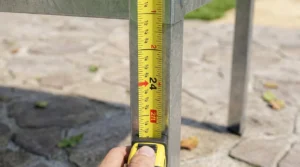
Leg height is the one decision that decides whether an elevated raised garden bed actually saves your knees or just moves the problem a few inches higher. The University of Georgia Cooperative Extension has a number for this. A bed built for wheelchair access should sit at least 24 inches off the ground. Space it at least 36 inches from the next bed. A bed built for standing-height gardening, with no bending at all, usually needs a growing surface closer to 28 to 32 inches. The table below shows the accessible height numbers from the University of Georgia Cooperative Extension.
| Number & Insight | Source (Institute) | Expert / Team |
|---|---|---|
| A wheelchair-accessible raised bed should be raised to a height of at least 24 inches, with at least 36 inches of clearance from the next bed. | University of Georgia Cooperative Extension | UGA Horticulture, David Berle |
Legs also carry real weight once the box is full of wet soil. Cross-bracing at the base helps. So does a footprint no wider than 4 feet. Both keep a tall bed from rocking side to side in the wind. Read more from the University of Georgia Cooperative Extension’s raised bed guidance on sizing a bed for accessibility before you build or buy one.
How Often to Water an Elevated Bed With Legs
Elevated beds drain faster than an in-ground plot. Air moves around all four sides of the box, not just the top. Kansas State University Research and Extension has a rule of thumb for this. Water a raised bed with 1 to 2 inches of water, or the rainfall equivalent, once or twice a week in a typical summer. Hot, windy or full-sun days push that number up. Checking soil moisture by hand beats sticking to a fixed schedule.
Try the finger test instead. Push a finger 2 to 3 inches into the soil. If it comes out dry, water that day. It doesn’t matter what the weekly schedule says.
Metal Modular Raised Bed Kits for Vegetables
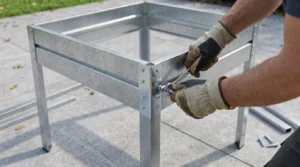
Modular metal kits bolt together from pre-cut galvanized steel panels. That skips the cutting and staining a wooden frame demands. It also holds up to weather without the rot risk of untreated lumber. The American Galvanizers Association has real numbers on this. Hot-dip galvanized steel gives maintenance-free rust protection for 75 years or more. That holds true even in atmospheres far more corrosive than a typical backyard. The table below shows the galvanized-steel numbers from the American Galvanizers Association.
| Number & Insight | Source (Institute) | Expert / Team |
|---|---|---|
| Hot-dip galvanized steel provides maintenance-free corrosion protection for 75 years or more, even in industrial and coastal atmospheres more corrosive than a home garden. | American Galvanizers Association | AGA Technical Services Committee |
Modular panels also make it easy to bolt on a leg kit later. A ground-level metal bed can become an elevated one without rebuilding the whole box. Our full guide on best metal modular raised bed kit for vegetables covers panel gauge and leg-kit compatibility.
A Compact Wall-Hanging Planter Box for a Fence
A wall-hanging planter box skips legs entirely. It carries its whole weight through the fasteners driven into a fence rail or wall stud. Fastener strength matters more than the box itself. The American Wood Council tested this. A properly seated 5/16-inch lag screw in common softwood resists 212 to 266 pounds of pull-out force. In denser southern pine, that number climbs to around 307 pounds. The table below shows the fastener numbers from the American Wood Council.
| Number & Insight | Source (Institute) | Expert / Team |
|---|---|---|
| A properly seated 5/16-inch lag screw resists 212 to 307 pounds of withdrawal force depending on wood species, per National Design Specification withdrawal values. | American Wood Council | AWC Technical Committee |
Use two lag screws, not one. Drive them into a stud or rail, not into thin fence paling alone. That keeps a loaded planter box from working loose over a season of watering and wind. Our full guide on best compact wall hanging planter box outdoor covers stud-finding and box weight limits for fences.
The 24-Inch Rule for Wheelchair-Accessible Raised Beds
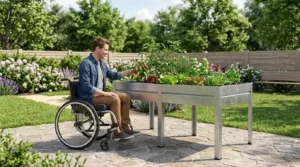
Twenty-four inches off the ground is the number most horticulture extension programs point to. It lets a wheelchair’s footrest slide under the growing box. The frame won’t catch a knee or armrest. Anything shorter forces a gardener to lean over the rim. That defeats the whole point of raising the bed.
Pair that height with a bed no wider than 24 to 30 inches if it’s only reachable from one side. Reach distance matters as much as height once the frame gets that tall. A narrower, taller bed almost always beats a wide, short one for real accessibility.
1 Landscape Fabric Fix for Placing a Bed on Grass
An elevated bed with legs doesn’t need the ground prepped the way an in-ground box does. The soil never touches turf directly. But a single layer of landscape fabric or cardboard under the legs still helps. It blocks grass and weeds from creeping up through gaps in a paver or gravel base.
Leg feet resting right on grass can sink unevenly as the soil settles underneath. A paver or a scrap of decking under each leg keeps the whole frame level through a full season of watering. That one fix solves most of the wobble complaints new owners report.
Best Budget Elevated Raised Bed Under $150: 2026 Pick
A basic galvanized steel kit with bolt-on legs is the easiest way to land an elevated raised garden bed with legs under $150. It skips the cost of cedar or composite lumber entirely. Expect a single 4-foot by 2-foot bed at that price, not a multi-tier or extra-wide setup.
Cedar and composite framed beds with legs usually start closer to $200 once shipping gets added. That makes the metal kits the clearest budget pick for a first elevated bed. Add a $20 to $30 leg-height extension kit later if 24 inches turns out too short.
Elevated Raised Garden Bed Buying Takeaways
An elevated raised garden bed with legs earns its keep the moment your knees stop complaining. Getting the height right matters more than any material choice. Generally, 24 inches for wheelchair access, or 28 to 32 inches for standing-height comfort. Galvanized steel panels resist rust for decades. Wicking reservoirs cut down on watering chores. A greenhouse cover buys real weeks at the start of the season.
Whichever build you choose, check leg spacing and fastener strength before you fill the box with soil. A loaded bed is far harder to fix than an empty frame. Share a photo of your finished setup below. We’d love to see how you adapted these builds. If your outdoor solar lights have stopped working altogether, our guide on why solar lights stop working walks through five proven fixes before you toss the fixture.
Frequently Asked Questions (FAQs)
What is the best elevated raised garden bed with legs?
The best elevated raised garden bed with legs is a galvanized steel or cedar frame raised at least 24 inches. That height clears a wheelchair footrest. It also keeps most adults from bending at the waist while they garden.
How tall should an elevated raised garden bed be?
Build the growing surface at least 24 inches high for wheelchair access. Go with 28 to 32 inches if the bed is meant for standing-height gardening, with no bending at all.
Do raised garden beds with legs need drainage holes?
Yes, an elevated bed still needs drainage holes or gaps in the base liner. A solid bottom traps water against the legs and root zone, just like a solid-bottom pot would.
What is the best material for an elevated raised garden bed?
Galvanized steel resists rust and outlasts untreated wood by decades. Cedar and redwood resist rot on their own, without chemical treatment. Either one beats standard pine for the long haul.
How much soil do I need for a raised garden bed with legs?
A standard 4-foot by 2-foot bed at 10 inches deep needs roughly 6.7 cubic feet of soil. Elevated beds usually use less soil than a full in-ground box of the same size, since the legs replace buried volume.