
Lights Charge in Shade, Just Not the Way You’d Want
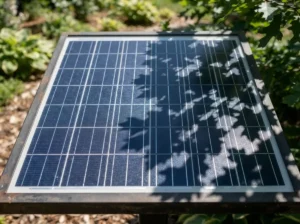
Solar lights charge in shade, but slowly and incompletely, which is a very different outcome from not charging at all. A panel getting only dappled or filtered light will still draw some current, just nowhere near enough to power a full night of illumination, and the gap between “some charge” and “enough charge” to run all night is much bigger than most people expect.
Key Takeaways
- Partial shade can cut panel output by 75% or more, not just a proportional dip.
- Solar cells are wired in series, so one shaded cell drags down the whole panel.
- Even light dappling from a single branch can meaningfully reduce total charge.
- Relocating a fixture just a few feet often makes a dramatic difference.
- Morning shade matters less than afternoon shade, since afternoon sun is strongest.
This is the part that surprises most people: shade doesn’t reduce output proportionally to how much of the panel it covers. A small amount of shade can cause a disproportionately large drop, which is exactly why a fixture that “gets some sun” can still charge far worse than expected, sometimes worse than other causes covered in our full breakdown of why solar lights stop working, even when the fixture itself is working exactly as designed. Keep reading for the three key facts that actually determine how much shade is too much, plus what to do if relocating the fixture isn’t an option.
Why Shade Hurts Solar Panels More Than It Should
Solar cells inside a panel are wired together in series, meaning the electrical current has to pass through every cell in the chain. Aurora Solar’s shading research cites Stanford University’s Gil Masters, whose research demonstrated that shading just one out of 36 cells in a small solar module can reduce the panel’s total power output by as much as 75%. The table below details official series-wiring shading-loss guidelines established by solar research specialists.
| Number & Insight | Source (Institute) | Expert / Team |
|---|---|---|
| Shading just 1 out of 36 cells in a small solar module can reduce total panel power output by as much as 75%, since series-wired cells share one current limit. | Aurora Solar, citing Stanford University research (Gil Masters) | Aurora Solar Technical Research Team |
That single-weak-link effect is why a fixture that looks like it gets “mostly sun” with just a little shade can still perform dramatically worse than a fixture with genuinely no shade at all.
The Three Facts That Actually Matter for Placement
The first fact is that shade timing matters more than shade duration. Afternoon shade, when the sun is strongest and most direct, costs more charging potential than the same number of shaded hours in early morning.
The second fact is that even a single tree branch swaying across a panel intermittently can meaningfully reduce output over a full day, since the series-wiring effect applies every time shade touches even one cell. The third fact is that relocating a fixture by just a few feet, out from under a branch’s swing radius or an eave’s shadow line, often produces a bigger improvement than any other single change you can make.
3 Signs Your Solar Light Placement Needs Adjusting

A light that consistently dims out well before dawn is the first sign, since that points to insufficient charge from the previous day. A light that only stays lit for a couple of hours after dusk is the second sign, especially if nearby fixtures in fuller sun last much longer.
Visible shadow patterns crossing the panel at midday, the sun’s strongest hour, are the third sign, and it’s often the easiest one to actually observe and fix.
Best Solar Light Extension Mount Under $10
A simple extension mount or taller stake raises a fixture’s panel above low shrubs or garden bed shadows, and basic options run under $10. This small height change often clears just enough shade to make a meaningful charging difference without needing to relocate the fixture entirely.
Measure the shadow’s actual height at midday before buying, since guessing at mount height can still leave the panel partially shaded.
2026 Pick: Best Solar Lights for Partially Shaded Yards
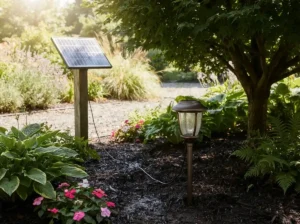
Look for fixtures with a separate, relocatable panel connected by a cable, rather than an all-in-one unit, since these let you mount the panel in full sun while keeping the light itself in the shaded spot you actually want illuminated. This single feature solves the shade problem for yards where full sun and desired lighting placement don’t overlap.
Higher-capacity batteries also help bridge the gap on partially shaded days, storing more charge from the reduced sunlight that does reach the panel.
Lights Charge in Shade Enough to Matter, Just Not Enough to Rely On
Solar lights charge in shade in the sense that any light reaching the panel produces some current, but the series-wiring effect means even modest shade can cut output far more than it looks like it should. Understanding that single fact changes how you think about placement, since a “little bit of shade” is rarely as harmless as it appears, and a fixture that looks perfectly positioned can still underperform badly if even one corner catches a shadow.
That’s really the whole story behind shade and solar charging: a small amount of coverage causing an outsized effect because of how the cells are wired together internally. The fix is almost always placement, not the fixture itself, and it usually takes less effort to move a light a few feet than to troubleshoot it as broken. If this explains why a fixture you assumed was defective was actually just poorly placed, pass it along to whoever else has been quietly frustrated with a dim light in their yard.
Frequently Asked Questions (FAQs)
Do solar lights charge in shade?
Yes, but slowly and incompletely, since shaded cells still draw some current, just far less than a fully sunlit panel produces. Full shade all day will not charge a light enough to power a full night.
How much shade is too much for a solar light?
Even partial shade covering a small portion of the panel can cut output by more than half, since panel cells are wired in series and one shaded cell limits the whole chain.
Does morning shade matter as much as afternoon shade?
No, afternoon shade costs more charging potential, since the sun is strongest and most direct in the afternoon hours in most locations.
Will moving a solar light a few feet actually help?
Often significantly, since clearing even a single branch’s shadow or an eave’s shade line can restore most of a panel’s lost charging capacity.
Do cloudy days count as shade for solar lights?
Yes, in effect, though less severely, since cloud cover reduces overall sunlight intensity reaching the panel rather than blocking specific cells the way a branch or shadow does.