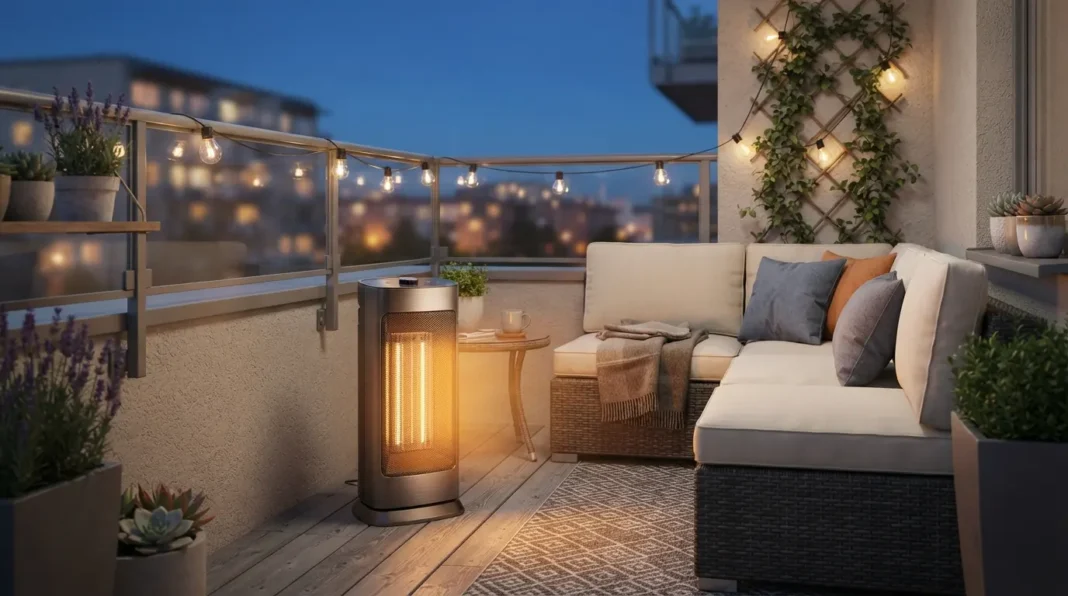
The Best Outdoor Heaters Small Balconies Need in 2026
Outdoor heaters small balconies actually fit solve a problem neither a wall-mounted unit nor a full fire pit can: real warmth that moves with a renter or repositions as the season changes. Look for a unit rated for outdoor use with a stable base that will not tip in wind, and always confirm the building’s actual policy on open flame before choosing a propane model over an electric one. Most small-balcony owners either skip heating entirely once fall arrives or bring in furniture never built for the exposure.
Key Takeaways
- Compact electric towers weigh under 15 pounds, ideal for renters with strict weight limits
- Propane heaters output more heat but need explicit building approval for open flame
- Tip-over shutoff protection removes one of the most common portable heater failure points
- Many buildings restrict propane regardless of unit size, so checking the lease matters more than the heater
- Low-profile and tabletop designs reclaim floor space a standing tower heater cannot
Seven Portable Heaters Built for Small Balconies
Every one of these outdoor heaters small balconies actually fit solves a slightly different version of the same problem: real warmth that moves with the space rather than demanding a permanent installation. The middle pick covers the heating-equipment safety standards worth checking regardless of fuel type, and the other six cover size, stability, and heat output.
The Compact Electric Tower Heater
A slim electric tower heater takes up a footprint barely wider than a dinner plate, making it one of the smallest true outdoor heaters small balconies can accommodate. Most compact towers put out 1,500 watts, enough ambient warmth for one or two people standing or seated close by.
The narrow profile also means less wind resistance, though a lighter unit still needs a stable base to avoid tipping. This pick suits renters on a strict weight limit for balcony furniture, since most compact towers weigh under 15 pounds.
The Freestanding Propane Heater on a Weighted Base
A small-tank propane heater on a weighted base delivers noticeably more heat output than a comparable electric unit, often covering a wider radius at the same footprint. The weighted base keeps the unit stable in wind that would tip a lighter design, though the added weight also makes it harder to move solo compared to a compact electric tower.
Fuel comes from a small, refillable propane cylinder rather than a plug, which matters for balconies without convenient outdoor outlet access. This pick only works where the building’s policy explicitly allows open flame, which is not the case in every apartment or condo complex.
The Tabletop Electric Heater for Small Surfaces
A tabletop electric heater sized to sit on a side table or a narrow ledge solves the problem of a balcony too small for any floor-standing unit at all; it’s one of the more compact outdoor heaters small balconies can fit. Heat output runs lower than a full tower design, typically under 1,000 watts, which suits close-range warmth for one person rather than heating a wider seating area.
The compact size also means it can be moved indoors easily when not in use, unlike a larger unit that stays put by necessity. This pick pairs naturally with a single accent chair or a compact two-piece bistro setup rather than a full sectional.
The Heater Built to Real Heating-Equipment Safety Standards
Every one of these outdoor heaters small balconies rely on comes down to the same core safety question: does the unit have genuine tip-over protection, and is it being used with the fuel type the space actually allows? Heating equipment is a leading cause of home fires broadly, and the same three-foot clearance from anything combustible that applies indoors applies just as directly to a balcony heater sitting a few feet from furniture, curtains, or a wood railing.
A unit that automatically shuts off if tipped removes one of the most common failure points for portable heaters used in tight, often windy spaces. Fuel type matters just as much as clearance here: many apartment and condo buildings restrict open flame of any kind regardless of unit size, which makes confirming the building’s actual policy a required step rather than an assumption. The table below details heating-equipment safety guidelines established by NFPA specialists.
| Number & Insight | Source | Expert/Team |
|---|---|---|
| NFPA reports that heating equipment is a leading cause of home fires, peaking in December, January, and February, and recommends at least three feet of clearance from anything combustible | NFPA | National Fire Protection Association |
The Dual-Fuel Heater for Flexible Setups
A dual-fuel heater that runs on either propane or a compatible electric attachment gives buyers flexibility if a building’s policy changes or a move brings access to a different power source. The trade-off is a higher upfront cost compared to a single-fuel unit, since the dual-fuel mechanism adds real manufacturing complexity.
Heat output typically matches whichever single-fuel category the unit is closest to in size, so this pick does not necessarily outperform a dedicated design. This pick suits buyers who anticipate moving within a year or two and want one heater that works regardless of the next building’s rules.
The Low-Profile Heater for Under-Railing Placement
A low-profile heater designed to sit beneath a railing rather than stand upright solves the problem of a balcony too narrow to fit any floor-standing unit without blocking the walkway, a common constraint among the smallest outdoor heaters small balconies require. Heat radiates upward and outward from a lower point than a standard tower design, which changes the warmth pattern but still covers a seated area effectively.
This style typically runs on electric power, since a low-profile propane design raises additional stability and clearance concerns close to the floor. This pick fits balconies under 4 feet deep, where a standard tower heater would eat too much of the already limited floor space.
The High-Output Propane Heater for Larger Balconies
A high-output propane heater, typically putting out more heat than any compact or tabletop design here, suits a balcony large enough to host more than one or two people comfortably. This size demands the most attention to the building’s open-flame policy and to stability in wind, since a larger unit catches more wind resistance than a compact tower ever would.
Fuel usage also scales up with output, so a larger tank or more frequent refills become part of the real running cost. Buyers on a genuinely spacious balcony benefit most from this size, while anyone on a truly small footprint is better served by one of the more compact picks above.
How Much Space Does a Portable Heater Need? (2026 Pick)
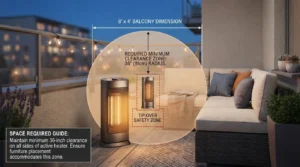
Most compact electric towers, among the more common outdoor heaters small balconies actually accommodate, need a clear footprint of about 12 by 12 inches plus a few feet of open space in front for the heat to radiate into, making them workable on balconies as small as 4×6 feet. Propane models on a weighted base typically need a slightly larger footprint to accommodate the base itself and the fuel tank.
Buyers on a truly minimal balcony should prioritize a tabletop or low-profile design over a floor-standing tower, since those styles reclaim floor space a standing unit cannot.
Electric vs Propane Heaters: Which Adds $100 in Running Cost?
Propane heaters typically cost $50 to $150 less upfront than a comparable electric model but run higher ongoing fuel costs, often adding up to $100 or more per season depending on usage frequency and local propane prices. Electric heaters cost more initially but run on standard electricity, which is usually cheaper per hour of use than propane refills.
Buyers using a heater occasionally save more with the lower upfront cost of propane, while frequent users often come out ahead with electric despite the higher initial price.
Can I Use a Propane Heater on an Apartment Balcony? (Policy Check)
Many apartment and condo buildings prohibit open flame of any kind on balconies regardless of heater size or safety rating, which makes checking the building’s actual lease terms or HOA rules a required step before buying rather than an assumption based on what neighbors might be doing.
Electric heaters avoid this restriction entirely in most buildings, which is why they remain the safer default choice for anyone unsure of their building’s specific policy or unwilling to ask property management directly.
Conclusion
A portable heater earns its spot on a small balcony the moment it adds real warmth without demanding a permanent mount or a footprint the space cannot spare. The lesson from every pick above is the same: check stability and fuel type before checking the finish, since a heater that tips in wind or violates a building’s open-flame policy solves nothing at all. Pair the right heater with the right fuel type and the cold-balcony problem that ends most fall evenings early simply goes away.
This is really a stability-and-policy question wearing a comfort upgrade, and it shows up the same on rooftop decks, fire escapes, and narrow side balconies everywhere. Get the base weight and fuel type right, and wattage and finish become simple taste calls. Save this whole guide, check your building’s policy before ordering anything, and check out our companion pillar on fire pits for wooden decks if a bigger heat source is still worth considering.
Frequently Asked Questions (FAQs)
Are portable outdoor heaters safe for small balconies?
Yes, portable outdoor heaters can be safe for small balconies when the unit has genuine tip-over protection and the fuel type matches what the building actually allows, since many apartments and condos restrict open flame regardless of heater size.
How much does it cost to run a portable balcony heater?
An electric heater running for four hours typically costs $1 to $2 depending on local electricity rates, while a propane unit costs more per session in fuel but less upfront, so total cost depends on how often the heater actually runs.
Can I use a portable heater in the rain?
Only units explicitly rated for outdoor or wet-location use should run in active rain, and even then, checking the specific IP rating on the product listing matters more than assuming “outdoor” automatically means “rain safe.”
Will a portable heater tip over in wind?
A heater with a weighted base and genuine tip-over shutoff protection resists tipping in normal wind conditions, though any portable heater should be secured or brought inside during a serious wind advisory or storm.
Do I need my landlord’s permission to use a propane heater on my balcony?
Most leases address this directly, and many prohibit propane or any open flame regardless of heater size, so checking the lease or asking property management directly before buying prevents a wasted purchase.