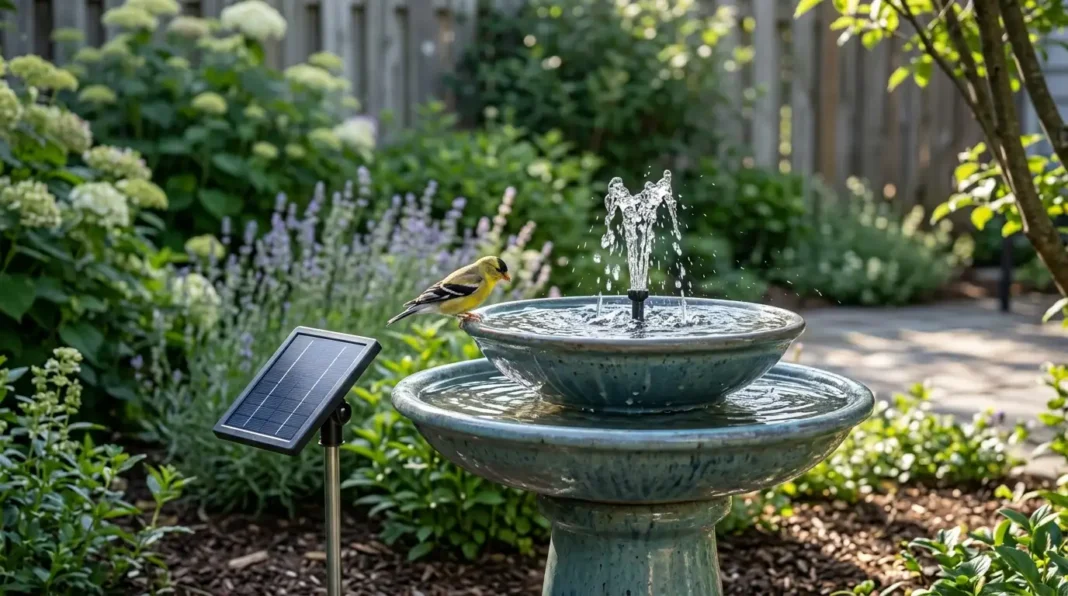
Solar Bird Bath Fountain Pumps Explained
A solar bird bath fountain pump stays reliable with three simple habits: clear the filter and nozzle, scrub the bath and wipe the panel. The Cornell Lab of Ornithology says to change birdbath water every day or two and never past three days, so the schedule matters as much as the gear.
Key Takeaways:
- Rinse the filter and nozzle every time you change the water.
- Change the bath water every day or two and never past three days.
- Scrub with very hot water and a stiff brush if algae appear.
- Wipe the panel and check it for new shade.
- Keep the water shallow: 1 inch at the edges and 2 inches in the middle.
Those habits keep algae off the basin and grit out of the pump. They also keep the panel charging at full strength. Birds can’t tell you the water has gone off, so the routine does the real work. Small steps add up. Keep reading to build a schedule that fits your bath and your week.
Three Habits That Keep a Solar Bird Bath Pump Running
A solar bird bath fountain pump is a small pump powered by a solar panel and sometimes a small battery. It pushes water through a nozzle to make a bubble or a spray. It needs three kinds of care: the pump itself, the water around it and the panel behind it. Each one fails in its own way. Each fix is quick.
Rinsing the Filter and Clearing the Nozzle
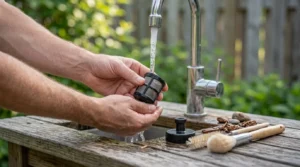
A weak spray often points to a clogged filter or nozzle. Algae, leaf bits and grit collect there and choke the flow. A spray that shrinks week by week is the early warning. Cover the panel with a towel or unplug its cable before you open the pump. Sunlight can spin the impeller without warning. Fingers near a moving impeller are a bad mix.
Lift the pump out and pop off the nozzle. Rinse the filter under running water and clear the impeller chamber with a soft brush. A short soak in diluted white vinegar loosens mineral crust on the housing. Rinse everything well before it goes back in the water. Do this each time you change the bath water so the job never piles up.
Changing the Water and Scrubbing the Bath
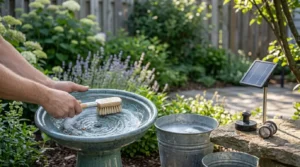
A running fountain doesn’t clean the bath for you. It keeps the water moving but it can’t remove what birds leave behind. Bathing birds shed droppings and dirty feathers. The Cornell Lab of Ornithology says that makes the bath increasingly unsanitary for other birds. The lab puts the schedule at every day or two. Three days is the outer limit. Warm weather shortens it. The table below details birdbath cleaning guidelines established by Cornell Lab of Ornithology specialists.
| Number & Insight | Source (Institute) | Expert / Team |
|---|---|---|
| Change birdbath water at least every three days and more often in warm weather. If algae start to grow, scrub immediately with very hot water and a good scouring brush. | Cornell Lab of Ornithology | All About Birds |
| Mosquitoes that breed in small stagnant pools such as birdbaths are the ones most likely to harbor West Nile virus. Changing the water every day or two gives their eggs no time to hatch. | Cornell Lab of Ornithology | All About Birds |
Start with very hot water and a good brush before harsh cleaners. Pour out the old water and scrub the basin. Rinse the pump too while the bath is empty. Never let it run dry. It needs water to work. Refill to the shallow depth and set the pump back in. Read the Cornell Lab’s birdbath algae and mosquito guidance for the full reasoning.
Wiping the Panel and Planning for Winter
Dust, pollen and droppings dim a panel without any warning light. Wipe it with a damp soft cloth each time you change the water. Then look up. A branch that has leafed out since spring can shade the panel and drag the spray down. If the fountain fades earlier in the afternoon than it used to, new shade is a likely culprit.
The bath and the panel don’t have to share a spot. The Cornell Lab suggests placing a birdbath in shade during hot months. A panel needs the opposite. If your kit has a cable between the two, split them. Before a hard freeze, bring the pump and any battery pack indoors. Never add antifreeze to the bath. Cornell says it is poisonous to all animals.
1 Amazing Reason Birds Love a Moving Fountain
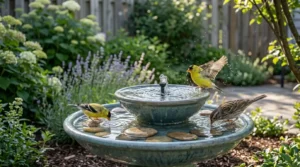
Many birds find the sight and sound of moving water irresistible. That comes straight from the Cornell Lab of Ornithology. It explains why a moving fountain can draw a wider mix of birds than a still bowl. A birdbath may even attract birds that wouldn’t otherwise visit seed feeders. The lab adds that a simple dripper or sprayer widens the list of visitors even more.
Keep the spray gentle so the bath stays safe. The water should be no deeper than 1 inch at the edges and 2 inches in the middle. Add a flat stone or two for footing. Set the bath at ground level if you can since birds seem to prefer it. A tall spray that splashes the bath dry does birds no favors.
1 Proven Fix for a Painful Cloud-Day Shutdown
A panel-only pump runs on sunlight alone. When a cloud passes, the spray fades. When the sun drops, it stops. That is normal. It is not a sign the pump has died. Test it by shading the panel with your hand for a few seconds. If the spray fades and then returns when you move your hand away, the pump is fine.
Two fixes help. Pick a kit with a small battery so the pump rides out short cloudy spells. Otherwise, move the panel to the sunniest spot its cable allows. Either way, a clean panel gives you the most from every minute of light. A battery adds cost and one more part to keep dry. Weigh that against how much evening spray you want.
Best Solar Bird Bath Pump for Small Baths: 2026 Pick
Small baths do best with small pumps. A gentle bubbler suits a shallow bowl far better than a tall fountain. Look for an adjustable nozzle so you can drop the spray low and keep the water in the bath. Spray height is the setting that matters most. Gentle beats tall here. A spray that clears the rim wastes water and leaves the basin low.
Check three things before you buy. Pick a filter you can pull out and rinse in seconds. Pick a cable long enough to reach full sun. Pick a nozzle that unscrews without tools. Small kit panels commonly run 1.5 to 3.5 watts. Compare the listed wattage of both parts. Match the pump to its panel and the bath to the pump.
Solar Bird Bath Fountain Pump Care Takeaways
A solar bird bath fountain pump rewards a short and steady routine. Rinse the filter every time you change the water. Scrub the bath whenever algae show up. Wipe the panel and check it for new shade. Keep the water shallow and fresh. The birds keep coming back to a clean bath and strong spray. Clean water protects the birds first and the pump second. That is the real reason to stay on schedule. Pick one day this week to try the routine and see how it feels. Mark the next change on the calendar before you put the brush away. Then tell us how it goes.
If you also want to power a fountain through cloudy spells, our guide on how to install solar water fountains with battery walks through the sizing math. If this guide helped you care for your bird bath and pump, let us know in the comments below and share it with friends or family who love birds.
Frequently Asked Questions (FAQs)
What is the best solar powered bird bath fountain pump?
The best solar powered bird bath fountain pump is a small unit with a panel matched to the pump, an adjustable nozzle and a filter you can rinse in seconds. Choose one sized for your bath, since a gentle bubble suits a shallow bowl better than a tall spray.
How often should you clean a solar bird bath fountain pump?
Rinse the filter and nozzle every time you change the bath water. The Cornell Lab of Ornithology says that should happen every day or two and at least every three days, with warm weather calling for more.
Why did my solar bird bath fountain stop working?
A clogged filter or nozzle is a common cause. A dirty or shaded panel is another since less sunlight means less power. Check both before you replace the pump.
How deep should the water be in a bird bath with a fountain?
Keep the water no deeper than 1 inch at the edges and no more than 2 inches in the middle, according to the Cornell Lab of Ornithology. Add flat stones so birds can stand and drink.
Do solar bird bath fountains attract more birds?
They can. The Cornell Lab of Ornithology says many birds find the sight and sound of moving water irresistible. It adds that an aerator or slow drip attracts a wider variety of birds.