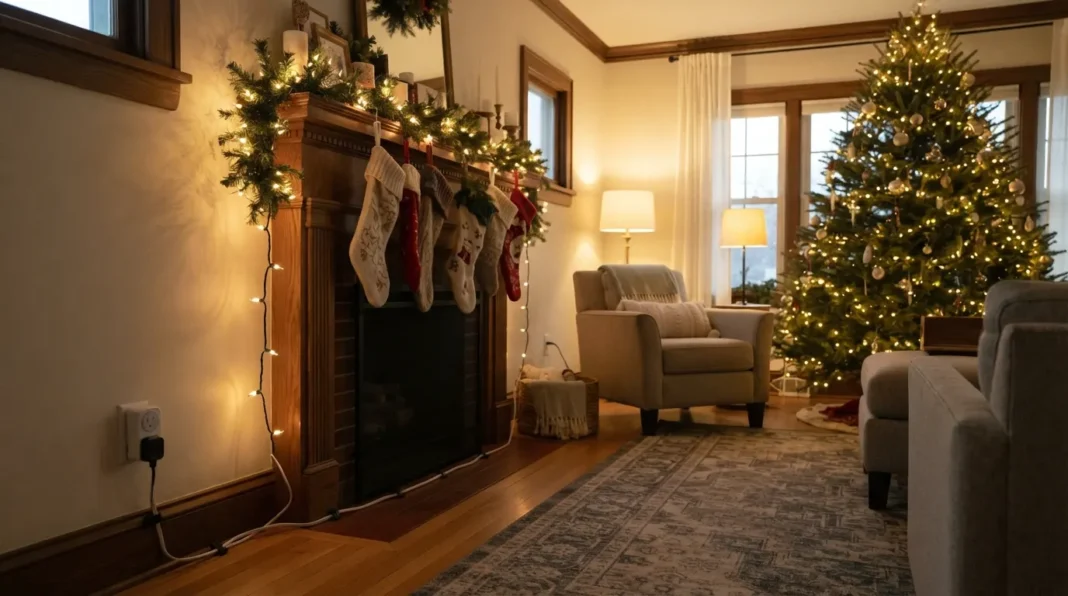
Place Festive Lights Right by Counting Strands Before You Plug Anything In
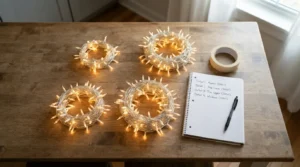
To place festive lights right, count every strand first, give each outlet a safe load and run each cord where nobody walks. Use indoor-rated lights inside the house and never string together more than three sets of incandescent lights. Then put the whole display on a timer plug so the glow switches off on schedule. Those three moves cover the load, the route and the hours.
KEY TAKEAWAYS:
- Write a strand count for each outlet before hanging anything.
- Never string together more than three sets of incandescent lights.
- Keep each outlet load low and unplug at night or use a timer plug.
- Clip cords along the baseboard and off the walkway.
- Choose warm white LED lights for a soft glow and cooler running.
Lights are the first thing guests notice and the first thing that can go wrong. Our guide on how to plan Christmas room layout marks every outlet in the room on one page. This article takes that page and shows what to plug into each spot. The three hacks below keep the warm white glow bright, the extension cord tidy and the plug cool all season long without any real worry.
Three Hacks That Turn a Tangle of String Lights Into a Safe Glow
The hacks follow the order you work in: count the load on paper first, respect the outlet limits second and route the cords last. Counting on paper costs nothing and saves a trip up the ladder later. Each hack needs only a pen and some masking tape and a few cord clips. By the end, every strand has a home and a limit and a switch-off time.
Write the Strand Count on Tape at Every Plug
List every set you own before you hang one: its type, its length and the outlet it will use. Note the number of light strands per outlet beside each socket on your floor plan. Check the box or the tag for the maximum number of sets that can join end to end. Mixed types matter here. LED lights and older incandescent sets do not always share a limit so read each label on its own.
Here is the tip most people skip. Wrap a strip of masking tape around each plug and write the outlet number on it. When a breaker trips in January, you know which set to blame in seconds. Plan the light spacing on paper too. About a hand’s width between strands on a garland keeps the glow even and stops you from adding extra sets to fill gaps. Fewer sets means a lighter load.
Hold the Line at Three Sets and Stop Outlet Overload
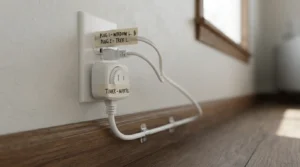
The American Red Cross holiday decorating fire safety tips say to follow the manufacturer’s instructions for how many light strands you can safely connect. Treat that printed limit as the ceiling for your plan. When a fourth set seems necessary, give it a separate outlet or swap in one longer single strand. A power strip never raises the limit of the wall outlet behind it.
The same page adds two habits that protect the cords. Use clips and not nails to hang lights to avoid damaging them and always turn off tree lights before leaving home or going to bed. Both habits are easier when the load is settled on the ground and not fixed later from a ladder. The table below details light connection and cord care guidelines established by American Red Cross specialists.
| Number & Insight | Source | Expert/Team |
|---|---|---|
| The American Red Cross says to follow the manufacturer’s instructions for how many light strands you can safely connect. It advises using clips and not nails to hang lights to avoid damaging the cords. It says to always turn off tree lights before leaving home or going to bed. | American Red Cross | American Red Cross |
Clip the Cords Flat and Let a Timer Plug Do the Switching
Run every extension cord along the baseboard and fix it with cord clips every couple of feet. Choose a cord labeled for the way you use it and retire any with cuts or worn spots. Never run a cord under a rug or across a doorway where feet will catch it. Clips cost little and keep the cord flat against the wall so a vacuum or a pet cannot snag it.
A timer plug is the easiest fire safety upgrade in this guide. Set it to switch the lights on at dusk and off at bedtime so you never rely on memory to unplug at night. Check that the timer’s rating covers your combined load and keep it in an outlet you can reach. If a plug feels warm, turn the set off and remove a strand.
3 Signs an Outlet Is Carrying Too Much
Three signs warn that an outlet is carrying too much: a plug or cord that feels warm, lights that flicker or dim when another device starts and a breaker that trips more than once. Any one of them means stop and unplug the set. Do not reset the breaker and carry on as if nothing happened because the load has not changed.
Move one strand to another circuit and test again after an hour. If the sign returns, check the label on each set and recount with your tape-marked plan. Replace a flickering strand instead of trusting it. A new LED set costs little compared with a tripped breaker in the middle of a family dinner. Keep a spare in the box so a fix takes seconds.
5 Low-Cost Fixes for Tidy and Safe Light Cords
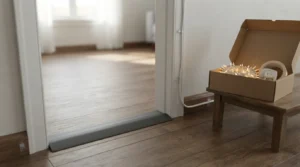
Five fixes cost little: adhesive cord clips, a timer plug, a short extension cord in the right length and a flat cord cover for doorways and masking tape for labels. Each solves one problem. Clips hold the line along the wall while a cover protects a cord where it must cross a walkway. The timer handles the switching and the tape handles the guesswork.
Buy the shortest extension cord that reaches the outlet because a long loop adds clutter and trip risk. Fit the clips as you hang the strands and not afterward. If a cord must cross a floor, use a flat cover and keep it out of the main walkway. Label the plugs last. Five small items remove most of the mess people blame on the lights themselves.
2026 Pick: Warm White LED Strands on a Timer Plug
For 2026, the best way to place festive lights right is warm white LED lights on a timer plug. LED strands generally run cooler than older incandescent bulbs and the warm white glow looks like candlelight and not like harsh white. Choose indoor-rated lights for the tree and the mantel and keep outdoor-rated sets for the porch. Follow the label on every box because limits vary by product.
Pair the strands with a timer plug set from dusk to bedtime. You get a reliable glow and a built-in switch-off with no nightly chore. Keep a short extension cord and a few cord clips in the same box so the setup comes out of storage ready to go. Buy one extra set of the same strand so a failure never leaves a gap in the display.
A Safe Glow Begins With a Number on Paper
Begin tonight by counting every strand and writing the number beside its outlet. Add a strip of tape to each plug and mark the three-set limit on your plan. Then clip the cords and set the timer. Those steps are how you place festive lights right so the display looks warm and the outlets stay cool. The glow you hang on top of that plan is the easy part.
Good lighting makes a room feel finished without anyone noticing the wires. A safe setup takes a little time up front and gives back calm evenings all season. Ask yourself which outlet in your home worries you most and fix that one first. Post a picture of the glow you built and tell us which hack saved you the most hassle. Pack the plan away with the lights in January.
Frequently Asked Questions (FAQs)
How do you place festive lights right?
To place festive lights right, count your strands, assign each outlet a safe load, use indoor-rated lights inside, clip the cords flat and put the lights on a timer plug.
How many strings of Christmas lights can you plug together?
The U.S. Consumer Product Safety Commission says never to string together more than three sets of incandescent lights. Check the label on LED sets because limits vary by product.
Is it safe to leave Christmas lights on all night?
It is safer to unplug at night or to use a timer plug that switches the lights off at bedtime. Nobody needs to watch the display while they sleep.
Can you use outdoor lights indoors?
Outdoor-rated lights can usually be used inside, but indoor-rated lights should stay inside. Follow the label on the box for each set you own.
What color of string lights looks best in a room?
Warm white gives a soft glow like candlelight and suits most rooms. Cool white looks sharper and can feel harsh in a bedroom or a reading corner.