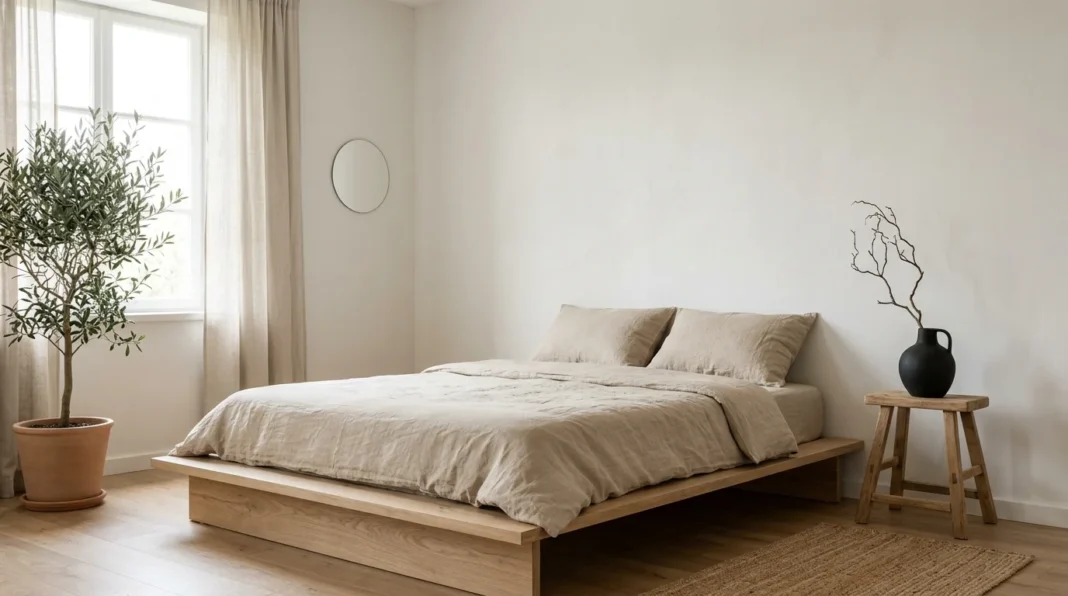
Which Japandi Interior Design Ideas Work in a Real Room
The japandi interior design ideas that actually work come down to three decisions working together. Those are choosing raw or lightly oiled wood instead of anything painted, holding the palette to two tones plus that wood and leaving more open floor than filled floor. Most rooms get two of the three right, which is exactly why the third one keeps bothering whoever lives there without them being able to say why.
Key Takeaways
- Raw or lightly oiled wood beats painted or laminate furniture every time.
- Two tones plus wood is the full color budget, nothing more.
- Empty floor space is part of the design, not a gap to fill.
- A low bed or sofa frame does more than any accent piece.
- One dark object against a wood wall usually finishes the room.
These three rules show up in almost every real japandi room, whether the budget sits at $50 or $5,000, because they describe how the style actually behaves rather than how it photographs. Keep reading to the end, since one of them is probably the rule quietly working against your own room right now.
Three Rules Behind Every Japandi Room That Works
Japandi gets treated like a mood board style, all beige and softened minimalism, when it’s really closer to a set of material rules borrowed from two very different design traditions that happen to agree with each other.
Japanese joinery contributed the wood, while Scandinavian design contributed the restraint. Here’s how the two actually combine into the japandi interior design ideas that hold up in a room people live in, rather than just a photo, starting with the material that carries the whole style.
Choose Raw Wood Over Painted Furniture
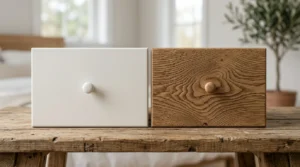
Painted and laminate furniture are the fastest way to turn a japandi room into a generic neutral room, since the style depends entirely on seeing real wood grain. That grain has to show up somewhere real, whether on a dining table, a bed frame or just one open shelf. A light oak or ash tone reads as japandi, while a painted white dresser standing in the same spot reads as almost everything else.
The Forest Stewardship Council runs the main certification system buyers use to check that wood actually comes from a responsibly managed forest, not just a nice-sounding label. The table below details the wood certification guidelines established by Forest Stewardship Council specialists.
| Number & Insight | Source (Institute) | Expert / Team |
|---|---|---|
| FSC uses three separate labels: FSC 100% means the wood is entirely virgin material from certified forests, FSC Mix allows a combination of certified, recycled and controlled wood and FSC Recycled requires the product to be fully recycled material. | Forest Stewardship Council | FSC Labelling and Trademark Team |
A piece stamped FSC 100% is about as close as a shopper gets to actually knowing where the wood came from. Most listings don’t bother showing any label at all, though that isn’t automatically a red flag so much as something worth asking the seller about directly.
Hold the Palette to Two Tones Plus Wood
A japandi palette is smaller than most people expect, since it really only allows for one light neutral, usually an off white or warm gray, one deeper tone like charcoal or black and the wood itself. No third accent color, no pattern competing for attention.
I’d put the deeper tone on a single object and leave it there, whether that’s a lamp base, a vase or the frame on one piece of art you already own. Spreading that same tone across three or four small things is the more common mistake and it’s an easy one to make without ever noticing it happening.
Leave More Floor Than You Fill
This is the one people skip without meaning to, because after decluttering and picking out nice furniture, some leftover habit kicks in and pushes toward filling the last bare wall with something anyway. Resist that pull, since an empty wall in a japandi room isn’t unfinished; it’s doing its job the same way the furniture is.
Try picking just one wall in the room and committing to leaving it alone for a month. Pull the furniture a few inches off the corners too, so there’s visible air around each piece instead of everything pushed flush against the walls. It’ll probably feel wrong for about a week and then it won’t.
5 Japandi Bedroom Ideas for 2026
A japandi bedroom leans even harder on the wood-and-restraint formula, since a bedroom has fewer functional objects competing for attention than a living room does. Five ideas hold up particularly well in 2026: a low platform bed in raw oak, linen bedding kept to one neutral tone, a single pendant light instead of a bedside lamp pair, one textured floor cushion and bare walls except for a single piece of art.
Skip the matching nightstand pair, because mismatched but materially related pieces, like one wood stool paired with one low wood shelf, read as more intentional than a bedroom bought as a matching set.
$200 Japandi Living Room Refresh
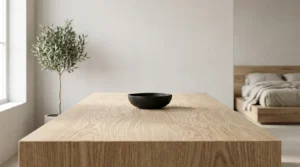
A full japandi refresh on $200 means prioritizing wood over everything else. The bulk of the budget should go toward one real wood piece, whether that’s a side table or a stool, sourced from a secondhand shop or an unfinished furniture store where raw wood costs less than pre-painted stock.
The rest goes toward a linen throw, one ceramic vase in the deep accent tone and a round woven mat instead of a full rug. The walls stay untouched for now, since bare space costs nothing and does more for the look than another purchase would.
Japandi Small Apartment Layout: 2026 Pick
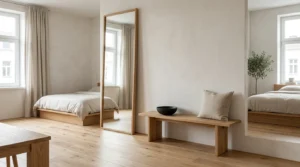
A small apartment actually suits japandi better than a large one, since the style rewards a tight edit anyway. Keeping furniture low and light in both color and visual weight stops a studio apartment from reading as cramped the way it would with tall, dark pieces.
One multi-purpose piece, like a low bench that works as seating and a side table, beats two single-purpose pieces taking up that same floor space. A full-height mirror placed on the emptiest wall adds light to the room without adding a single object anyone has to visually track.
The Three Rules Worth Remembering
Wood, palette and space are the whole story here, even though Pinterest makes japandi look like a vibe anyone can buy in one trip to a home goods store. The japandi interior design ideas that actually hold up are just those three material decisions working together, not a mood board quietly assembled for a single photo.
If it’s not obvious which one is off in your room, walk in cold the way a guest would and notice whatever actually catches your eye first, since color or clutter noticed before the wood usually points straight to the answer. For a different palette, our guide on how to style minimalist living room spaces covers the neutral version.
Frequently Asked Questions (FAQs)
Which Japandi interior design ideas work?
The japandi interior design ideas that hold up are real wood instead of painted or laminate furniture, a tight two-tone palette and floor space you deliberately leave empty. Those three cover most of what separates a room that reads as japandi from one that just reads as plain.
Why does my japandi room feel generic instead of japandi?
It’s usually the wood, since painted or laminate furniture erases the grain that signals japandi and leaves the room reading as plain minimalism instead. Swapping even one painted piece for raw or lightly oiled wood is usually enough to fix it.
What colors work in a japandi room?
Two tones plus the wood itself: one light neutral like off white or warm gray and one deeper tone like charcoal, used sparingly on a single object rather than spread across the room.
Does japandi work in a small apartment?
Yes, it often works better than in a large space, since the style already rewards a tight edit. Low, light furniture and one multi-purpose piece keep a small footprint from feeling cramped.
How much does a japandi refresh cost?
A focused refresh built around one real wood piece, a linen throw and a few small accents typically runs under $200, while a full furniture replacement costs significantly more, depending on the quality of the pieces chosen.