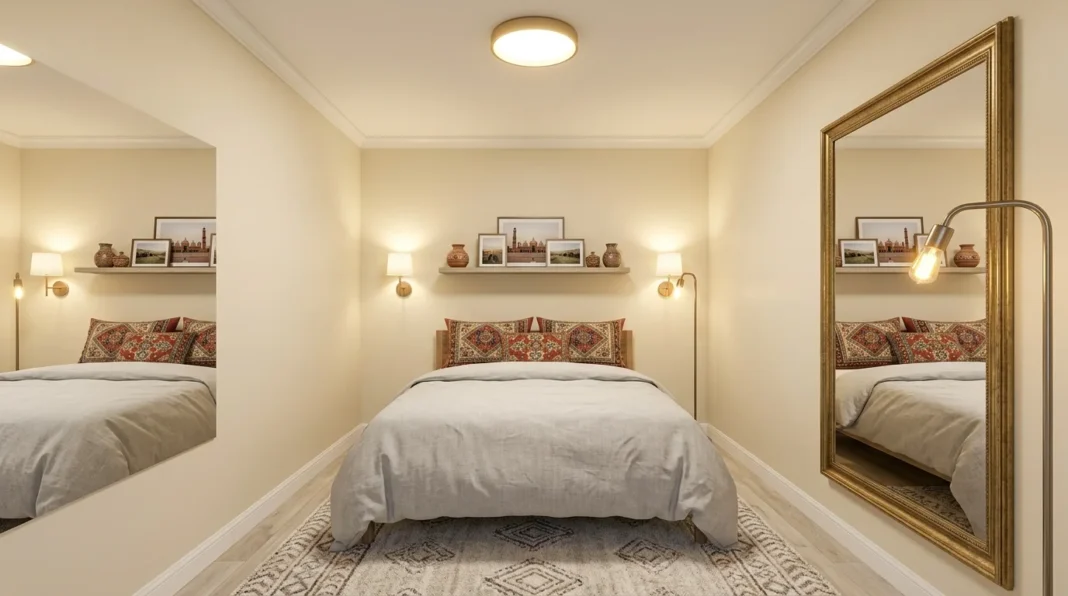
Brighten Dark Windowless Bedroom Corners Without New Windows
You can brighten dark, windowless bedroom spaces by layering three light sources instead of relying on one overhead fixture, adding reflective surfaces, and sticking to warm white bulbs in the 2700K to 3000K range. None of these fixes require adding a window or touching the wall structure.
KEY TAKEAWAYS
- Warm white bulbs (2700K-3000K) feel less clinical than cool white in a room with zero natural light.
- A single overhead fixture creates flat light and harsh shadows, no matter how bright the bulb is.
- A large mirror placed across from the main light source can visually double the perceived brightness.
- Light-reflective wall and ceiling colors bounce more light around the room than dark, matte finishes.
- Task, ambient, and accent lighting each need different levels of brightness, not one fixture doing everything.
A windowless bedroom feels smaller and darker than its actual square footage suggests, mostly because a single ceiling fixture creates flat light with harsh shadows in every corner. The five fixes below tackle that problem directly, starting with the cheapest lighting swap and ending with mirror placement, the kind of trick that makes a genuinely dark room look twice as bright without any electrical work. If the room’s furniture layout still needs sorting first, that groundwork is covered in how to fit queen bed desk combinations before tackling the lighting.
5 Ways to Brighten Dark Windowless Bedroom Spaces
Each way below tackles a different piece of the problem, from the bulbs themselves to how light bounces once it leaves the fixture. They’re ordered from cheapest to most involved, so the first two fixes can usually be done in a single afternoon with no tools required.
Swap to Warm White Bulbs First
The fastest and cheapest way to brighten dark windowless bedroom spaces is replacing whatever bulbs are currently installed with warm white LEDs in the 2700K to 3000K range. Cool white and daylight bulbs, anything above 4000K, tend to make a windowless room feel clinical and sterile rather than warm and lived-in.
A pack of warm white LED bulbs typically costs $10 to $15 for a set of four to six, making this the lowest-cost fix on the entire list. This swap alone won’t solve a genuinely dark room on its own, but it changes the character of every other fix that follows it.
Add a Large Mirror Across From the Main Light Source
A mirror placed directly across from the room’s brightest light source, whether that’s a lamp or the main ceiling fixture, bounces light back into the room and can make a small windowless space feel noticeably larger. The bigger the mirror, the more dramatic the effect, with a floor-length leaning mirror typically outperforming a small wall-mounted one.
This trick works best when the mirror reflects the light source itself rather than a dark wall or piece of furniture, so it’s worth testing a few positions before committing to permanent placement. A secondhand full-length mirror can often be found for $20 to $40, making this one of the more affordable upgrades on the list.
Layer Task, Ambient, and Accent Lighting Together
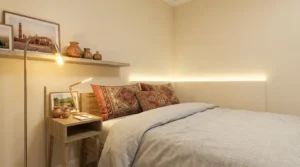
Relying on a single ceiling fixture is the single biggest reason windowless rooms feel flat and dim, since one light source can’t serve reading, general movement, and mood lighting all at once. Adding a desk or bedside lamp for task lighting, a floor lamp for ambient fill, and one small accent light, like an LED strip behind a headboard, spreads the brightness across the whole room instead of concentrating it in one spot.
The residential lighting standard jointly published by the Illuminating Engineering Society and the American Lighting Association recommends noticeably higher light levels for reading and task areas than for general ambient lighting, which is part of why a single bright overhead bulb still feels inadequate for close-up work no matter how high the wattage goes. The table below details lighting guidelines established by American Lighting Association specialists.
| Insight | Source | Team |
|---|---|---|
| Recommended illuminance for task areas like reading or a desk generally runs several times higher than the level recommended for general ambient lighting in the same room, which is why layering sources works better than one strong overhead fixture. | American Lighting Association | ALA Lighting Committee |
Paint Walls and Ceiling in a Light, Reflective Finish
A light, warm-toned wall color, paired with a ceiling in the same shade or slightly lighter, bounces far more light around a windowless room than a dark or heavily saturated color ever will. Satin or eggshell finishes reflect more light than flat matte paint, which matters more in a room with zero natural light than it would in a sunny space.
A single gallon of paint typically covers one wall for $25 to $35, making this a moderate-cost fix compared to the bulb swap or mirror trick. Painting the ceiling to match or nearly match the walls also removes the visual “cap” that a dark or contrasting ceiling color creates in a room already fighting for light.
Add LED Strip Lighting Behind Furniture or Shelving
Hidden LED strips mounted behind a headboard, under a shelf, or along the back of a dresser create indirect light that fills a room without adding visible fixtures. This kind of accent lighting is especially effective in a windowless room because it adds a light source low in the room rather than only from the ceiling, which helps break up the flat, single-direction shadows a single overhead bulb creates.
Basic warm white LED strip kits typically run $15 to $25 for enough length to cover one piece of furniture, and most stick-on versions require no wiring or an electrician. This is usually the last fix worth adding, once the bulb temperature, mirror placement, and main lighting layers are already sorted.
3 Signs Your Windowless Bedroom Needs More Than a Bulb Swap
A windowless bedroom needs more than a simple bulb swap when the room still feels dim with the lights on, when a single overhead fixture is the only light source in the entire room, or when dark wall colors are absorbing most of the light instead of reflecting it. Any one of these three signs usually means at least two of the five fixes above need to be combined rather than relying on just one.
Most people notice the “still feels dim with the lights on” problem first, since it’s the most obvious daily frustration. That specific complaint is almost always solved by adding layered lighting, Way 3 on this list, rather than by simply installing a brighter bulb in the same single fixture.
Cheapest Way to Brighten a Windowless Room Under $50
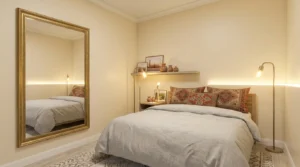
Combining the warm white bulb swap with a secondhand mirror is consistently the cheapest effective combination, typically landing between $30 and $55 total depending on the mirror’s size and condition. Both fixes require zero tools and can be done in under an hour combined.
LED strip lighting comes in close behind at $15 to $25 on its own, and pairing it with just the bulb swap keeps the total under $40 while still meaningfully improving how the room feels at night. Any combination of two fixes from this list tends to outperform spending the same budget on a single expensive fixture.
Best Windowless Bedroom Lighting Setup for 2026 (Editor’s Pick)
For most people trying to brighten dark windowless bedroom spaces in 2026, the strongest overall combination is warm white bulbs paired with full layered lighting, task, ambient, and accent sources working together, plus one large mirror positioned to reflect the brightest source. This combination typically costs $60 to $90 total but delivers the most noticeable transformation of any pairing on this list.
For anyone not ready to commit to all three at once, starting with the bulb swap and the mirror trick together remains the strongest budget-friendly starting point, since both are reversible and neither requires any wiring. Either approach outperforms leaving a windowless room lit by its original single fixture.
A Windowless Room That Finally Feels Bright
Start with the bulb swap before spending money on new fixtures, since changing color temperature alone fixes a surprising amount of the flat, gray feeling a windowless room tends to have. Add the mirror and layered lamps only after the bulbs are sorted, so the extra light has something warm to bounce off.
This same layering approach works in windowless bathrooms, interior hallways, and basement bedrooms, anywhere natural light simply isn’t an option no matter what gets done to the walls. A windowless room will never look exactly like one with a window, but it can stop feeling like a cave once the light sources work together instead of fighting a single overhead bulb. Try the cheapest fix first this coming week, then tell us whether the mirror trick or the bulb swap made the bigger difference.
Frequently Asked Questions (FAQs)
How can you brighten a dark windowless bedroom?
You can brighten dark windowless bedroom spaces by swapping to warm white bulbs, layering task and ambient lighting instead of relying on one overhead fixture, adding a large mirror across from the main light source, and painting walls and ceiling a light, reflective color.
What color light is best for a windowless bedroom?
Warm white light in the 2700K to 3000K range generally feels more comfortable in a windowless bedroom than cool white or daylight bulbs, which can make the space feel clinical rather than cozy.
Does a mirror actually make a dark room brighter?
Yes, a mirror placed across from a light source reflects that light back into the room, which can meaningfully increase how bright a windowless room feels, especially with a large, floor-length mirror.
Should the ceiling be painted the same color as the walls in a dark room?
Yes, painting the ceiling the same color or slightly lighter than the walls removes the visual “cap” a dark or contrasting ceiling creates, helping the whole room feel more open and better lit.
Is one bright overhead light enough for a windowless bedroom?
No, a single overhead fixture creates flat, harsh-shadowed light no matter how bright the bulb is, which is why layering task, ambient, and accent lighting works better than increasing wattage alone.