
Coastal Living Room Ideas That Skip the Beach Souvenir Look

INTRODUCTION: Coastal style earns its calm from light, texture and restraint, not from a basket of seashells by the door. These coastal living room ideas focus on what actually makes a room feel like it belongs near the water: soft natural light, breathable fabrics and a palette pulled straight from sand and sea instead of a gift shop shelf.
You don’t need beach frontage to pull this off, just the right choices in the room you already have. We’ll walk through what genuinely works and where coastal decor tends to tip into costume territory. By the end, you’ll have a clear plan for your own space.
The Coastal Look Beyond the Beach House Cliché
Real coastal living room ideas lean on light, material and color, not novelty decor. Here’s where you should actually put your attention first.
Choosing a Color Palette That Feels Like the Sea, Not a Gift Shop
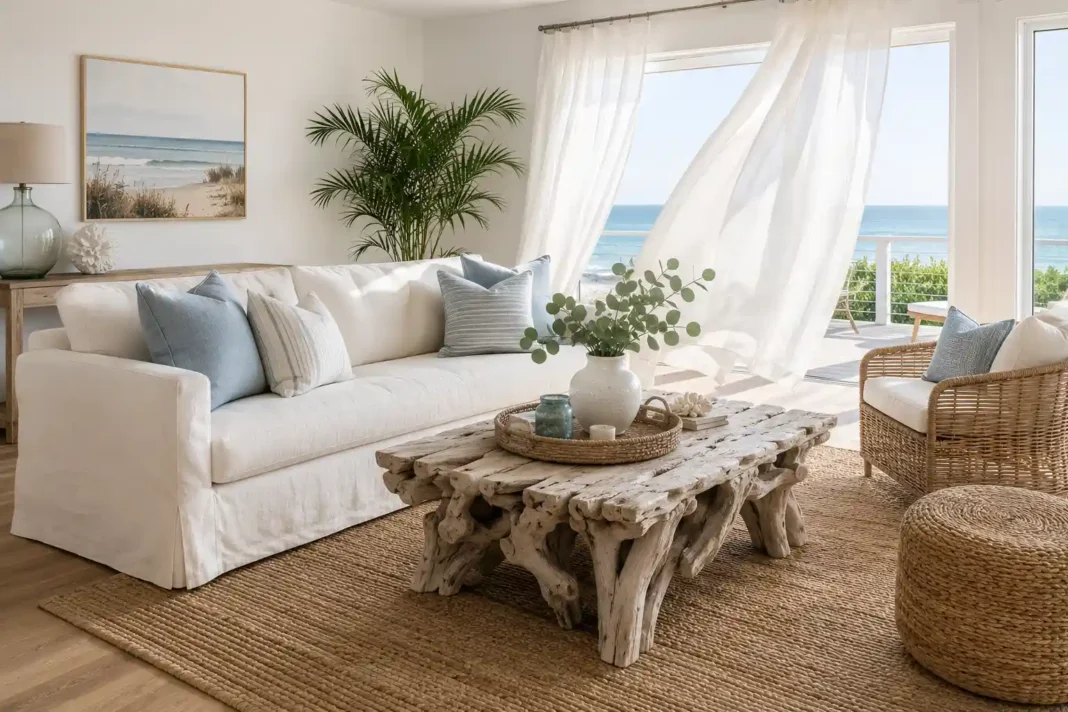
The fastest way to ruin coastal living room ideas is to reach for primary-colored anchors and cartoonish blue stripes. Real seaside color comes from sand, driftwood, sea glass and overcast sky, so lean into soft sandy neutrals, weathered blue-grays and the occasional deeper navy instead of anything that reads like a toy store.
Keep your walls in a warm off-white or pale sand tone and let color show up in your textiles and small accents instead. If you want blue, choose one muted, water-like shade and repeat it in two or three spots rather than scattering five different brights around your room.
Add one warm metal accent, brushed brass or aged bronze, in a lamp base or drawer pulls to keep the palette from feeling too cool. That single warm note against all the blues and sand tones is what keeps your room from tipping into a spa-like sterility.
Natural Textures That Do the Work Instead of Nautical Props
Skip the rope-wrapped mirrors and anchor throw pillows. A woven jute rug, a linen sofa and a rattan chair carry your coastal feel far better than any prop ever could, because they’re the same materials a real seaside home would naturally collect over time. Southern Living’s own coastal design tips make the same point directly: use natural fiber and don’t go overboard with themed accents. The table below details official coastal interior design principles established by Apartment Therapy home & decor experts.
| Insight | Source (Institute) | Expert / Team |
| Coastal design focuses on maximizing natural light, muted ocean-inspired palettes (blues, sand, whites), and organic woven textures rather than overusing kitschy nautical-themed props. | Apartment Therapy Coastal Design Guide | Apartment Therapy Design & Style Team |
| Layering breathable textiles like linen, jute, and distressed wooden accents creates a relaxed seaside aesthetic while preventing living spaces from feeling cold or washed out. | Apartment Therapy Interior Tips | Apartment Therapy Editorial Specialists |
Mix at least three different natural textures in your seating area alone: something woven, something linen and something wood. That contrast is what makes your room feel textured and alive instead of one flat beige note from wall to wall.
Mixing a chunky, open weave rug with a finer woven basket keeps your room from reading as one uniform texture, which is a subtle mistake even seasoned decorators make.
Light and Airy Without Feeling Bare
Coastal rooms live and die by light, so start with your windows. Sheer linen curtains that actually move in the breeze do more for your mood than almost any other single change you can make in your living room.
Airy doesn’t mean empty, though. Layer in enough texture and warmth that your room still feels lived in rather than stripped bare. A few plants, a stack of real books and one soft throw keep your space feeling like a home instead of a rental.
These coastal living room ideas also work well with a mirror placed opposite your main window; it bounces extra daylight around the room without adding any visual clutter.
Furniture Choices That Hold Up Near Humidity and Sun
If your living room actually sees salt air, humidity or direct sun, that changes what belongs in it. These coastal living room ideas work best with performance fabrics, rattan, teak and other materials built to handle moisture and light without breaking down.
Even if you’re nowhere near the water, the same materials still read as authentically coastal rather than staged. Skip delicate silk upholstery and go for something you could genuinely spill a drink on without panicking.
Choose slipcovers or cushion covers you can actually remove and wash, since coastal rooms see more spills, sandy feet and general wear than most other spaces in your home.
One Statement Piece That Anchors the Whole Room
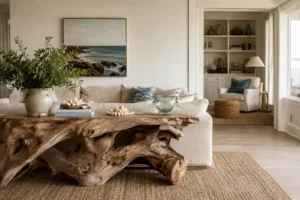
Every one of these coastal living room ideas works better once you pick a single anchor piece: a driftwood console, a woven pendant light or a large piece of ocean-inspired art. That one item gives your eye somewhere to land and keeps the rest of your room from feeling like a random collection of beach souvenirs.
A small uplight or spotlight aimed at your anchor piece after dark keeps it functioning as the room’s focal point even once the sun goes down.
Build everything else around that one piece instead of treating every wall and surface as equally important. It’s the same anchor-piece principle covered in our farmhouse living room ideas guide, just applied to a completely different palette. A room with one clear focal point almost always reads as more intentional than one where every corner is competing for your attention.
Coastal Living Room Lighting to Avoid Harsh Glare Under $39
Skip stark overhead lighting in your coastal room; it flattens all the texture you just spent time layering in. A woven pendant, a rattan floor lamp or a simple linen-shaded table lamp gives you warmth without the glare.
Layer at least two light sources at different heights in your seating area. That mix of overhead and lower lighting is what makes your coastal room feel golden in the evening instead of clinical.
Dimmers on every fixture let you take the same lighting from bright and functional during the day to soft and golden once the sun sets in your space.
Ways to Pick a Coastal Living Room Rug – Top 3
A jute or sisal rug is the most reliable coastal choice you can make, since the texture reads as natural no matter what colors surround it. Layer a smaller printed or textured rug on top if you want a bit more softness underfoot.
Stick to a rug at least two sizes larger than you think you need. A too-small rug is one of the fastest ways to make your otherwise well-styled coastal room feel oddly proportioned.
Vacuum a natural fiber rug regularly and keep it out of consistently damp spots, since jute and sisal can wear faster than synthetic options in a humid room.
Coastal Living Room Wall Decor to Avoid Kitsch Under $45
One large piece of abstract or ocean-inspired art beats a wall full of small nautical signs every time. Choose art with the same soft, sandy or blue-gray tones already in your room so it feels connected rather than bolted on.
If you want texture on your walls, try a single woven wall hanging or a stripped-wood mirror frame instead of stacking multiple small pieces. One confident choice reads as designed; five small ones read as collected in a hurry.
Rotate your wall art or wall hanging seasonally if you want the room to feel fresh without buying anything new.
Conclusion
Coastal style holds up because it’s built on real materials and real light, not on a shelf of souvenirs. Pick one change from this guide, maybe a new rug or a single anchor piece. Give your room a few weeks to settle before adding anything else. These coastal living room ideas work best layered in slowly, the same unhurried way an actual seaside home fills up over years of use.
We’d love to hear which change made the biggest difference in your space, so tell us in the comments below. Our other interior style guides are worth a look too if you’re still deciding on a direction.
Frequently Asked Questions (FAQs)
What colors work best for a coastal living room?
Soft sandy neutrals and muted blue-grays work best in most rooms. These coastal living room ideas lean on quiet, weathered tones rather than bright primary blue in your space. Adding crisp white accents helps reflect light and keeps the room feeling fresh and open.
Do I need seashells or nautical decor for a coastal look?
No. We’d actually skip them. Texture, light and a natural palette do far more for your look than any themed prop. A few simple organic accents will keep the room feeling fresh and timeless instead of overly themed.
What furniture materials suit a coastal living room?
Rattan, teak, linen and jute hold up well and read as authentically coastal. They’re also practical if your room gets a lot of sun. Mixing these natural materials creates depth while keeping the space light, relaxed, and timeless.
Layer in natural textures like a chunky throw, a jute rug and a few plants. Airy doesn’t have to mean empty in your space. Woven baskets and light wood accents also add warmth while maintaining the relaxed coastal style.
Can a coastal living room work without a view of the water?
Absolutely. The materials and light do the work, not your actual location. Natural textures, soft colors, and airy fabrics can create a coastal feel in almost any home.


[…] a few token pillows around. It’s the same one-material-at-a-time principle covered in our coastal living room ideas guide, just adapted to a completely different palette. A genuinely soft rug under your feet does more for […]