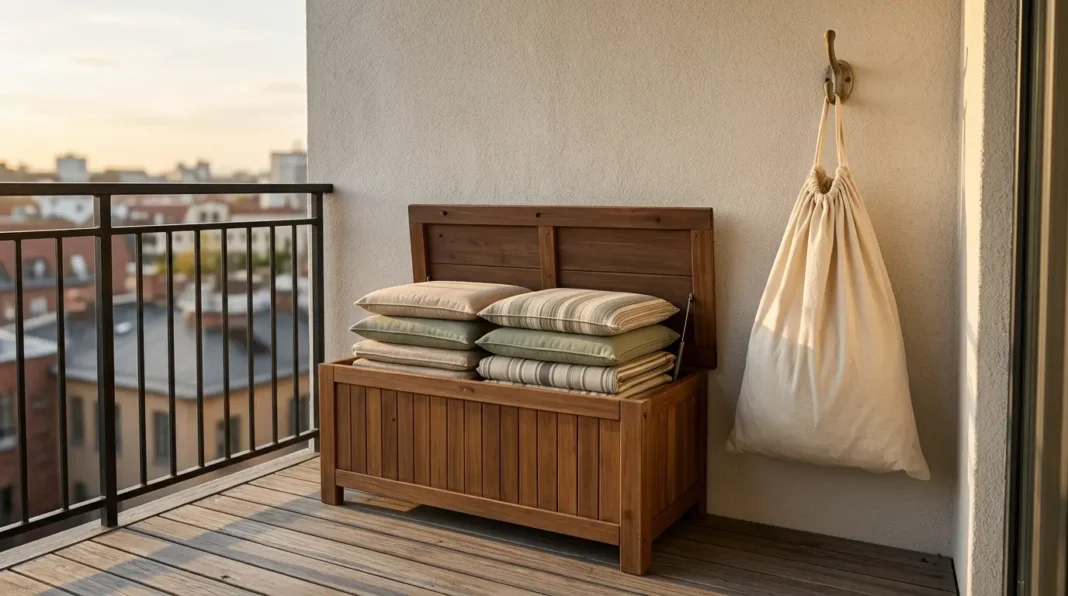
Find a Home for Cushions in Small Space Before the Season Ends
To store outdoor cushions in small space, wash and dry them completely first, then keep them off the floor in a ventilated bench, deck box or breathable bag where air can still move around the foam. Cushions take up the most room and fail the fastest when stored damp, so the real job is not squeezing them smaller but giving them a dry, airy home that costs almost no floor space through the whole off-season.
Key Takeaways:
- Wash and dry first, because soiled or damp cushions mildew in storage.
- Choose ventilated storage such as lidded benches, deck boxes or breathable bags.
- Keep cushions off the floor and away from damp walls and bare concrete.
- Stack loosely so foam keeps its shape and air can move.
- Check every few weeks for dampness, spots or a musty smell.
Small balconies and apartments rarely have a spare closet, which is why the five storage ideas below use space you already own: the bench you sit on, the wall beside the door and the shelf above the coats. Pick the idea that fits your layout, clean the cushions this weekend and put them away before the first cold week arrives.
Clean and Dry First, Because Storage Cannot Fix a Damp Cushion
A cushion that goes into storage damp or dirty comes out musty, no matter how clever the container is. Wikipedia’s entry on airing explains that water condensing on stored articles can cause rot, mould and mildew and that circulating air around them dries them out, so air circulation matters as much as the container you choose. The table below details the official airing guidelines established by Wikipedia specialists.
| Number & Insight | Source (Institute) | Expert / Team |
|---|---|---|
| Airing outdoors is best done when the outdoor humidity is lower, often between 10:00 a.m. and 3:00 p.m. and airing for a few hours prolongs the life of fabric, but airing for too long in strong light can damage it. | Wikipedia (Airing) | Wikipedia Contributors |
So the order matters. Wash removable covers, spot-clean the foam and air everything outdoors around midday, when humidity is lower, until the center of each cushion feels completely dry, keeping it out of strong sun for long stretches. Only then does it make sense to choose a home for cushions in small space and that home needs air, not just a lid.
Five Storage Ideas for Cushions in Small Space
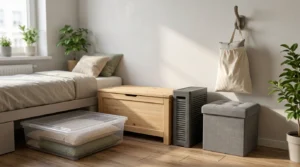
Storing cushions in small space is a puzzle of volume, air and access. The best spot keeps foam dry, keeps the pieces you use often within reach and does not steal floor space from the way you move around. Each idea below suits a different layout, so mix them rather than forcing everything into one container.
Rotate cushions between spots as the season changes, with this summer’s set near the door and the off-season set in the deepest, driest place you have. Whatever you pick, line it up with the rule from the section above: clean, completely dry and given air, because a good container only protects what you put into it.
Slide Them Into a Lidded Storage Bench
A bench with a hinged lid gives you seating and a cushion home in one footprint, which is exactly what a small balcony needs. Choose one with ventilation slots or small gaps in the sides and line it with a breathable cotton sheet rather than plastic so condensation never sits against the foam for weeks.
Fill it loosely and leave a little air at the top, because a packed bench holds humidity like a closet. If the bench is wood, seal it and keep the lid clear of standing water so rain does not drip inside and wipe the inside dry after wet weeks before the cushions go back in.
Use a Slim Ventilated Deck Box
A slim deck box tucked against the wall holds a whole set while barely changing how the balcony looks. Pick a model with vents or a mesh-lined lid and a raised base, so water cannot collect underneath and the cushions sit above any puddles that form during heavy rain. Even a small lift off the ground makes a big difference over a wet season.
Stack cushions on edge or flat with a thin gap between them rather than cramming them together and place the box where it gets some breeze. Check the lid seal after storms, since a cracked seal quietly turns a protective box into a damp one that smells worse each week. A quick look after every storm is enough.
Hang Breathable Bags on Hooks or a Closet Rod
Breathable storage bags made from cotton or mesh let air in while keeping dust and pests out and they can hang from sturdy wall hooks, a closet rod or the back of a door. Hanging them gets cushions off the floor, which is where moisture tends to collect in small closets and entryways. Choose bags with mesh panels for extra airflow.
Avoid sealed plastic bags and vacuum bags for foam cushions, since a closed bag plus a little dampness is the ideal recipe for mold. Label each bag with the room and season it belongs to, so you can swap sets quickly and never open the wrong one at the wrong time. It also makes seasonal swaps feel effortless.
Park Off-Season Sets Under the Bed or Sofa
For off-season sets, the space under a bed or sofa is often the driest spot in a small home. Slide cushions into a flat, breathable bag or an under-bed bin with air holes, keep them off bare concrete and exterior walls and make sure the room itself stays reasonably dry and ventilated. A cool, dry bedroom is far better than a damp garage.
Pull them out once or twice during storage to fluff and sniff-test them and air them near an open window on a dry day. Use this spot for the cushions you will not need for months and keep the daily set in an easy-reach home like a bench near the door. That keeps the whole system simple to follow.
Turn a Storage Ottoman Into Cushion Parking
A storage ottoman or hollow pouf doubles as a footstool and a hidden compartment for a few throw cushions, which is handy when floor space is tight. Choose a washable cover and a sturdy lid and keep the ottoman indoors or under cover so it does not become a sponge in the rain. Washable covers make spills a non-issue.
Use it for the small pieces and keep the big seat cushions in the bench or box. That split keeps every cushion within reach without cluttering the walkway and it makes tidying a one-minute job when guests arrive or the weather suddenly changes and everything has to come in. It is a small trick with a big payoff.
Moisture, Pests and Pressure: Three Things That Ruin Stored Cushions
Moisture is the biggest enemy, but pests and pressure do quiet damage too. Insects and rodents like warm, dark, undisturbed corners, so check bags and boxes for droppings or chewed fabric and keep food crumbs away from cushion storage. Heavy stacking crushes foam and weakens its recovery, so keep the load light and rotate the pieces on top.
Cushions are one part of a tidy balcony. Our guide on how to organize small balcony storage shows how benches, hooks, cords and furniture layout work together, so the cushion storage you choose fits a plan instead of fighting the rest of the space for every square foot. That integration is what keeps small spaces calm.
How Much Does It Cost to Store Cushions in Small Space (Under $60)
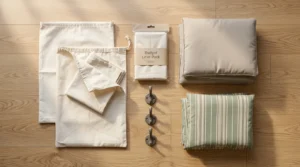
Breathable storage bags, a pack of cotton liners and a few wall hooks usually total under $60 and a basic lidded bench or deck box is the one larger purchase worth planning for. Many people start with bags and hooks to test how much room they really need before buying anything bulky. Testing first prevents expensive mistakes.
Compare that with replacing a full set of cushions, which can cost several times more than the storage gear. A small, steady routine of washing, drying and storing correctly is the cheapest way to make the same set last for many more seasons and many more summers. That is a small investment for a lot of comfort.
How Often Should You Check Stored Cushions (Every 4 to 6 Weeks)
Check stored cushions every four to six weeks, which is often enough to catch dampness or odor early. Press the center of the foam, sniff the cover and look for spots or discoloration, because mildew leaves a musty odor and can discolor fabric long before the cushion looks damaged from the outside. Catching it early keeps cleanup simple.
On a dry day, take the cushions outside to air around midday for a few hours, since Wikipedia’s entry on airing notes that too long in strong light can damage fabric, then return them to their home. If you find a damp or smelly cushion, dry it completely before it goes back into storage. Never put a damp cushion back, because patience here saves the whole set.
3 Storage Mistakes That Make Cushions Smell Musty
The first mistake is storing cushions damp or dirty, since soil and moisture are all mildew needs to get started. The second is sealing them in plastic or vacuum bags, where a closed bag and a little humidity create ideal conditions for mold, even when the cushions feel dry to the touch. That hidden dampness is the usual culprit.
The third is packing cushions tightly in a closet with no airflow, which is how poorly ventilated spaces turn damp and musty during wet weather. Wash, dry completely, and give them air, and most smell problems disappear before they ever bother you. Most fixes cost nothing but a little attention and a dry afternoon.
Conclusion
Cushions come through the off-season in good shape when they go into storage clean, completely dry and able to breathe. The five ideas above give every cushion a home that fits a small space, from the bench you sit on to the bag on the closet door, without giving up floor room or comfort. It is a small habit with a large payoff over many seasons.
Even one change, like swapping a sealed bag for a breathable one, can protect the whole set. Small fixes add up when space is tight. Your cushions will thank you the next time spring arrives. Pick one simple idea to try this weekend, then tell us in the comments where your cushions finally found a home or share this guide with a friend whose balcony is overflowing with cushions.
Frequently Asked Questions (FAQs)
How do you store outdoor cushions in a small space?
To store outdoor cushions in small space, wash them and let them dry completely, then keep them in a ventilated lidded bench, slim deck box or breathable bag instead of sealed plastic. Store them loosely off the floor, rotate sets by season, check them every few weeks for dampness or odor and keep off-season sets in the driest spot you have.
Can you store outdoor cushions in plastic bags?
Plastic bags are risky for outdoor cushions because a closed bag, plus even a little dampness, traps humidity and lets mildew take hold. If you must use plastic, make sure the cushions are completely dry and check them often but breathable cotton or mesh bags are the safer choice for storage. Label the bag and check it each month.
Where should you store outdoor cushions in winter?
Store outdoor cushions in winter in a dry, ventilated spot such as a lidded bench kept under cover, a deck box with vents, a closet shelf or under a bed indoors. Avoid damp basements, bare concrete floors and sealed plastic containers and bring the cushions out on dry days to air before the new season starts.
How do you keep stored cushions from smelling musty?
Wash and dry cushions completely before storage, because soiled or damp cushions are more likely to mildew and store them with airflow in a breathable bag or vented box. Air them in the sun on warm, dry days and check them monthly. A musty odor signals mold, so dry and clean the cushion at once. Never store a smelly cushion without cleaning it.
Can you compress outdoor cushions to save space?
You can gently compress foam cushions for short periods but avoid vacuum-sealing them or squeezing them tightly for months, because crushed foam can lose its shape and a sealed bag traps moisture. Stack them loosely, stand them on edge or use several smaller storage spots instead of forcing everything into one tight space. Smaller spots also keep sets easy to reach.