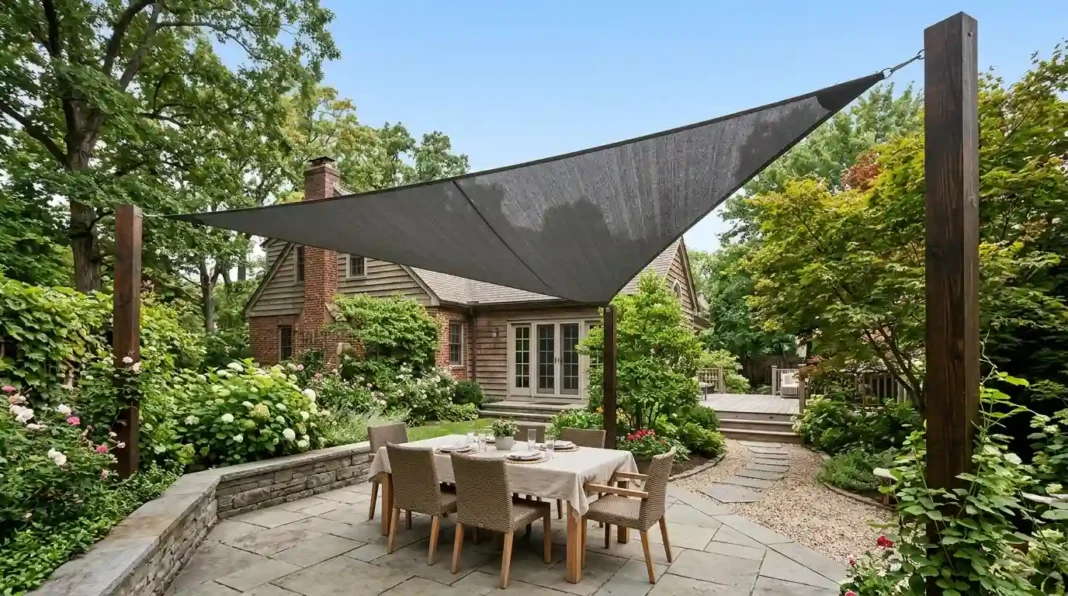
Best Waterproof Shade Sails Explained
Hanging the best waterproof shade sails takes three steps: choose strong anchors, pitch one corner low and tension the fabric until it is taut. The Skin Cancer Foundation says densely woven cloth is more protective than loosely woven cloth and dark or bright colors beat pale ones for blocking UV rays.
Key Takeaways:
- Anchor to posts or house framing, never gutters.
- Pitch one corner lower so rain runs off.
- Pooled water weighs about 8.3 pounds per gallon.
- Pick dense fabric in a dark or bright color.
- Tension until taut and recheck after the first rain.
A waterproof sail sheds rain instead of letting it through. That makes the slope and the anchors matter more than the brand on the label. Get those two right and the sail stays tight and quiet all season. Skip either one and the fabric pays for it. Keep reading to hang yours the right way this weekend.
Three Steps From Posts to Shade
A shade sail is a sheet of tensioned fabric anchored at three or more corners to posts or to a building. A waterproof sail blocks sun and sheds rain from above.
Three jobs cover the hang: the anchors and slope, the fabric and its rating and the final tension. Each has a quick check you can do in minutes. The best waterproof shade sails get all three right.
Choosing Strong Anchors and Setting the Pitch
A sail pulls on every anchor all day and pulls harder in a gust. Posts set in concrete and solid house framing can carry that load. A gutter or a loose fence rail can’t. Even the best waterproof shade sails fail on weak anchors. Pick your anchor points and mark them with stakes. Watch where the sun falls at noon before you commit.
Set one corner lower than the rest so rain runs off. Water pools in a flat sail and weighs about 8.3 pounds per gallon. A sail holding 20 gallons carries roughly 167 pounds. That load drags on fabric and hardware. Give every sail a visible slope and a clear path for water to leave. Make the drop easy to see from the seats.
Picking the Fabric and the UV Rating
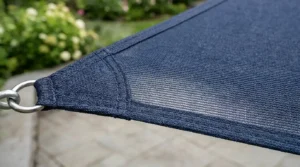
The Skin Cancer Foundation explains that UPF counts both UVB and UVA rays. Fabric separates the best waterproof shade sails from the rest. The foundation says densely woven cloth protects better than thin or loosely woven cloth. It also says dark or bright colors absorb more UV than pale shades. Those rules were written for clothing. The logic carries over to shade cloth. The table below details fabric UV protection guidelines established by Skin Cancer Foundation specialists.
| Number & Insight | Source (Institute) | Expert / Team |
|---|---|---|
| UPF measures the UVB and UVA a fabric lets reach the skin. SPF measures only UVB. | The Skin Cancer Foundation | Skin Cancer Foundation Experts |
| Densely woven cloth is more protective than sheer, thin or loosely woven cloth. | The Skin Cancer Foundation | Skin Cancer Foundation Experts |
| Dark or bright colors absorb UV and protect better than lighter shades. | The Skin Cancer Foundation | Skin Cancer Foundation Experts |
Look for the maker’s UPF number on the label and aim for 50 or higher. Ask for the fabric type and weave in writing if the listing leaves them out. Choose a darker shade if you want the most protection. Pale fabric still works if you prefer a lighter look. Read the foundation’s guide to UPF and sun-safe fabrics before you compare sails.
Hanging, Tensioning and Taking It Down
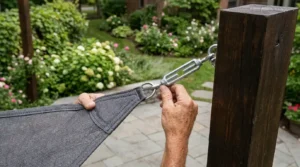
Hang the sail with a helper and keep tools and spare hardware within easy reach. Attach the hardware at each corner and pull the fabric toward the anchors. Tighten a little at a time and work around the sail in turns. Stop when the fabric is taut and wrinkle-free and the edges form a smooth curve. Over-tightening can damage the fabric and the anchors.
Check the tension after the first rain and again after the first week since new fabric and hardware settle. Take the sail down in high wind and heavy snow. The best waterproof shade sails still catch wind like a boat sail. Store it dry and folded loosely so it doesn’t crease or grow mildew. Note the date so the next check never slips.
1 Proven Fix for a Painful Pooling Problem
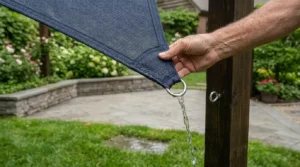
Pooling means the sail is too flat or too loose. Lower one corner a few inches or raise the opposite corner to steepen the slope. Then tighten the sail a little at a time. If a pool has already formed, lift the low edge gently and let the water run off. Stand clear of the falling water and keep your footing dry and steady.
Recheck after the next storm. A sail that holds water once will hold it again until you change the slope. Write down the corner heights so you can restore them if hardware slips. Photograph the sail from the side after each change. A side view shows the slope better than any guess. The best waterproof shade sails shed rain in seconds and not hours.
3 Proven Signs of a Painful Loose Sail
View the sail from the side in low evening light. Folds stand out. Listen too. Wrinkles are the first sign. A taut sail shows a smooth curve and a loose one shows folds that run toward the corners. Flapping is the second sign. A sail that snaps in a light breeze has slack somewhere. The third sign is water that stays after the rain stops.
Fix a loose sail the same way you hung it. Tighten in small turns and work around the corners. Check every shackle and ring for wear. Replace any hardware that is bent or rusted. A frayed corner reinforcement means it is time to retire the sail. Keep a spare shackle and turnbuckle in the shed. A quick swap beats a failed corner.
Best Waterproof Shade Sail for Small Backyards: 2026 Pick
Small yards do best with small sails. A triangle fits a tight corner and a small rectangle covers a seating area. Measure the space between your anchors and leave room at each corner for hardware since the fabric corners never reach the posts. Hardware adds length at every corner. The best waterproof shade sails for small yards are the ones that fit without strain.
Pick dense fabric in a dark or bright color with a UPF of 50 or higher. Confirm the kit includes corner hardware and ask how the fabric sheds water. A sail with a clear slope and strong rings will outlast one that is simply cheap. Keep the receipt and the care sheet. Ask about the warranty on the fabric and the stitching.
Shade Sail Hanging Takeaways
The best waterproof shade sails reward careful hanging. Anchor to posts or framing. Set a slope so rain runs off. Pick dense fabric in a dark or bright color with a UPF of 50 or higher. Tension in small turns and recheck after the first rain. Each step is quick and prevents a costly failure. A good sail should add shade to a yard and not a sag. The hang is where that gets decided. Spend a full weekend on it. Put a reminder on the calendar for the first rain. Check it again after the first week. Then enjoy cooler afternoons for the rest of the season.
If you are also planning a water feature in the shade, our guide on how to install solar water fountains with battery covers the power math. If this guide helped you plan your sail, let us know in the comments below and share it with friends or family who need backyard shade.
Frequently Asked Questions (FAQs)
What is the best waterproof shade sail for a small backyard?
The best waterproof shade sail for a small backyard is a triangle or small rectangle in dense fabric with a UPF of 50 or higher. Measure the space and leave room at each corner for hardware.
How do you keep a waterproof shade sail from pooling water?
Set one corner lower than the others so rain runs off. A flat sail holds water that weighs about 8.3 pounds per gallon.
What UPF rating should a shade sail have?
Aim for UPF 50 or higher. The Skin Cancer Foundation says UPF 30 to 49 offers very good protection and UPF 50+ rates as excellent.
How tight should a shade sail be?
Tight enough that the fabric is taut and wrinkle-free with a smooth curve at the edges. Tighten in small turns and recheck after the first rain.
Should you take a shade sail down in winter?
Take it down in high wind and heavy snow and store it dry. Check the manual first since some makers allow it to stay up.