Buy Senior Room Decor That Looks Warm and Works Hard
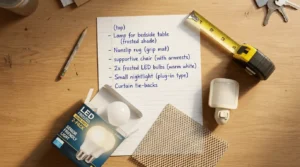
The smartest way to buy senior room decor is to shop in a set order: lighting first, then grip, seating, contrast and emergency items, choosing pieces that look warm but also help the person see, stand and call for help. Most of these items are sold at hardware stores, pharmacies, medical supply shops and ordinary furniture retailers. The shopping list matters more than the shop, because a handsome item that fails its job is money wasted.
KEY TAKEAWAYS:
- Buy light and grip before buying anything purely decorative.
- Choose bright non-glare bulbs and a motion-sensor night light.
- Pick a sturdy chair with armrests for dressing instead of a soft low seat.
- Prefer solid, textured fabrics with clear contrast over busy patterns.
- Add a phone, a flashlight and an alert option within reach of the bed.
Buying is the last move in our complete plan to decorate older adult bedroom spaces. It is the move where money is most easily wasted. Once the layout, colors and bedding are settled, you know exactly which gaps need filling. The seven risks below show where shoppers go wrong and how a short, ordered list keeps a modest budget focused on things that matter.
7 Buying Risks That Waste Money in a Senior Bedroom
Shopping for a bedroom that has to look good and work well pulls in two directions at once. Showrooms reward appearance, while a real night rewards grip, light and reach. Each risk below is a common purchase mistake with a plainly stated fix, ordered so the early ones protect the budget for the later ones. Read them before you open a single tab. Carry the list with you in a notes app so you can check each item as you shop.
Buying Style First and Function Second
A lamp with a gorgeous base and a tiny shade, a chair that sinks when you sit, a rug that curls at the corner. They photograph beautifully and then fail at their basic job. The cure is to write the job before the product: this lamp must light the pillow and the path, this chair must be easy to stand up from, this rug must stay flat. If a product cannot meet its job, skip it however good it looks.
Make the job list short and specific, then shop against it. A useful trick is to name one person who will use each item and picture the hardest moment, such as getting out of bed at 3 a.m. Items that pass that test are usually the ones that also look calm and uncluttered. Style then becomes the tiebreaker between choices that are already safe, which is exactly where it belongs.
Settling for Dim or Glaring Bulbs and Fixtures
Lighting is the highest-value purchase in the room. It is often the cheapest. Lighthouse Guild reports that seniors can require 3 to 6 times more light and recommends higher-wattage, compact fluorescent or LED bulbs. NCOA advises replacing dim bulbs with bright, non-glare ones. AARP suggests a motion-sensor night light for the walk between the bedroom and bathroom after dark.
Pay attention to the shade as well as the bulb. A bare, bright bulb creates glare that hides edges, while a frosted shade spreads the light softly. If the bedside table is too crowded for a lamp, the AARP HomeFit Guide suggests a wall sconce with an adjustable arm, with adhesive clips or a cord cover to keep the cord out of the way. Spend here before you spend on art or cushions.
Choosing Rugs and Mats With No Grip
Decorative rugs are the most common fall-causing purchase in a bedroom, because they curl, slide and catch slippers. NCOA advises securing or removing throw rugs that slide or curl and placing a non-skid mat with non-skid backing beside the bed on hardwood or tile. AARP adds that any area rug should be secured with a non-slip mat or anti-slip rug tape.
If you want a rug for warmth or style, choose a low, flat weave in a solid color and fix it down firmly. The American Foundation for the Blind warns that stripes and checks can create confusion, so patterned designs may blur the edge of the rug against the floor. Check the corners every week for curling. Replace any mat whose backing has worn smooth.
Skipping the Aids That Support Standing and Dressing
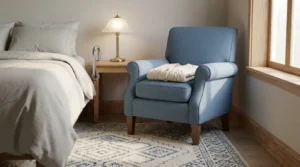
Support aids are the items shoppers forget, because they do not feel like decor. A sturdy chair with armrests near the bed lets someone dress sitting down. An assist handle on the side of the bed gives a firm grip for standing. Aids such as these are easy to hide among the furniture if you choose finishes that match the room, which keeps the bedroom from looking medical.
The NCOA’s bedroom safety guide for older adults lists other aids worth knowing about before you buy senior room decor: bed ladders, which work best with an occupational therapist, floor-to-ceiling transfer poles, bedside commodes and reachers or grabber tools. You do not need them all. Knowing they exist means you can ask a professional about the right one when needs change instead of improvising in a hurry. The table below details bedroom aid guidelines established by NCOA specialists.
| Insight | Source | Team |
|---|---|---|
| NCOA lists bed ladders (best used with an occupational therapist), floor-to-ceiling transfer poles, bedside commodes and reachers or grabber tools as aids for getting in and out of bed and reaching items safely | NCOA | NCOA Center for Healthy Aging |
Forgetting Contrast and Texture in Fabrics and Accessories
Fabric choices change how easily a person finds and uses furniture. The American Foundation for the Blind advises textured upholstery where possible because texture gives tactile clues. It also advises contrast on furniture, such as a light beige pillow on a darker sofa, so the sofa is easier to find. It also notes that brightly colored accessories like vases and lamps make furniture easier to locate.
That means a pillow or throw can be a functional purchase as well as a pretty one. Pick solid colors that stand out against the chair or bed beneath them. Avoid patterns that make edges disappear. Keep surfaces uncluttered, so the bright accessory you choose is actually visible. One strong contrasting accent usually works better than five small ones spread around the room.
Ignoring the Phone, the Alert and the Alarm Items
Emergency items rarely appear on a decor list, yet they belong in the shopping plan. NCOA recommends keeping a fully charged phone beside the bed and considering a medical alert system for anyone who lives alone or is at risk of falls. For hearing loss, it suggests smoke alarms with strobe lights or bed-shaker alerts, so the alarm still wakes the person in the night.
AARP adds a digital clock with large, lighted numbers that can be read from a distance at night. It also suggests a working flashlight near the bed. Buy a second phone charger and keep it plugged in and ready, as AARP suggests. Give cords a designated spot so they stay off the floor. These small purchases cost little and answer the most frightening moments of a bad night.
Buying Without Checking Fit, Standards and Advice
The last mistake is buying a product without confirming that it suits the person and the bed. The FDA tells consumers that adult portable bed rails should meet ASTM F3186-17 and warns that not all rails fit all bed sizes, since rails, mattresses and frames are often bought separately. NCOA also notes that full-length rails have been recalled over entrapment and fall risks.
Before spending on anything that touches how someone gets in or out of bed, ask a doctor or occupational therapist for a recommendation. Take a photo of the bed, the mattress thickness and the floor space when you shop. Bring it into the conversation with a store assistant. A few minutes of preparation can prevent a return or an unsafe fit that costs far more than the item.
3 Warning Signs a Purchase Was the Wrong Fit
A purchase was the wrong fit when the person avoids using it, when it needs adjusting every time it is used or when it creates a new obstacle such as a curling edge or a glare spot. Any one of these signs deserves a quick fix or a return. Ignoring them usually means the item ends up in a closet while the problem it was meant to solve continues.
Ask the person directly how each new item feels in daily use. Listen for polite hesitation. A chair that is too low or a lamp that is too bright may never be mentioned unless you ask. Keep receipts and packaging for the first few weeks. Treat the first week as a trial period so a poor choice can go back without any guilt or awkwardness.
5 Small Buys That Do the Most Work
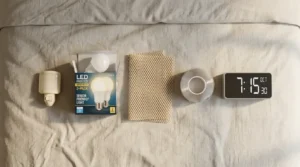
Five small purchases deliver the biggest gains when you buy senior room decor on a tight budget: a motion-sensor night light, brighter non-glare bulbs, a non-skid mat with backing, anti-slip rug tape and a digital clock with large lighted numbers. Each is drawn from AARP, NCOA or Lighthouse Guild advice. Each solves a problem that shows up on nearly every bedroom checklist. Together they can be bought and installed in a single afternoon.
Buy them in that order if money is tight. Light and grip prevent the most accidents, while the clock and tape refine comfort. Bring the old bulbs with you to match base sizes. Measure the mat area beside the bed before you leave home. Place the purchases, then walk the room after dark to see whether anything still feels harder than it should.
2026 Pick: Start With Light, Grip and a Sturdy Chair
If you can make only three purchases this year, make them a bright non-glare bulb with a motion-sensor night light, a non-skid mat or anti-slip tape and a sturdy armchair with armrests near the bed. These three fix the problems that most often cause night-time falls and everyday strain. They work in almost any bedroom regardless of budget, style or size.
Add a phone charger and a flashlight within reach of the bed, then think about contrast pillows and wall art. This order keeps spending tied to real need. It leaves room in the budget for the personal touches that make the space feel like home. Revisit the list every six months as needs change. Retire anything the person no longer uses.
Shop for the Job First and the Style Second
Write the job list tonight: light the pillow and the path, keep the floor from sliding, make standing and dressing easier and keep a phone and flashlight in reach. Then match each job to one product and buy in that order. When you buy senior room decor this way, every purchase earns its place, the budget stretches further and the room still ends up warm, personal and good to look at.
Decor for later life should never feel like equipment bolted onto a bedroom. It should feel chosen. Let the person pick the colors, the throw and the frame for the family photo. Let safety quietly decide the base items. Try the job list this weekend with a pen and a tape measure in hand, then tell us which purchase made the room feel safest once it was in place.
Frequently Asked Questions (FAQs)
Where is the best place to buy senior room decor?
The best way to buy senior room decor is by item type: bulbs, night lights and rug tape at hardware stores; aids such as reachers at pharmacies or medical supply shops and chairs and bedding at furniture retailers, with an occupational therapist advising on any support equipment.
What should you buy first for a senior’s bedroom?
Buy light and grip first: a bright non-glare bulb, a motion-sensor night light and a non-skid mat or anti-slip rug tape, as NCOA, AARP and Lighthouse Guild advise.
What type of chair is best for an older adult’s bedroom?
NCOA suggests a sturdy chair with armrests nearby for dressing. The AFB advises textured upholstery with contrast so the chair is easy to find.
Are bed rails a good thing to buy for a senior?
Only with care. The FDA says portable rails should meet ASTM F3186-17 and fit the bed. NCOA notes that full-length rails have been recalled over entrapment and fall risks.
Should senior bedroom decor avoid patterns?
Large busy patterns on rugs and upholstery are best avoided, because the American Foundation for the Blind notes that stripes and checks can create confusion for older eyes.