How To Manage Household Shopping Budget Without Overspending

The simplest way to manage household shopping budget is to write a plan and check it every month. List your bills and expenses. Add up your monthly income. Subtract one from the other. The FTC says the result should be above zero. Online orders are easy to click and easy to forget. Small buys add up fast. Shipping and taxes add more. A written plan shows you the real number before your card statement does.
Key Takeaways:
- List bills and expenses, then subtract them from monthly income because the FTC says the result should be above zero.
- Add up the full cost of any order, including shipping, handling, delivery and taxes.
- Record what you spend each day and compare it with your plan at month-end.
- Paying by credit card gives the strongest protection when an order goes wrong.
- Watch your statements and dispute errors or unwanted charges quickly.
Household shopping covers more than groceries. It includes furniture, decor, delivery fees and subscriptions. Each one needs a place in your plan. This guide gives you five steps in a working order. Compare prices first. Check the seller next. Build the monthly plan in the middle. Then learn what to do when a parcel arrives damaged or a subscription starts by mistake. Bookmark this page before your next big order so the steps are ready when you need them.
Five Proven Steps To Control What Your Home Spends Online
These five steps show how to manage household shopping budget in one order that you can repeat for any purchase. Two steps happen before you pay. One builds the monthly plan that holds everything together. Two steps protect your money when an order goes wrong. Each step ends with facts from the FTC so you can act with confidence.
Compare Full Prices Before You Pay
A low sticker price is only the start. Real totals help you manage household shopping budget. The FTC says to add up the full cost. That means shipping, handling, delivery, taxes and other fees. Note the model number, size and color of the item. Use those details to search comparison sites. Read the fine print on any deal because you may have to buy extras to get the low price. A fair price is the total at checkout and not the number on the product page (verified October 2026).
Ask about price matching too. The FTC says some sellers match or beat competitor prices. Ask whether you can get a credit or refund if the price drops after you buy. Be careful with ranking pages because some are run by manufacturers and others rank products only when sellers pay. See the five best tools to find lowest price online for a side-by-side check. The table below details price comparison guidelines established by FTC specialists.
| Number & Insight | Source | Expert/Team |
|---|---|---|
| The total cost includes shipping, handling, delivery, taxes and other fees (verified October 2026) | FTC, Online Shopping | FTC consumer education |
| Some comparison sites are run by manufacturers and others rank products only when sellers pay | FTC, Online Shopping | FTC consumer education |
| Some sellers have price-matching policies and some will match or beat competitors’ prices | FTC, Online Shopping | FTC consumer education |
| Ask whether you can get a credit or refund if the price drops after you buy | FTC, Online Shopping | FTC consumer education |
Check The Seller And Return Terms Before You Buy
Big household items carry big risk. Check the seller before you check out. Search the seller name with the word complaint or scam. Read the return policy first. The FTC says it should state whether you get a full refund and who pays return shipping. It should also state how many days you have and whether restocking fees apply. Sale and clearance items often have different terms. Screenshot the policy on the day you order (verified October 2026).
Think about shipping promises too. The FTC says sellers must ship as promised in their ads. If a seller does not promise a time, it has to ship within 30 days after it gets your payment or permission to charge you. Avoid sellers who ask for gift cards, wire transfers, payment apps or cryptocurrency. Learn how to buy furniture online safely with three tested steps before a large order. The table below details seller and return guidelines established by FTC specialists.
| Number & Insight | Source | Expert/Team |
|---|---|---|
| A return policy should state full refund terms, who pays return shipping, the number of days and any restocking fees (verified October 2026) | FTC, Online Shopping | FTC consumer education |
| If a seller promises no time, it has to ship within 30 days after receiving payment or permission to charge you | FTC, Online Shopping | FTC consumer education |
| Gift cards, wire transfers, payment apps and cryptocurrency make it hard to recover your money | FTC, Online Shopping | FTC consumer education |
| Sale and clearance items often have different terms than regular items | FTC, Online Shopping | FTC consumer education |
Build A Monthly Plan That Includes Online Orders
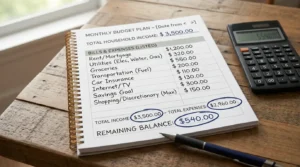
This step is the heart of the plan. The FTC budget guide has three parts. First, list your bills and expenses with amounts. Bills include rent and electricity. Expenses include food and clothing. Second, calculate your monthly income from pay stubs. If your pay is not monthly, add up last year’s income and divide by 12. Third, subtract expenses from income. The result should be above zero. If it falls below zero, you are spending more than you earn (verified October 2026).
To manage household shopping budget well, add a line for online orders, delivery fees and subscriptions. Plan your spending at the start of the month. Record what you spend each day. At month-end, compare real spending with your plan. Then adjust next month. The FTC Making a Budget guide also suggests putting leftover money into savings for emergencies or larger purchases. The table below details monthly budget guidelines established by FTC specialists.
| Number & Insight | Source | Expert/Team |
|---|---|---|
| Three steps: list bills and expenses, calculate monthly income, then subtract (verified October 2026) | FTC, Making a Budget (consumer.gov) | FTC consumer education |
| If pay is not monthly, add last year’s income and divide by 12 for a monthly estimate | FTC, Making a Budget (consumer.gov) | FTC consumer education |
| The result of income minus spending should be above zero and a negative result means you spend more than you earn | FTC, Making a Budget (consumer.gov) | FTC consumer education |
| Plan at the start of the month, record spending daily, review at month end and put leftover money into savings | FTC, Making a Budget (consumer.gov) | FTC consumer education |
Know What To Do When A Parcel Arrives Damaged
Damage happens even when you shop well. Act fast and keep proof. The FTC says you can dispute a charge if you receive a wrong or defective item. Call your card company right away. Ask the company to temporarily withhold payment while it investigates. Take photos of the box and the item. Save the order email and receipt. Ask your card company whether a damaged item qualifies for a dispute (verified October 2026).
Mind the clock. The FTC says to send a letter within 60 days of the first bill showing the error. Keep every message with the seller. Try the seller first because the FTC advises resolving a problem with the seller before you report it. If that fails, report it at ReportFraud.ftc.gov. Learn how to fix damaged delivery item before the dispute window closes in clear steps. The table below details dispute guidelines established by FTC specialists.
| Number & Insight | Source | Expert/Team |
|---|---|---|
| Call your card company right away and send a letter within 60 days of the first bill showing the error (verified October 2026) | FTC, Online Shopping | FTC consumer education |
| You can dispute a charge for a double charge or an item you never got or a wrong or defective item | FTC, Online Shopping | FTC consumer education |
| Ask the card company to temporarily withhold payment while it investigates | FTC, Online Shopping | FTC consumer education |
| Save the company name, what you ordered and paid, the return policy, the shipping promise, all messages and your card statements | FTC, Online Shopping | FTC consumer education |
Cancel Accidental Subscriptions Before They Drain Cash
A mistaken click can start a monthly charge. The FTC says free trials usually need a credit card number. The company can charge you if you do not cancel before the trial ends. Uncheck pre-checked boxes because they may grant permission for ongoing charges. Note the cancellation deadline on your calendar. Watch your card statements. Add every active subscription to your budget so none stays hidden (verified October 2026).
If you are charged after canceling, act at once. Keep a copy of your cancellation request and notes of any calls. The FTC says to dispute the charge with your card company right away if the company will not refund you. Follow up in writing. Certified mail with a return receipt is a good idea. See how to cancel accidental subscription order in three fast steps today. The table below details subscription guidelines established by FTC specialists.
| Number & Insight | Source | Expert/Team |
|---|---|---|
| Businesses must tell you how to cancel before collecting your card information and must make canceling simple (verified October 2026) | FTC consumer guide on free trials and subscriptions | FTC consumer education |
| If you are charged after canceling or without consent and the company will not refund you, dispute the charge with your card company right away | FTC consumer guide on free trials and subscriptions | FTC consumer education |
| Send a follow-up letter to the card company by certified mail and ask for a return receipt | FTC consumer guide on free trials and subscriptions | FTC consumer education |
| Report cancellation problems or unauthorized charges at ReportFraud.ftc.gov or to your state attorney general | FTC consumer guide on free trials and subscriptions | FTC consumer education |
How Do You Set A $150 Online Order Limit? (Example)

Start with the FTC method. Say your monthly income is $2,000. Your bills and expenses add up to $1,700. That leaves $300 above zero. These numbers are an example and not a rule. Now give online orders a limit. You might set $150 and put the other $150 toward savings. The FTC says leftover money can go into savings for emergencies or larger purchases. Your numbers will differ. The method stays the same for every household.
Track the limit each day. Write down every order the day you place it. Include shipping, handling and taxes. When the total reaches the limit, pause new orders until next month. If you overspend in one area, move money from another category and record the change. At month-end, compare real spending with the plan. Then reset the limit using what you learned. A firm limit helps you manage household shopping budget without guessing. Small adjustments work better than strict rules that nobody follows.
Is Buy Now Pay Later Safe For A $300 Chair? (2026 Check)
The FTC says buy now pay later plans often advertise no interest and few fees. Most still charge some fees and those fees can be high. They include per-payment fees and late fees. Some plans charge a fee to change your payment date. You may need to pay off the item within weeks. Autopay from a debit account can trigger overdraft fees if your funds run short. The price is an example and the checks work at any price.
Check the total cost with interest and fees. Ask whether you could save up and pay cash instead. The FTC says late or missed payments can hurt your credit. It also says these plans often offer fewer dispute protections. A credit card’s protections may not cover the original purchase even if you pay the plan by card. Read the refund policy before you agree. Keep a record of every payment until the balance reaches zero.
Can You Get Money Back If A Price Drops? (3 Questions)
Ask three questions before you buy. Does the seller have a price-matching policy? The FTC says some sellers will match or beat competitor prices. Will the seller give a credit or refund if the price drops after you buy? The FTC says to ask. Is the return window long enough to use it if the price falls? Write the answers down. Take a screenshot of the policy page so you can show the wording later.
Compare the answers across stores. A seller with clear terms deserves more trust than one with vague terms. Remember that sale and clearance items often have different terms. Read the fine print before you add the item to your cart. If the price drops and the seller refuses to help, you can still return the item under its policy. Then buy again at the lower price. Keep your receipts until every window has closed.
Conclusion
To manage household shopping budget, write the plan before you shop. List bills and expenses. Add up income. Subtract and aim for a result above zero. Compare full prices. Check the seller and the return policy. Record every order the day you place it. These steps take minutes each month. They protect you from surprise fees and forgotten charges. A plan turns every purchase into a choice you made on purpose. That is how every household keeps real control.
Money habits work best when the whole household joins in. Share the plan with the people who shop for your home. Review it together at month-end. Adjust it as prices and needs change. Keep your receipts and statements in one folder in case an order goes wrong. Share this guide with a friend who buys on impulse. Then tell us which step helped you most. Your story may help another shopper stay on budget. If you are planning a big order soon, our guide to avoid online shopping scams is a good place to start.
Frequently Asked Questions (FAQs)
How to manage household shopping budget?
Manage household shopping budget by listing your bills and expenses and calculating your monthly income. Subtract expenses from income. The FTC says the result should be above zero. Record what you spend each day and review it at the end of the month.
What is the first step in making a household budget?
List your bills and expenses with their amounts. The FTC says bills include rent and electricity, while expenses include food and clothing. Gather your bills and pay stubs first so the numbers are accurate.
How do you track online shopping spending?
Record every order the day you place it. Include shipping, handling, delivery and taxes. The FTC advises saving what you ordered and when, along with how much you paid. Check your card or bank statements against your notes each month.
What if your spending is higher than your income?
The FTC says a result below zero means you are spending more than you earn. Look for items to cut. Review your daily records to find the highest costs. Then adjust next month’s plan and try again.
Which payment method is safest for online orders?
The FTC says paying by credit card gives the strongest protection against scams and other problems. You can dispute a charge for a wrong or defective item. Avoid sellers that demand gift cards, wire transfers, payment apps or cryptocurrency.