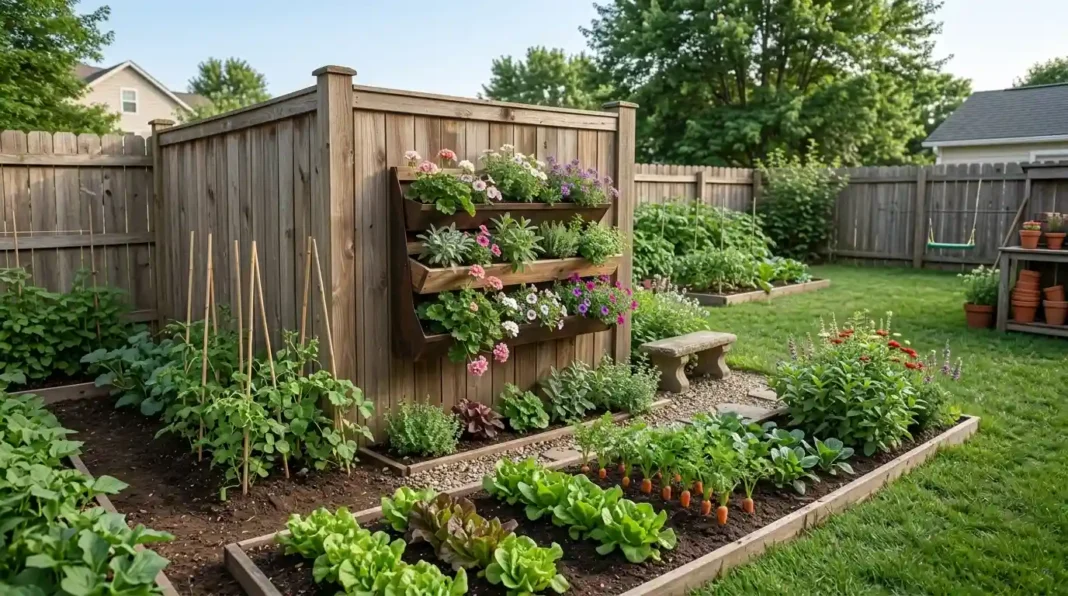
Compact Wall Hanging Planters Explained

A compact wall hanging planter is simply a box that mounts straight to a fence rail or wall stud instead of sitting on the ground. No legs. No footprint. No stealing patio space you don’t have. Hang one, fill it with herbs or flowers, and a bare fence quickly turns into growing space. The whole job takes about twenty minutes.
Key Takeaways
- Mounts to a fence rail or stud, not the ground.
- Lag screws need real edge distance, usually 1.5 times the screw diameter.
- Two mounting points per box keep it from twisting under weight.
- Basic plastic boxes start under $25; cedar runs $40 to $70.
- A loaded box can weigh 20 to 40 pounds once fully watered.
This guide covers mounting hardware, box material, drainage, weight limits and the one common install mistake that causes most planters to fall off a fence within the first season.
Five Compact Wall Hanging Planter Guides
Every wall hanging planter lives or dies by its mounting hardware. The box matters less than what’s holding it to the fence. Here’s the order these questions actually come up, starting with the one that decides whether the box stays up at all.
Finding a Stud Before You Drill Anything
A fence picket alone won’t hold a loaded planter. Thin, often warped, and barely an inch thick, pickets split under sustained weight. The rail behind it is different. Solid, load-bearing, built to carry real stress. Find the rail first, then drill.
A stud finder works on some fences. Not all. Knock along the picket with a knuckle instead. A solid thud means wood behind it. A hollow sound means you’re between rails. That spot won’t hold anything heavier than a pinwheel.
What the Spacing Numbers Actually Mean
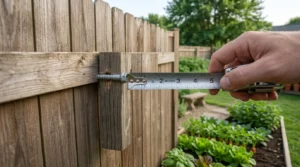
Screws need room to do their job. Too close together, or too close to the wood’s edge, and the wood splits before the screw even grips properly. The American Wood Council sets real numbers for this. Edge distance should be at least 1.5 times the screw’s shank diameter. End distance needs to be at least 4 times that diameter. The table below shows the spacing numbers from the American Wood Council.
| Number & Insight | Source (Institute) | Expert / Team |
|---|---|---|
| Lag screws need a minimum edge distance of 1.5 times the shank diameter, and a minimum end distance of 4 times the diameter, to avoid splitting the wood. | American Wood Council | AWC NDS Technical Committee |
For a standard 5/16-inch lag screw, that works out to roughly half an inch of edge clearance and over an inch of end clearance. Skip those numbers, and the wood can crack the first time the box gets watered and goes heavy. Read more from the American Wood Council’s fastener spacing guidance before mounting anything that’ll carry real weight.
Plastic, Cedar, or Metal: Pick Your Fighter
Plastic costs the least and weighs the least before it’s filled. It fades in direct sun, though. Within a couple of seasons it starts looking chalky. Cedar looks better and resists rot on its own, no sealant required, but it costs more and adds extra weight the mounting hardware has to carry.
Galvanized metal splits the difference. It won’t rot, won’t fade much, and holds up to weather better than either option. It does run hot in full sun, which matters if you’re growing anything with shallow, heat-sensitive roots.
Drainage Decides Whether Plants Actually Survive
A box with no drainage holes drowns its own plants within a week. Water pools at the bottom, roots sit in it, and rot sets in fast. Three or four holes, roughly a quarter inch each, solves it. Drill them yourself if the box didn’t ship with any.
Mount the box with a slight forward tilt, just a few degrees. That sends runoff away from the fence instead of staining the wood behind it season after season.
How Much Weight Can a Fence Actually Hold
A loaded planter, soil and water included, typically runs 20 to 40 pounds depending on box size. That’s not nothing. Two mounting points, not one, keep the box from twisting loose under that weight over time. A single screw might hold for a while. It won’t hold forever.
Check the fence itself before loading up multiple boxes on one section. A fence built for privacy, not structural load, can only take so much hardware before a rail starts to sag.
The Proven 1.5x Rule Sellers Won’t Mention
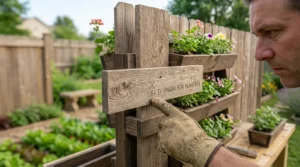
That half-inch edge distance number from the American Wood Council isn’t a rounded-up safety margin. It’s the point where wood starts to split under load if you get closer than that to the edge. Shave it down to save time, and the screw hole becomes the exact spot where a board cracks months later.
Measure before you drill, every time, even on a repeat project. A fence board that looked identical to the last one can have different grain, and grain direction changes how forgiving that spacing really is.
1 Proven Washer Fix for an Annoying Wobble
A loose or wobbly planter almost always comes down to a screw sitting too shallow or too loose in the pilot hole. A simple fender washer under the screw head spreads the load across more surface area, which stops the screw from slowly working its way back out.
Re-drill a slightly larger pilot hole if the original one stripped out. A quarter-inch deeper and a sixteenth wider usually catches fresh wood and holds the screw properly again.
Best Budget Wall Planter Under $25: 2026 Pick
A basic plastic box with a mounting bracket included is the clearest way to land a compact wall hanging planter under $25 this year. Expect a single box around 16 to 20 inches wide, not a multi-box system at that price.
Cedar versions start closer to $45 even at small sizes, since the material itself costs more. For a first planter on a tight budget, plastic still does the job for a season or two.
Compact Wall Hanging Planter Buying Takeaways
A compact wall hanging planter earns its spot by using space nothing else can. No floor footprint, no legs, just a fence that was doing nothing before. Finding the rail, not the picket, is the decision that matters most, since everything else depends on mounting into solid wood with the right spacing. Drainage holes and a slight forward tilt keep plants alive and keep runoff off your fence. Two mounting points carry a loaded box better than one, especially once soil and water push the weight past 20 pounds.
If you’re also weighing a full raised bed instead of a mounted planter, our guide on what are elevated raised garden beds breaks down that larger build. If this guide helped you plan your build, let us know in the comments below and share it with friends or family who are setting up their own garden beds this season.
Frequently Asked Questions (FAQs)
What is the best compact wall hanging planter box for outdoors?
Look for a box with a two-point mounting bracket and at least three drainage holes, sized 16 to 20 inches wide. That combination holds up to outdoor weather while staying light enough to mount on a single fence rail.
How do you mount a planter box on a fence without it falling?
Find a rail or stud behind the fence picket first, not the picket itself. Use two mounting points with lag screws spaced at least 1.5 times the screw’s diameter from the wood’s edge.
How much weight can a fence-mounted planter hold?
A loaded box typically weighs 20 to 40 pounds once filled with soil and watered. Two solid mounting points into a rail, not a picket, are needed to carry that safely.
Do wall hanging planters need drainage holes?
Yes. Without them, water pools at the bottom and roots rot within about a week. Three or four quarter-inch holes solve the problem.
What’s the cheapest way to get a wall hanging planter?
A basic plastic box with an included mounting bracket lands under $25 in most cases. Cedar and metal versions cost more but last longer outdoors.