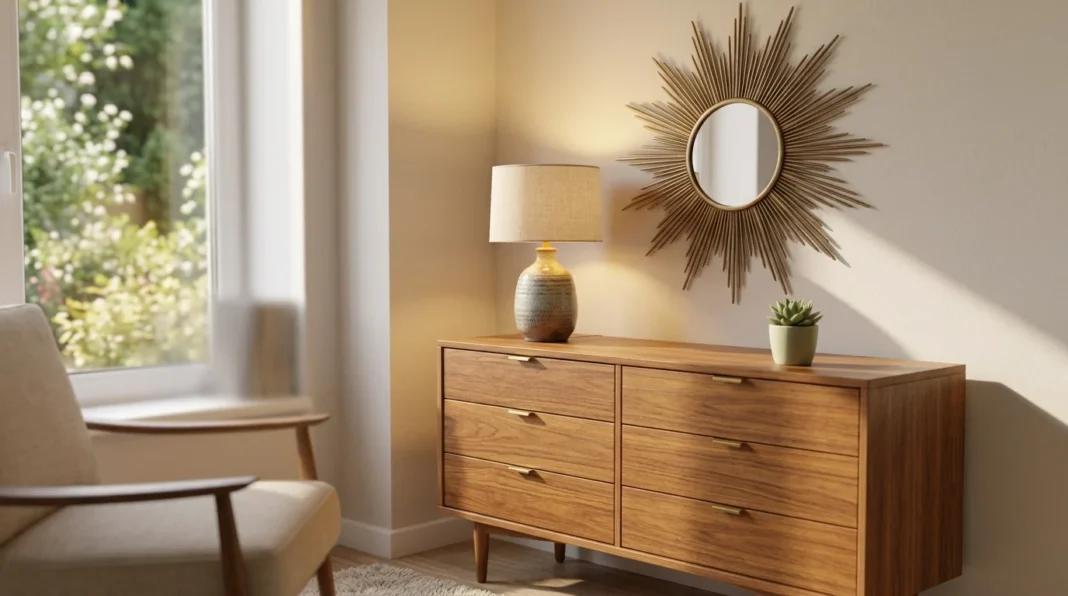
Where to Add Mid Century Accents Without the Showroom Price
The best places to add mid century accents are estate sales, thrift stores, vintage resale sites and lighting shops, with every piece capped at $50. Retail “mid-century inspired” lines sell the silhouette without the real materials, the tapered legs and the slight wear that make the look convincing.
Key Takeaways:
- Estate sales are the single best source for real teak and walnut pieces.
- Cap every piece at $50. Most finds land well under that.
- One statement piece does more than five small matching ones.
- Tapered legs, warm wood tones and clean lines are the giveaway details.
- Lighting is the cheapest way to add the look fast.
Here are seven places to shop, each with a spending cap and a clear job to do. Start with the one closest to you and resist buying everything at once, since a real mid-century room comes together over months, picked piece by piece, not purchased as a set.
Seven Places to Shop for Mid-Century Style
Mid-century accents reward patience more than budget. A single real teak dresser from an estate sale beats five “mid-century inspired” pieces from a big-box catalog.
The spots below run from cheapest to most specialized. Our guide on how to create modern farmhouse bedroom spaces shows how one mid-century piece fits into a warmer, farmhouse-leaning room.
Estate Sales
Start here if you can. Estate sales are where real mid-century furniture surfaces most often, since entire households from the 1950s and 1960s get sold off at once. Look for tapered legs, warm teak or walnut tones and hardware that is simple rather than ornate. Arrive early, since the best pieces move fast.
Set a $45 cap for a small dresser or side table. Ask the estate sale company if they know the piece’s age, since many keep notes from the family.
Thrift Stores and Charity Shops
Thrift stores turn up smaller mid-century pieces more often than large furniture: a teak bowl, a brass candle holder, a starburst mirror, a simple ceramic lamp base. Walk the housewares and lighting aisles first. Set a $20 cap and check hardware and wood grain closely, since real teak feels different from a stained veneer.
Skip anything with cracked veneer or a strong smell. A little wear on real wood is part of the look, so do not pass on a piece for small surface scratches.
Vintage and Consignment Furniture Shops
A dedicated vintage shop costs more than a thrift store. The owner has already done the sorting for you. Ask specifically for teak, walnut or rosewood pieces, since these are the woods most associated with the style. Many shops also know which designers or manufacturers made a piece, which thrift stores rarely do.
Set a $50 cap and pick one piece that can anchor a room, like a low dresser or a round side table. A good consignment shop will also tell you honestly if a piece has been refinished.
Online Resale Marketplaces
Facebook Marketplace, Chairish and eBay all carry real mid-century pieces if you search the right terms. Try teak, walnut, atomic, Sputnik, hairpin legs or tapered legs, then add your city to the search so you can pick up locally and skip shipping costs on furniture.
Cap the total at $40 and ask for extra photos of the underside or back of any wood piece, since that is where veneer damage and old repairs usually show up first. Measure twice before you commit, since online photos tend to make small pieces look larger than they are.
Vintage Lighting Shops
Lighting is the fastest, cheapest way to add the look. A single Sputnik-style pendant, an arc floor lamp or a simple ceramic table lamp does more visual work than several small accessories combined. Wikipedia’s overview of the mid-century modern movement names Børge Mogensen, Hans Wegner, Finn Juhl, Arne Vodder, Verner Panton and Alvar Aalto among the designers who stood out in the movement, with Scandinavian design in particular aiming to combine functionality with beauty while promoting quality over quantity. The table below details mid-century design guidelines established by Wikipedia specialists.
| Number & Insight | Source | Expert/Team |
|---|---|---|
| Wikipedia names Børge Mogensen, Hans Wegner, Finn Juhl, Arne Vodder, Verner Panton and Alvar Aalto among the designers who stood out in the mid-century modern movement, with the Scandinavian branch of the style stated as aiming to combine functionality with beauty while promoting quality over quantity. | Wikipedia | Wikipedia Contributors |
Set a $35 cap for a single lamp or small pendant. Rewiring an older lamp is usually a small added cost, so ask the seller whether it has already been checked for safety.
Flea Markets and Swap Meets
Flea markets are where odd, one-off pieces turn up: a carved wood bowl, mismatched brass candlesticks, a single Scandinavian-style chair missing its match. Go early for the best selection and bring cash, since most sellers do not take cards.
Set a $30 cap for a small haul. Haggle politely. If a seller has several pieces from the same era, ask about the rest of what they brought, since dealers often hold pieces back.
Hardware and Small Accent Shops
If you already own the furniture but it reads as generic, swap the hardware. Simple brass or walnut pulls, tapered wood legs sold separately and starburst wall mirrors are all inexpensive ways to shift an existing piece toward the look without buying anything large.
Cap this stop at $25. A set of new pulls or a single starburst mirror usually does more for a room than another small tabletop object would.
$35 Mid-Century Lighting Starter Kit
One lamp changes a room faster than almost anything else on this list. Spend the $35 on a single ceramic table lamp or a small arc-style floor lamp rather than splitting it across several smaller pieces, since one confident light source reads as intentional where several small ones read as cluttered.
Pair it with a warm-toned bulb rather than a cool white one, since the warmer tone suits the wood tones the rest of the style leans on. Add a second lamp only once the first one earns its spot in the room for a few weeks.
5 Mid-Century Wall Accents Under $30
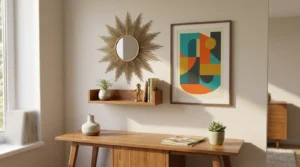
A starburst mirror, a set of simple geometric prints, a single teak wall shelf, a ceramic wall planter or a round wood-framed mirror all read as mid-century without needing a single piece of furniture. Pick one, not all five.
Hang it at eye level and give it room to breathe on the wall. If you rent, removable hooks keep the wall undamaged. Keep each piece under $30 and resist filling every bare wall at once.
Mid-Century Accents for Small Spaces: 2026 Pick
In a small room, one real mid-century piece does more work than several small accessories scattered across shelves, since a tight room reads as cluttered fast once too many small objects compete for attention. A single low dresser or one statement lamp anchors the space without crowding it.
Choose pieces with visible legs, since they let floor space show through and make even a small room feel more open. Save the smaller accent pieces, bowls, candle holders and the like, for a room with more surface area to spread them across.
Where Your Mid-Century Budget Goes Furthest
You can add mid century accents for under $50 a piece if you shop estate sales and vintage shops first, use the exact search terms that find real pieces online and keep the total small. Estate sales and consignment shops give you real teak and walnut, while lighting shops offer the fastest visual change for the least money. Start with whichever option is actually near you.
Set your cap before you shop and let the room come together slowly, piece by piece, over several real months instead of racing to fill every last shelf in one single weekend. Which of these sources turned up your best find? Tell us about it in the comments. Pass this list along to anyone else hunting for real mid-century pieces on a budget.
Frequently Asked Questions (FAQs)
Where can I add mid century accents on a budget?
You can add mid century accents at estate sales, thrift stores, vintage and consignment shops, online resale marketplaces, vintage lighting shops, flea markets and hardware shops. Start with estate sales and thrift stores, since they carry real pieces for the least money.
What is the cheapest way to add mid-century style to a room?
Lighting is usually the cheapest, fastest change. A single Sputnik-style pendant or a ceramic table lamp shifts a room’s feel more than several small accessories combined, often for $35 or less.
How do I tell real mid-century furniture from reproductions?
Check for tapered legs, real wood grain rather than printed veneer and simple, unornamented hardware. A vintage or consignment shop can usually confirm a piece’s age, while thrift stores rarely know.
Is it worth buying unfinished or damaged mid-century furniture?
Sometimes. Minor wear and small scratches are part of the look and cost little to live with. Cracked veneer or a strong odor is harder and more expensive to fix, so they are usually worth skipping.
How many mid-century pieces does a room need?
One real statement piece, like a dresser, a chair or a single lamp, does more than five small accessories. Add pieces slowly, since a mid-century room should look collected over time rather than bought in one trip.