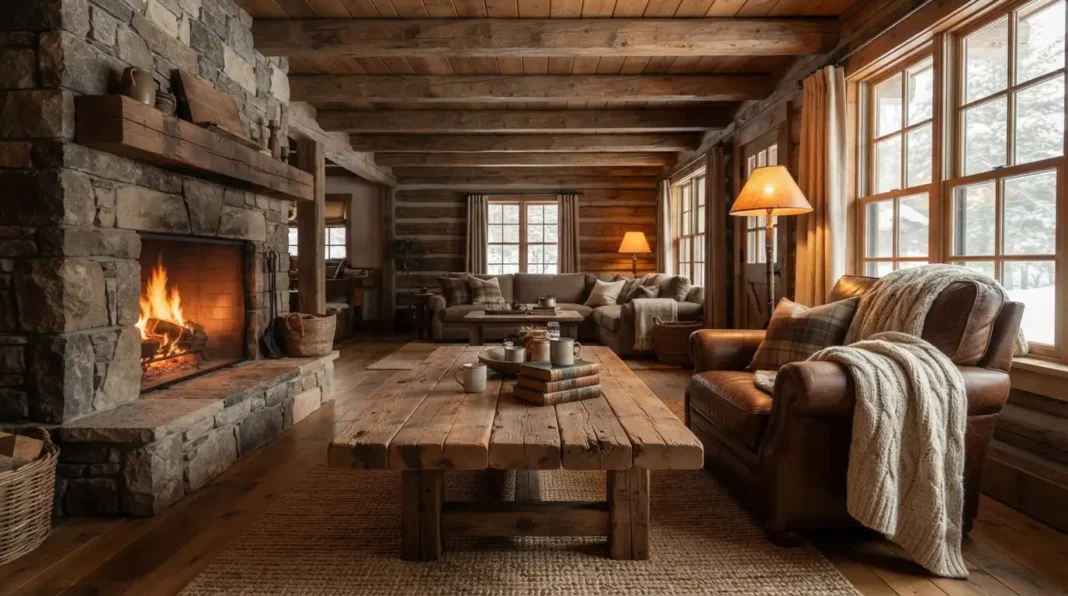
Rustic Interior Design Styles Work in Any Home With Raw Wood in Charge
Yes, rustic interior design styles work in apartments, cabins, townhouses or suburban houses with raw wood as the lead material at any budget from $200 to $2,000 per room (our estimate). Rough stone, aged iron, wool plus leather bring texture, weight, a worn finish to every room, from a small studio to a large mountain lodge.
Key Takeaways:
- Lead with one heavy wood piece in every room.
- Keep stone near the heat source for visual weight.
- Layer wool and leather in one pattern only.
- Hold metal to aged iron and brass for a worn look.
- Choose warm bulbs so the wood never looks flat.
Start with a heavy table if the room feels empty. Start with warm bulbs if the room feels dark. A $200 budget covers a used oak side table and a wool throw (our estimate). At $2,000, you add a reclaimed beam mantel (our estimate). Small rooms need fewer pieces than large ones. Dark wood needs a pale wall beside it.
Nine Tips That Build the Room From History to Season
Tips follow the order in which a rustic room gets built. Wood, finish and stone set the shell. Textiles come next. History sits at the center because every material has a source. Metal and light fill the room. A small-room fix and a seasonal swap come last. The holiday side of this style sits in the full five tip plan for rustic holiday decor and this page covers rustic interior design styles inside the room.
A room with a stone hearth already has tip three covered. A room with bare windows gains most from tip seven. A studio benefits from tip eight first. A room with a cold floor gains most from tip four. Wood tone drives tips one and two. Note it in every room before buying. Take one photo of each room in daylight for comparison. Read the tip numbers that match your notes.
Anchor the Room With One Heavy Wood Piece
A rustic room needs one piece too heavy to move alone. A thick plank table, a timber bed frame or a stone-topped chest does the job. Choose a top at least 2 inches thick (our rule of thumb). Everything else can stay lighter. One heavy piece keeps a small room from looking like a pile of props.
Repeat the same wood tone in a second piece. Oak mixes with pine inside one color family (our reading). Avoid a second heavy table in the same room. A used plank table costs near $200 (our estimate). A new bed frame in solid pine costs near $500 (our estimate). Measure the doorway before buying a heavy table.
Choose Finishes That Show the Grain
Oil and matte wax let the grain show. Gloss polyurethane hides it behind a plastic sheen. Rustic style favors the first two. Try any finish on a hidden table leg before you commit. Reclaimed boards often carry nail holes and saw marks. Those marks add to the worn look. Do not fill every hole.
Sand a rough table lightly to remove splinters only. Heavy sanding erases the patina. A quart of tung oil costs near $22 (our estimate). Wipe it on with a clean cotton rag. Let each coat dry before you add the next. Two coats suit most tables (our reading). Lay used oily rags flat outdoors to dry (our tip).
Place Stone Near the Heat Source
Stone gives a rustic room weight. A stone fireplace surround does it best. A renter can use a slate hearth tray or a stack of river stones instead. Keep stone near the heat source so it reads as part of the plan. A stone shelf in the middle of a wall looks like a prop.
Cut stone veneer costs near $8 per square foot (our estimate). A 20-square-foot surround costs near $160 before labor (our arithmetic). Fieldstone looks rougher than cut stone. Choose fieldstone for a cabin look and cut stone for a lodge look (our reading). Check wall strength before any veneer goes up (our tip). Thin veneer weighs less than full stone.
Layer Wool and Leather Instead of Shine
Wool and leather soften heavy wood. A wool throw on a leather chair gives a layered look in one move. Pick undyed or earth-toned wool for the strongest rustic effect (our reading). Avoid satin because its shine fights with raw wood. Leather improves with wear while vinyl cracks (our reading). Hide rugs add a third layer underfoot.
Keep to one pattern across the whole room. A plaid throw or a hide rug can lead. Repeating plaid on pillows, curtains and rugs makes a cabin look like a catalog (our reading). A wool throw costs near $45 (our estimate). A used leather chair costs near $400 (our estimate). Pillows in solid colors keep the pattern count at one.
Trace the Style to Its Adirondack Roots Before You Buy
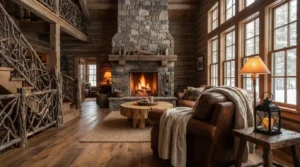
Rustic style has a documented home in the Adirondack Great Camps of New York. Wikipedia’s article on the Great Camps places one of the first family arrivals on Upper St. Regis Lake in 1883. Builders there favored local timber, native stone and twig details. This history explains why heavy wood and rough stone define the look. The table below details Adirondack Great Camp history guidelines established by Wikipedia specialists.
| Number & Insight | Source | Expert/Team |
|---|---|---|
| In 1883, the family of the merchant Anson Phelps Stokes was among the first on Upper St. Regis Lake. | Wikipedia | Wikipedia contributors |
| In 1975, Syracuse University announced plans to sell Sagamore Camp. | Wikipedia | Wikipedia contributors |
| Sagamore was listed on the National Register of Historic Places in 1976. | Wikipedia | Wikipedia contributors |
| Harvey Kaiser’s 1982 book Great Camps of the Adirondacks popularized the term. | Wikipedia | Wikipedia contributors |
| A multiple property submission for 10 great camps on the National Register was completed in July 1986. | Wikipedia | Wikipedia contributors |
Use the history as a shopping filter (our reading). Pick materials a camp builder would recognize, such as timber and stone. A glossy laminate table does not fit that filter. Skip veneer tops with a printed grain. Ask each seller which wood a piece uses before you pay. A solid oak side table runs near $150 used (our estimate).
Keep Metal to Aged Iron and Brass
Metal should look worn and not polished. Black iron hooks, hinges and lantern frames fit the style. Aged brass suits a lodge room. Bright chrome pulls the eye away from the wood. Swap cabinet pulls first because they cost little. Hammered finishes hide fingerprints better than smooth ones (our reading). Brass darkens with age, a change this style welcomes.
Match every metal piece to one finish per room. Keep black iron in one room and aged brass in another (our reading). A set of 6 iron cabinet pulls costs near $24 (our estimate). Hang one iron hook rail by the door for coats. Wipe fingerprints off dark iron with a dry cloth. Buy screws in the same finish.
Light the Room Low With Warm Bulbs
Rustic rooms look dark when light comes only from the ceiling. Add lamps at table height to bring light down to the wood. Choose bulbs rated 2700K for a warm glow (our rule of thumb). Lantern shapes and shaded lamps suit the style. Skip clear glass shades that expose the filament. Lamps also hide dull corners.
Use three light sources per room. A lamp by the sofa, a candle-style sconce and a floor lantern are enough (our reading). A warm bulb costs near $4 (our estimate). A dimmer costs near $18 (our estimate). Place the dimmer on the main lamp to lower the light at night. Plug lamps into a timer for evenings.
Brighten a Small Room Without Losing the Cabin Feel
Dark wood can shrink a small room. Paint the walls warm cream to bounce daylight. Keep the wood on the floor and on one furniture piece. Hang one mirror opposite the window. A pale wall lets a rough table stand out. Sheer linen curtains pass daylight through. Hang rods wide of the frame to expose the full glass (our tip).
Use a rug 4 feet by 6 feet to define the space (our rule of thumb). Swap a dark coffee table for pale oak. Skip a second shelf unit (our reading). Choose open legs on a sofa to show more floor (our reading). A quart of cream paint costs near $20 (our estimate). Photograph the room again after the paint dries.
Swap Seasonal Layers Without Touching the Base
Seasonal layers change the mood without moving the heavy pieces. Swap a wool throw for a lighter cotton one in spring. Add evergreen branches in a jar for winter. Keep the heavy wood and stone in place all year. Store off-season textiles in a cedar chest or a sealed bin. Pillow covers swap fastest.
A fixed base saves money because seasonal pieces stay small. A $60 seasonal swap per room is a fair budget (our estimate). Change one layer per month instead of redoing the whole room. Take a photo of each version for next year. Compare the photos before you buy anything new. Label each bin by season.
Modern Rustic Versus Classic Rustic: 3 Changes to Make
Modern rustic keeps the wood and cuts the clutter. Classic rustic piles on trophies, antlers and busy plaids. Three changes move a room toward modern rustic. Clear half the wall decor. Swap one heavy curtain for linen. Replace dark paint with warm white. These steps come from our reading of the two looks.
Modern rustic suits open plans and small apartments. Classic rustic suits cabins with many separate rooms. A mixed room can keep one heavy beam as the classic touch. Fresh paint costs near $45 per room (our estimate). Choose one look per floor to avoid a muddle. Match lamp shades to the paint tone.
Rustic Cabin Interior on a $400 Budget
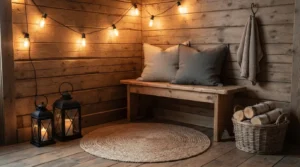
A $400 budget buys a used pine bench, a jute rug, two lanterns, a log basket and two pillow covers (our estimate). The bench costs near $90. The rug costs near $130. The lanterns cost near $60 together. The basket costs near $40. The pillow covers cost near $50. The total is $370 (our arithmetic). Check three local listings for each item.
Buy the bench and the rug first. They set the scale of the room. Add the lanterns and the basket next. The pillow covers come last. The $30 left over covers warm bulbs for the lanterns (our estimate). Keep the receipts in one folder for returns. Hang the lanterns at different heights.
2026 Pick: A Rustic Farmhouse Blend for Open Plans
An open plan needs one shared wood tone and one shared metal. Our 2026 pick blends rustic timber with farmhouse white walls (our reading). Keep the beams exposed and the cabinets white. Use iron pulls on every door. This pick comes from our reading of open plans and not from a sourced trend report.
Farmhouse adds lighter paint and open shelving to the rustic base. Rustic adds weight with timber and stone. Choose one lead style per room to avoid a muddle. A blend works best when the rooms share a floor color (our reading). Paint trim in the same warm white throughout. Keep door hardware in one finish.
Pick One Heavy Wood Piece and Photograph the Room Tonight
One heavy wood piece plus one daylight photo is the smartest opening step. The piece shows whether the style suits your room before you spend more. The photo shows how the wood tone sits in daylight. Add one new layer per week after that. Write each price on a note so the budget stays honest. Stop once the room feels finished and balanced.
Rustic interior design styles hold up since raw materials age gracefully. Wood gains patina and iron gains a soft shine. Stone keeps its color for decades (our reading). Wool and leather wear in with use. Trends change each year. Heavy timber plus warm lamps read well in every era. Share your favorite tip in the comments. Send this page to a friend facing a bare living room.
Frequently Asked Questions (FAQs)
Do rustic interior design styles work?
Rustic interior design styles work in most homes if one heavy wood piece leads the room. The style fails when every surface is dark. Light paint and warm bulbs repair it quickly. Rooms over 100 square feet with 8-foot ceilings carry the style best (our reading).
Is rustic out of style?
Rustic is not out of style. The look changed from trophy-heavy cabins to calmer rooms with fewer objects. Buyers now favor pale walls with a few rough pieces (our reading). A single beam or table keeps the style current without a full theme.
What are the types of rustic interior design?
Common types are log cabin, lodge, Adirondack, rustic farmhouse and modern rustic. Log cabin uses real logs on the walls. Lodge adds leather and antler accents. Adirondack uses twig details. Modern rustic keeps the wood and removes clutter.
Can you mix rustic with industrial style?
Rustic mixes with industrial style through shared metal and wood. Pair a plank table with black steel legs. Keep brick or concrete to one wall. Avoid adding a third look, such as glossy white furniture.
How do you care for rustic wood furniture?
Dust rustic wood with a dry cloth each week. Wipe spills at once with a barely damp cloth. Oil dry tables once or twice a year (our reading). Keep furniture a few feet from radiators to prevent cracks.