Cords on Concrete Patio Floors: Hide Them Without Creating a Hazard

To hide cords on concrete patio floors safely, use the shortest outdoor-rated cord that reaches, cover floor crossings with a proper cord protector and route the rest along the edge, because a cord must stay dry, cool and easy to inspect. Burying a cord under a rug or stapling it to a wall looks tidy yet creates real hazards, so the goal is protection and not concealment, which means choosing covers, edges and planters over anything that traps heat.
Key Takeaways:
- Use the shortest outdoor-rated cord that reaches the device.
- Cover floor crossings with a proper cord protector, never a rug.
- Never leave a cord coiled while it is in use, because heat builds up.
- Skip stapling cords to walls, since building codes restrict it.
- Replace the worst cords with solar or battery lights.
A concrete slab makes drilling difficult and adhesives unreliable, so the five ideas below rely on covers, smart routing and a few power swaps that work for renters and owners alike. Pick the one that removes your worst trip hazard first and add the others as you go, because small fixes are easier to finish than one big redo of the whole patio.
Choose a Safe Cord First, Because Hiding a Bad One Makes It Worse
Hiding a cord only helps when the cord suits the job, so start by checking that it is rated for outdoor use. Wikipedia’s extension cord entry says cords used outdoors, in wet areas or in prolonged sunlight should be selected for those conditions and a jacket marked SJTW is a common example, since the W stands for weather-resistant and the cord is typically used for general outdoor applications. The table below details the official floor-cord covering guidelines established by Wikipedia specialists.
| Number & Insight | Source (Institute) | Expert / Team |
|---|---|---|
| Cords running across the floor should be covered with a suitable device to protect them from physical damage, but they should never be covered with a rug or carpet, because that can produce a serious fire hazard. | Wikipedia (Extension cord) | Wikipedia Contributors |
That row explains why the best hiding methods protect the cord instead of burying it, which means a purpose-made cord cover is safe while a rug, a mat or a pile of mulch is not. Use the shortest cord that reaches, because every extra foot adds resistance and keep it fully uncoiled, since a coiled cord can trap heat and become a shock and fire hazard.
Walk the Patio and Map the Route Before You Buy Anything
Start at the outlet and trace the route to each device, noting every doorway, walkway and puddle the cord would cross, because the best plan avoids crossings altogether. Sketch the patio on paper and mark the outlet, the lights, the fountain or the heater, then look for the shortest route along an edge, which is also the safest and the cheapest.
Measure that route so you can buy a cord of the right length, since a cord that is too long ends up in loops while one that is too short tempts people to join a second cord to it, which adds connections that can heat up. A few minutes with a tape measure now saves you from buying extra covers for cords on concrete patio routes that were never necessary.
Surface Covers, Edge Routes and Solar Swaps: Which Method Fits Concrete
Concrete is hard to drill, rough for adhesives and unforgiving for anyone who trips, so the hiding methods that work best sit on top of it, such as rubber or plastic cord covers that you can lift and move. Methods that need fixing into the slab suit only owners who are happy to drill, while adhesive channels grip poorly on dusty or damp concrete and need a swept, dry surface.
Renters should stay with loose methods, since covers, planters and furniture leave no marks and cause no disputes. They should avoid stapling or nailing cords to walls, because the National Electrical Code, as Wikipedia describes it, restricts extension cords attached to building surfaces or concealed inside walls, floors and ceilings, so a permanent cord is a job for an electrician who can add a weatherproof outlet.
Five Ways to Make Cords Disappear Without Hiding the Danger
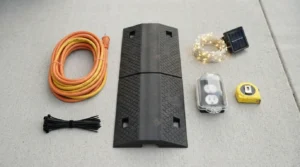
Hiding cords is a chain of small decisions and each one either removes a hazard or quietly adds one, so the five ideas below follow the order that keeps the patio safe first and tidy second. Most of them take under an hour and use cheap parts, which means you can test a layout over a weekend before committing to anything permanent.
Work through the ideas in order the first time, because shortening the cord often removes the need for the later fixes, although every patio is different and some layouts of cords on concrete patio floors need all five. Keep the tools simple, since a tape measure, a cord protector, a weatherproof cover and a flashlight handle nearly everything below.
Cut the Cord Down to the Shortest Safe Length
Measure from the outlet to the device along the route you plan to use and buy a cord that is as close to that length as you can. Wikipedia’s extension cord entry explains that every foot of cord adds resistance and that it is best to use a cord exactly as long as needed, so a shorter run also leaves less cord to hide, which is the quickest win on any patio.
Thicker cords carry more power over distance, so a heater or a pressure washer needs a heavier gauge than a string of lights, yet the rule of using the shortest length still applies to both. Never leave the spare length coiled while the cord is in use, since the same page warns that a coiled cord can trap heat and become a shock and fire hazard.
Cover Every Floor Crossing With a Proper Cord Protector
Where a cord has to cross a walkway, lay a rubber or plastic cord protector over it, because the extension cord entry states that cords running across the floor should be covered with a suitable device to protect them from physical damage. A protector also stops people from tripping on the cord, so choose a low ramp that feet and wheels can cross without catching.
A rug, a doormat or a pile of mulch is not a suitable cover, since the same page says covering a cord with a rug or carpet can produce a serious fire hazard, so keep the cover purpose-made and keep the plug ends visible. Check that the protector is rated for outdoor weather, although most rubber ones handle rain and sun well.
Route Along the Edge and Behind Planters or Furniture
Run the cord along the edge of the slab, the base of the house wall and the back of a planter bench, where feet rarely go and keep it loose rather than fixed to the surface. Loose routing stays easy to inspect and avoids the building-surface restrictions mentioned earlier, while tall planters, a storage bench or an outdoor sofa can shield the line from sight.
Leave the cord visible at both ends, since hidden does not mean buried and check it every few weeks for melting, darkening or a burnt smell, which are the warning signs Wikipedia’s entry lists for overloaded or damaged cords. Cords parked behind furniture for a long time deserve extra attention because damage there goes unnoticed.
Swap the Worst Offenders for Solar or Battery Lights
String lights, lanterns and small fountains cause most of the cord clutter on a patio and many of them now come in solar or battery versions that need no cord at all. Replacing the worst three offenders can remove most of the long cable runs in one afternoon. Solar panels need direct sun for several hours, while battery lights need an occasional recharge.
Keep a corded option only where you need steady power, such as a heater, a speaker or a pond pump and put those devices closest to the outlet, which shortens the cord and the hiding job at the same time. Mixing cordless lighting with a single well-routed power line gives the cleanest result on a small slab.
Add a Weatherproof Outlet Where Cords Keep Crossing
If the same cord crosses the patio every day, the real fix is a permanent outlet nearer the device. The National Electrical Code, as Wikipedia describes it, restricts extension cords attached to building surfaces or concealed inside walls, floors and ceilings and only limited exceptions exist, so a licensed electrician can add a weatherproof outlet in the right place.
Owners can budget for this as a one-time job that replaces a permanent cord problem, while renters can ask the landlord about adding an outlet or choose a freestanding solution in the meantime, since drilling concrete or fixing to the wall without permission can cause damage and disputes. Until then, keep the cord short, covered and checked.
Keep Connections Dry and Cool Once the Cords Are Out of Sight
Hidden cords still need checking, because Wikipedia’s entry advises routing cords away from places where they can be damaged and examining them periodically for melting, deformation, darkening in color or a burnt smell. Cords that sit behind furniture for a long time deserve extra attention, since damage there goes unnoticed. A quick look every few weeks takes under a minute and catches most problems early.
Keep every plug and socket connection off wet concrete by using a weatherproof cover or a raised box. Let the cord dip below the outlet before it rises, which is called a drip loop, so rain runs off before it reaches the plug. If your patio is small, our guide on how to organize small balcony storage shows how benches, hooks and layout work together with a tidy cord plan.
How Much Does It Cost to Hide Cords on Concrete Patio (Under $35)

A pair of rubber cord protectors, a set of reusable ties and a weatherproof cover for the outlet usually total under $35 and a right-length outdoor cord is the one item worth buying new if your current one is too long. Many people already own ties and tape, so the real spend is the protector and the cover.
An electrician adding a permanent outdoor outlet costs more, although it ends the cord problem for good, so it makes sense for owners who cross the patio with a cord every day. For everyone else, covers and smarter routing handle the job for the price of a takeaway meal, which is a small price for a patio that feels safe.
How Many Extension Cords Should Share One Outlet (Just 1)
Use one cord per outlet and avoid joining one extension cord to another, because every extra connection adds resistance and another point that can heat up. Wikipedia’s entry notes that a large proportion of structure fires are caused by extension cords that have been damaged or overloaded. If you need more sockets, think about adding an outlet instead, since that removes the extra connections entirely.
Some extension cords include a built-in circuit breaker or a ground-fault circuit interrupter, which is worth choosing for outdoor use because it adds a layer of protection, although it does not replace sensible routing. Check the rating on the cord and the device before you plug anything in and keep heaters on their own cord.
3 Cord Mistakes That Turn a Tidy Patio Into a Hazard
The first mistake is covering a cord with a rug, mat or mulch, which hides it but can produce a serious fire hazard because the heat has nowhere to go. The second is leaving the spare length coiled while the cord is in use, since a coiled cord traps heat and can become a shock and fire risk.
The third is running a cord through a window or door or stapling it to a wall, because building codes restrict extension cords used that way and a pinched cord can be crushed and damaged. Keep cords short, covered with a proper protector and visible at the ends and most of the common problems with cords on concrete patio floors disappear.
Conclusion
A safe patio is one where every cord is short, covered where it crosses and checked now and then, because tidy cords that trap heat are worse than visible ones that stay cool. The five ideas above give you an order to follow, so you can remove the worst trip hazard first and improve the rest over time. It is a small routine with a large payoff over many seasons.
Small fixes add up when the cords keep coming and the weather keeps changing. Your patio will feel safer the moment the floor is clear of loose cords. Pick one idea to try this weekend, then tell us in the comments which cord you fixed first or share this guide with a friend whose patio still looks like a tangle of wires after a long season of party lights and phone chargers.
Frequently Asked Questions (FAQs)
How do you hide outdoor cords on a concrete patio?
To hide cords on concrete patio floors safely, use the shortest outdoor-rated cord that reaches, cover every floor crossing with a proper cord protector and route the rest along the edge or behind planters where it stays visible for checks. Never bury a cord under a rug and never staple it to a wall, because both create hazards.
Can you cover an outdoor extension cord with a rug?
You should not cover an outdoor extension cord with a rug or carpet, because Wikipedia’s extension cord entry says that it can produce a serious fire hazard when the heat cannot escape. Use a purpose-made cord protector over any floor crossing instead and keep the plug ends visible so you can check them regularly for damage or heat.
What is an SJTW extension cord?
An SJTW extension cord is a junior hard service cord with a PVC jacket that is weather-resistant, which is why it is typically used for general outdoor applications. The letters describe the construction, so look for them printed on the jacket and still check the wire gauge and length before you use the cord for a heater or a pressure washer.
Can you tape or staple extension cords to a wall?
You should avoid taping or stapling extension cords to walls, because the National Electrical Code, as Wikipedia describes it, restricts extension cords attached to building surfaces or concealed inside walls, floors and ceilings. If a cord has to stay in the same place permanently, ask a licensed electrician to add a weatherproof outlet nearer the device.
Should you leave an extension cord coiled outdoors?
You should not use an extension cord while it is coiled, because the heat produced by the cord cannot dissipate between the tight coils and can lead to a shock or fire hazard. Uncoil the full length, choose a cord that is only as long as you need and cover the floor crossings with a proper protector instead.